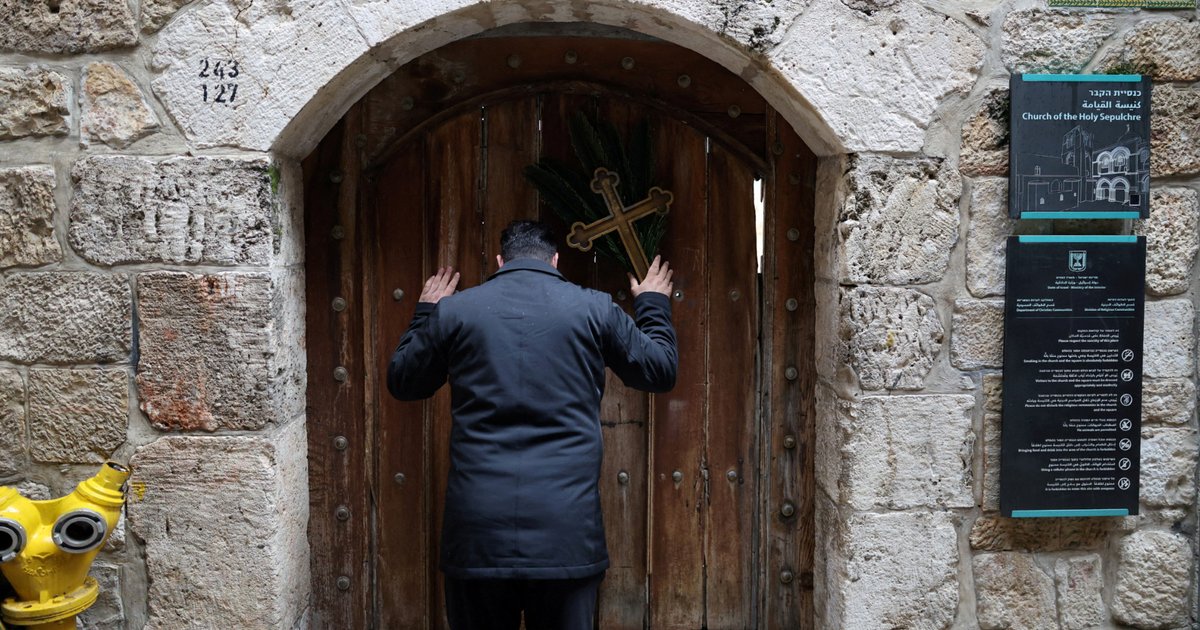
On Sunday, March 29, 2026, Israeli forces prevented both Cardinal Pierbattista Pizzaballa, the Latin Patriarch of Jerusalem, and Father Francesco Patton, the Custodian of the Holy Land, from entering the Church of the Holy Sepulchre to celebrate Palm Sunday. The Catholic leaders attempted to enter the church privately without any official celebration or public gathering, but they were met with refusal.
This incident marks the first of its kind in centuries, as Catholic church leaders have been barred from celebrating Palm Sunday at this sacred site. Local and international churches expressed their discontent with this decision, deeming it a dangerous precedent that disregards the sentiments of billions of people worldwide who look to Jerusalem during this week.
Details of the Incident
As Israeli authorities closed the Al-Aqsa Mosque and Christian churches in the Old City of Jerusalem since the onset of the attack on Iran last month, officials cited safety concerns as the reason for the closures. However, Palestinians rejected these justifications, asserting that the closures aim to reinforce control over the occupied city.
In reaction to this event, the Italian government summoned the Israeli ambassador, with Prime Minister Giorgia Meloni stating that this action is an "insult to believers." The churches confirmed that their actions were responsible, as they adhered to all imposed restrictions for over a month, including canceling public gatherings and preventing attendance during Easter, when "hundreds of millions of believers around the world turn to Jerusalem and the Church of the Holy Sepulchre."
Background & Context
This incident occurs amid ongoing tensions in Jerusalem, a city that represents a significant religious center for both Muslims and Christians. Historically, Jerusalem has been the focus of the world, housing sacred sites for the three major religions: Islam, Christianity, and Judaism. However, the political situation and Israeli occupation of the city have exacerbated conditions, affecting freedom of worship.
The "status quo" refers to a set of internationally recognized arrangements that ensure Christian authority over churches in Jerusalem and Islamic authority over the Al-Aqsa Mosque. Nevertheless, Israel has violated these arrangements for decades in favor of increasing Jewish presence in the city, heightening tensions among different communities.
Impact & Consequences
This incident serves as an indicator of escalating religious and political tensions in Jerusalem and may provoke strong reactions from Christian communities worldwide. Preventing church leaders from celebrating Palm Sunday could incite feelings of anger and resentment among believers, potentially leading to protests or diplomatic actions from concerned nations.
Furthermore, these events could impact relations between Israel and European countries, where religion is considered an essential part of the cultural and political identity of many nations. This may result in diplomatic pressures on the Israeli government to ease restrictions on holy sites.
Regional Significance
For the Arab world, this event reflects the ongoing challenges faced by Christian communities in the region and highlights the need to protect their rights and freedom of worship. Additionally, events in Jerusalem affect relations between Arabs and the West, as these occurrences are viewed as part of the broader conflict between Palestinians and Israelis.
In conclusion, Jerusalem remains a symbol of religious and cultural diversity, and the rights of all believers to practice their faith freely must be respected. Recent events indicate the necessity for dialogue and understanding among all parties involved to ensure lasting peace in the region.