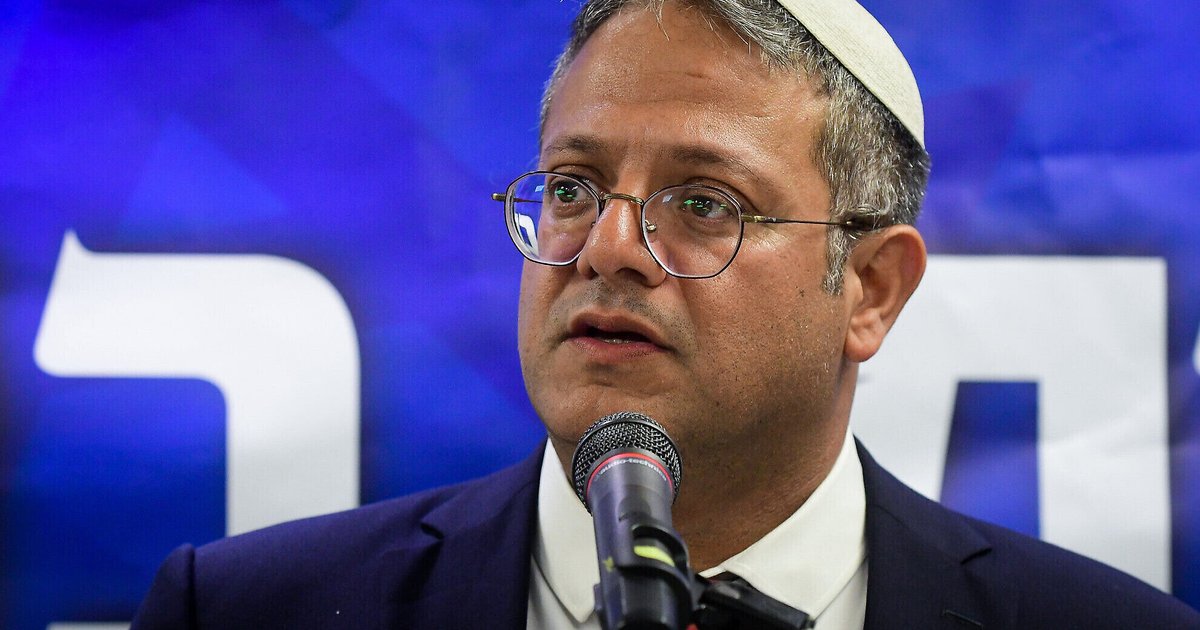
Israeli National Security Minister Itamar Ben Gvir stated that the Israeli government will not succumb to pressures from the European Union, emphasizing that the protection of Israeli citizens will remain a top priority. These remarks come at a time when international criticism of Israeli policies is escalating, particularly regarding the Israeli-Palestinian conflict.
In a press conference held in Tel Aviv, Ben Gvir said, "We are committed to protecting our citizens, and we will not allow any external entity to influence our security decisions." These statements come at a sensitive time, as the Israeli occupation faces increasing pressure from European countries calling for respect for human rights and an end to violations in the occupied territories.
Details of the Event
Ben Gvir's statements coincide with growing calls from the European Union to ease tensions in the region. Several European nations have expressed concern over the ongoing escalation in the West Bank and Gaza Strip, urging a resumption of the peace process. However, the current Israeli government, led by Prime Minister Benjamin Netanyahu, appears to adopt a more hardline policy towards the Palestinians.
In this context, Ben Gvir indicated that Israel will continue to take necessary measures to ensure the security of its citizens, including military operations if necessary. He also confirmed that the government will work to enhance the security capabilities of Israeli forces in the face of any potential threats.
Background & Context
Historically, relations between Israel and the European Union have witnessed increasing tensions, particularly in light of Israeli settlement policies in the West Bank. Since 2010, European countries have expressed concern over these policies, viewing them as an obstacle to peace. These tensions have led to a deterioration of diplomatic relations between the two sides, with European criticism of occupation practices intensifying.
In recent years, the region has seen an escalation of violence, further heightening international criticism. Attacks on Palestinian civilians have increased, while Israeli forces have responded with military operations, resulting in numerous casualties.
Impact & Consequences
Ben Gvir's statements indicate that the Israeli government is proceeding with its current policy, which may exacerbate conditions in the region. These policies could affect Israel's relations with European countries, as some nations may adopt a more hardline stance towards Israel in international forums.
Furthermore, the continuation of these policies could lead to an escalation of violence in the occupied territories, threatening the overall stability of the region. Under these circumstances, Palestinians may face greater challenges in their pursuit of legitimate rights.
Regional Significance
Ben Gvir's remarks serve as a clear message to Arab countries, reflecting the ongoing tensions in the Israeli-Palestinian conflict. These policies may increase tensions between Israel and Arab nations, particularly those seeking peace and stability in the region.
At the same time, these developments may influence Arab countries' positions on the Palestinian issue, as pressures on Arab governments to support Palestinians against Israeli policies may increase. The continued violence could also reinforce hardline positions in the region, complicating peace efforts.
In conclusion, Ben Gvir's statements reflect the current trends of the Israeli government, which may lead to worsening conditions in the region. Under these circumstances, hope remains pinned on the international community to exert pressure for achieving peace and stability in the area.