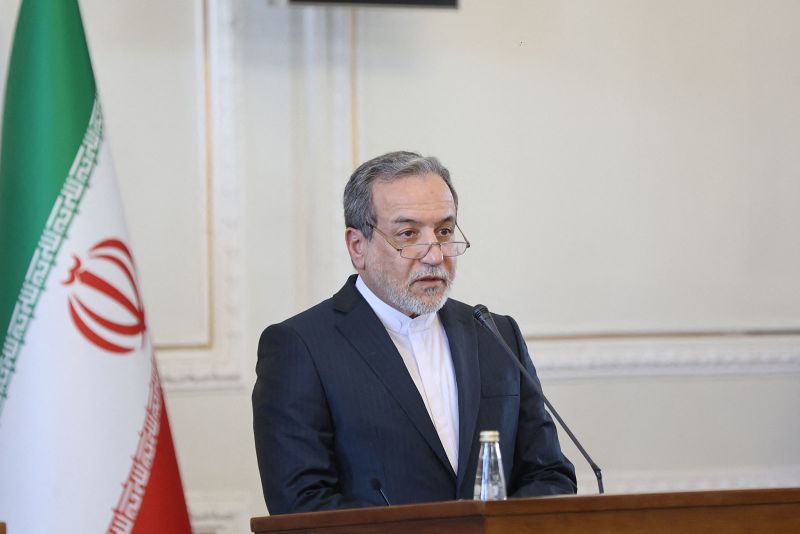
In an unexpected step, informed sources reported that Israel has lifted the name of Abbas Araqchi, Iran's Deputy Foreign Minister, from its previously established target list. Araqchi is considered one of the most prominent figures in Iranian diplomacy, having played a pivotal role in nuclear negotiations with major powers.
This decision comes at a sensitive time when the region is witnessing increasing tensions, raising questions about the reasons behind this sudden shift in Israeli policy towards a figure that Tel Aviv views as a potential threat.
Details of the Event
Abbas Araqchi, who has served as Iran's Deputy Foreign Minister since 2013, played a significant role in the nuclear negotiations that led to the Iranian nuclear agreement in 2015. He is known for his strong positions against American and Israeli policies, which made him a potential target on the Israeli list.
The removal of Araqchi from the target list reflects a shift in Israeli strategy and may be interpreted as an attempt to ease tensions with Iran, or as part of a broader deal that could involve other issues related to regional security.
Background & Context
Historically, Iranian-Israeli relations have been tense, with Israel considering Iran one of its greatest threats to national security. Recent years have seen an escalation in hostilities between the two sides, including cyberattacks and direct military operations.
In this context, the decision to remove Araqchi from the target list can be seen as an attempt by Israel to reassess its strategies towards Tehran, especially in light of political changes in the region.
Impact & Consequences
This decision could have significant implications for Iranian-Israeli relations, as it may be seen as an indication of Israel's willingness to open channels of dialogue with Iran, or at least reduce military escalation. Additionally, this decision may bolster Araqchi's position within Iran, where he is viewed as one of the key architects of Iranian foreign policy.
On the other hand, this shift may provoke mixed reactions within Iran, with some viewing it as a sign of weakness or a retreat from previous positions, while others may see it as an opportunity to enhance negotiations with major powers.
Regional Significance
Given the current circumstances, this decision is significant for the Arab region, as it could affect regional dynamics overall. Iran plays a pivotal role in many conflicts in the area, and any change in its policy or relations with Israel could reflect on the situations in Iraq, Syria, and Lebanon.
In conclusion, it remains to be seen how events will unfold following this decision, and whether it will lead to tangible changes in regional relations or in Iranian domestic policies.