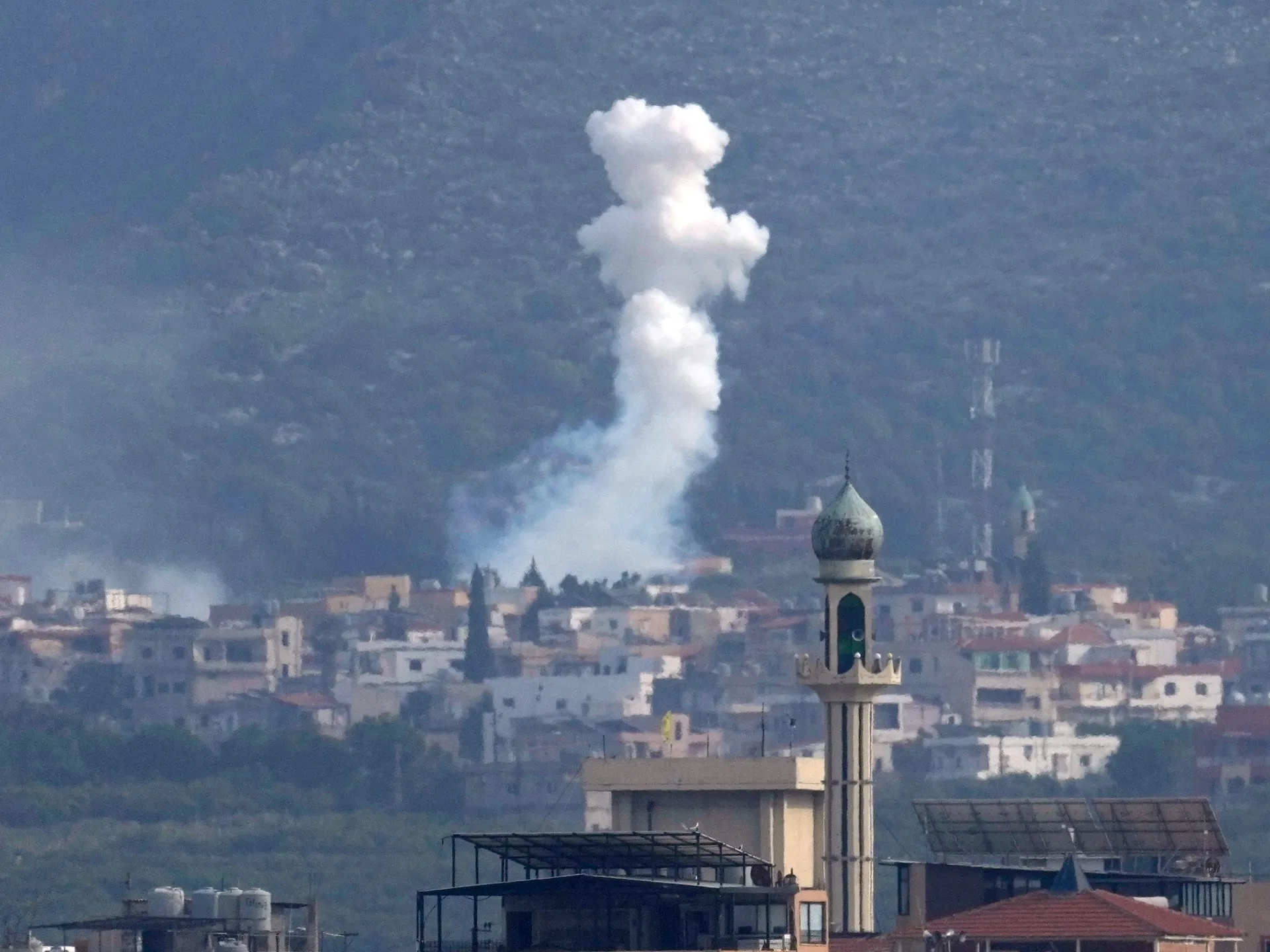
Israel is intensifying its military operations in southern Lebanon to create a completely population-free buffer zone, marking a significant shift from its previous invasions. In this context, military and strategic expert Brigadier General Elias Hanna confirmed that Israeli ground operations are expanding across five simultaneous axes aimed at controlling the area between the Blue Line and the Litani River.
Hanna explained that this approach fundamentally differs from that adopted by Israel in the past, where the security zone established between 1985 and 2000 included residents and was managed through local proxies. Today, the goal is complete evacuation and total destruction of what is estimated to be between 120 and 250 villages and towns, representing about 13% of Lebanon's territory.
Details of the Incursion
Journalist Mohammad Rammal showcased on an interactive map the details of the five axes of incursion, where Israeli forces are advancing from the direction of Khiyam and Adaysi-Tayyiba towards the valley of the Litani River, and from the direction of Aytaroun in an attempt to besiege the city of Bint Jbeil. Forces are also advancing from the direction of Ayt al-Shab and Qozah to tighten the cordon around Bint Jbeil from the west, in addition to the axis of Naqoura, which has reached the town of Al-Bayyadah overlooking the southern coast of the city of Tyre, approximately 8 kilometers away.
Rammal noted that the depth of the incursion ranges between 6 and 14 kilometers from the border line, while the Lebanese army has withdrawn to a depth of 10 kilometers inland, which represents the maximum interim limit for the Israeli incursion according to the nature of the terrain and elevations.
Background & Context
Brigadier General Hanna pointed out the strategic importance of the Hjir Valley as the central target for Israeli advancement, recalling the battle of the "Tank Cemetery" that took place in this valley in 2006. He explained that the Israeli army relies on a maneuvering strategy, avoiding direct confrontation in difficult urban areas, thus securing Bint Jbeil without entering it and continuing towards Deir Siryan and the Hjir Valley.
Hanna also indicated that Hezbollah today is different from what it was in 2006, as it relies on decentralized guerrilla warfare based on drones, anti-tank missiles, and Katyusha rockets, benefiting from prior deployment in areas such as the Hammoul Valley, which is a strategic site prepared by the party before the war.
Impact & Consequences
Regarding the rapidly evolving field developments, Hanna warned of targeting a site for UNIFIL forces in the town of Atchit in southern Lebanon, noting that this is not the first time, as UN forces were previously targeted in Qana in 1996, and this has recurred in 2023, 2024, and 2025, indicating an escalation in operations and an expansion of targeting to include international forces.
Israeli Defense Minister Israel Katz recently highlighted Israeli intentions when he announced the army's determination to impose control over vast areas of southern Lebanon, extending to the Litani River, in a statement that early reveals an Israeli tendency to expand the scope of aggression.
Regional Significance
On March 2, Hezbollah launched a series of missile and drone attacks targeting military sites and Israeli settlements in response to the assassination of Iranian leader Ali Khamenei and ongoing Israeli violations of Lebanese territory, despite a ceasefire agreement established since November 2024.
Concerns are growing over escalating tensions in the region, as these military operations could exacerbate humanitarian conditions and increase the suffering of civilian populations in southern Lebanon, necessitating urgent international action to protect civilians and ensure stability in the region.