Lebanon is experiencing one of the most challenging humanitarian crises in decades, as Israel combines its current aggression with a strategy of "forced displacement" and the destruction of vital infrastructure. These policies aim to impose a new geographical reality under the guise of "buffer zones", according to observers.
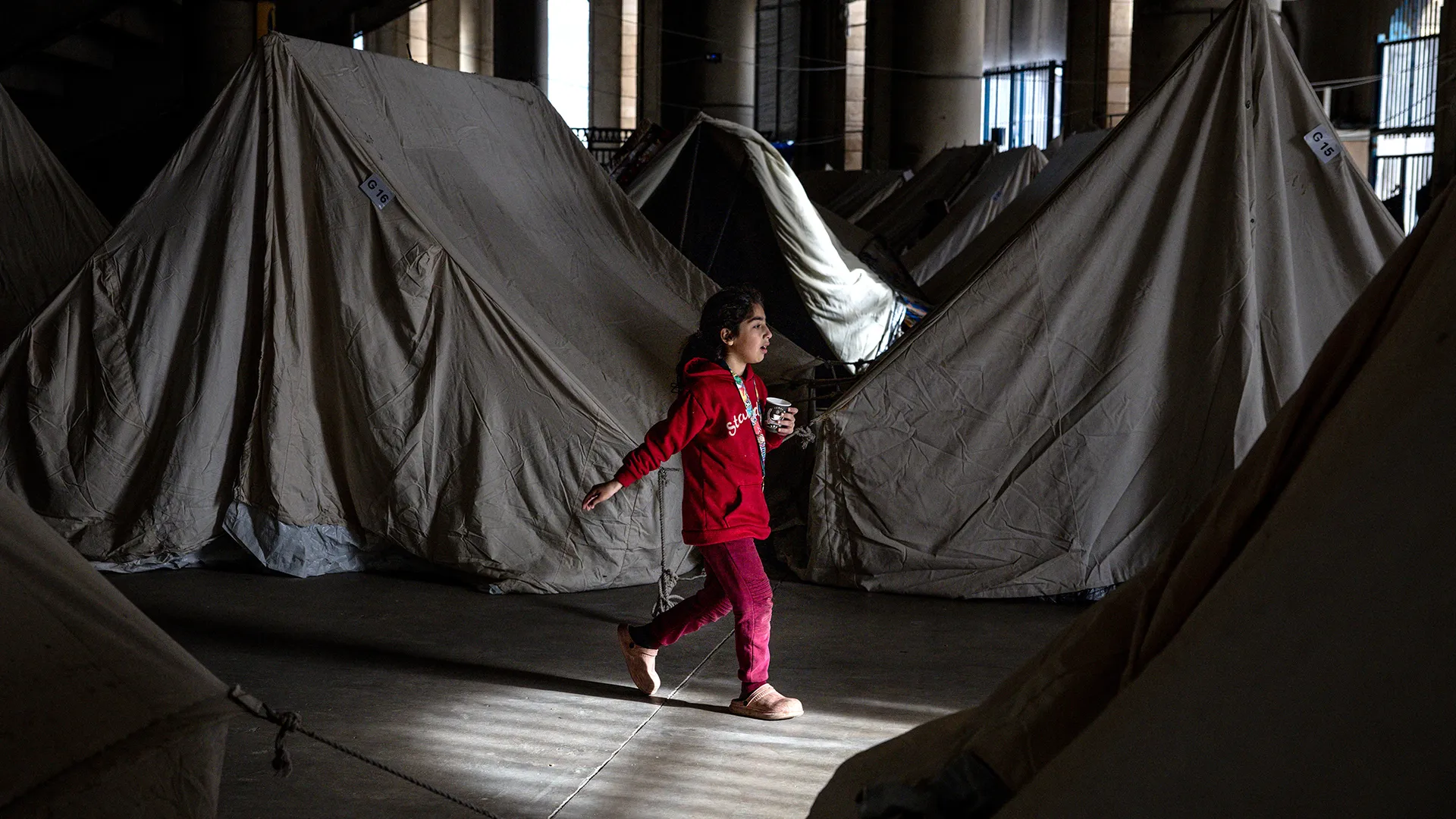
Al Jazeera correspondent, Salam Khadr, reported that the number of displaced individuals has exceeded 1.5 million according to United Nations estimates, including approximately 370,000 children. The shelter crisis has emerged as one of the biggest challenges, with state centers accommodating less than 200,000 displaced individuals, resulting in a paralysis of the educational sector as schools have been turned into shelters.
Details of the Event
In a dangerous field development, the Israeli army has bombed all vital bridges connecting both banks of the Litani River, starting from the Dalafah Bridge in the east to Qasmiyeh in the west. This bombing has completely isolated southern Litani, transforming it into a "buffer zone", where around 150,000 civilians are trapped and unable to flee or move amid intense shelling.
Field maps indicate that Israel has expanded the scope of its "evacuation orders" to extend beyond the Litani River to the southern banks of the Zahrani River, focusing on areas in the Western Bekaa. According to field analysis, this step aims to cut the "geographical connection" between Lebanese areas, completely emptying villages under the pretext of the presence of military infrastructure.
Context and Background
Brigadier General Elia Hna, a military and strategic expert, believes that Israel has shifted to a new military doctrine following the attacks on October 7, 2023, which surpasses previous "containment" tactics. Hna asserts that the new Israeli plan aims to transition the conflict into a "sustained war" based on three pillars, the foremost of which is to permanently shift the battle to the territories of others (Lebanon, Syria, Palestine) to ensure Israeli security.
The former brigadier general also points out that the new Israeli strategy aims to replicate the Gaza experience (the buffer zone) — where Israel controls 52% of the territory — and the Syrian Golan, imposing a new reality on southern Lebanon that exceeds the previous concept of the "security belt", which covered an area of 1,000 square kilometers.
Consequences and Impact
Hna considers the difference between the security belt that existed before 2000 and the current situation to be that Israel is now seeking a complete evacuation of the population (between 600,000 to 700,000 individuals) with a systematic destruction of villages to prevent their return. This effectively makes it a "vacant and occupied area".
Concerns are growing that these policies will exacerbate the humanitarian situation in Lebanon, where displaced individuals are suffering from severe shortages of shelter and basic resources, threatening the country's stability and complicating political and social crises.
Impact on the Arab Region
These developments indicate that the situation in Lebanon could significantly affect regional stability, as humanitarian crises may escalate tensions between neighboring countries. Furthermore, the continuation of Israeli aggression may open the door for reactions from Palestinian and Lebanese factions, complicating the security landscape in the region.
In conclusion, it appears that Israel is seeking to reshape the geographical reality in Lebanon, raising concerns about the future and stability of the region. These policies could present the entire area with new challenges that require an urgent response from the international community.