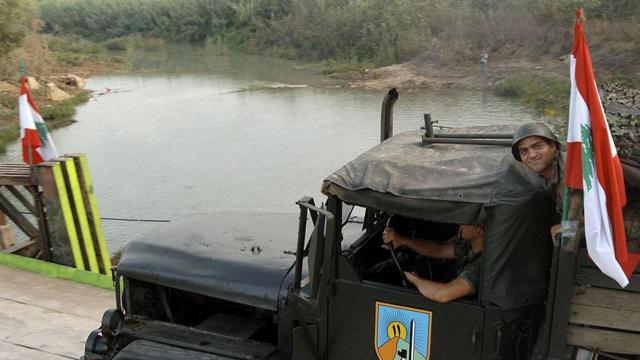
In a new escalation of tensions in the region, Israeli Defense Minister Yoav Gallant announced on Tuesday the intention of the Israeli army to assert control over vast areas in southern Lebanon, reaching the Litani River. These statements come at a time when Lebanon is witnessing a mass exodus of hundreds of thousands of citizens, amid escalating Israeli military operations against Hezbollah.
Gallant confirmed in a televised statement that the Israeli army would continue its operations in Lebanon "with full force" against Hezbollah, raising concerns about the humanitarian implications of this escalation in Lebanon, which is already suffering from multiple crises.
Details of the Announcement
Gallant's statements come at a sensitive time, as Lebanon grapples with a severe economic crisis, in addition to the repercussions of the ongoing conflict with Israel. Media reports have documented the displacement of hundreds of thousands of Lebanese from southern regions, complicating the humanitarian situation in the country. Gallant indicated that the military operations aim to protect Israeli security, but they simultaneously raise alarm in the international community regarding the deteriorating humanitarian conditions in Lebanon.
Moreover, these Israeli statements come amid increasing tensions between Hezbollah and Israel, with both sides exchanging accusations of inciting violence. Recent events have shown that the situation in the region may spiral out of control, necessitating international intervention to curb the escalation.
Background & Context
The conflict between Lebanon and Israel dates back decades, with the region witnessing several wars and conflicts, the most notable being the 2006 war. Since then, tensions have remained high, with Hezbollah seeking to bolster its influence in southern Lebanon while Israel continues its military operations in the area under the pretext of combating terrorism.
The Litani River area is strategically important for Israel, as it forms a natural border with Lebanon. Israel has repeatedly attempted to control this area, further complicating the political and economic situation in Lebanon.
Impact & Consequences
Forecasts suggest that the Israeli military escalation could exacerbate the humanitarian situation in Lebanon, where residents are suffering from severe shortages of basic resources. Additionally, the mass displacement may increase pressures on the Lebanese government, which faces significant challenges in managing multiple crises.
Furthermore, this escalation could provoke reactions from the international community, with expectations of increased calls to cease hostilities and seek peaceful solutions to the conflict. There are also concerns that the escalation could lead to a new war in the region, which would impact regional stability as a whole.
Regional Significance
The conflict between Lebanon and Israel represents a part of a larger picture of conflicts in the Arab region, where political and economic interests intersect. The military escalation could affect relations between Arab countries and Israel, as there may be increased pressure on Arab governments to take a more active role in mediation.
Moreover, the situation in Lebanon could impact Palestinian refugees in the region, as the number of displaced individuals may rise if conditions worsen. Thus, events in Lebanon pose a challenge not only for Lebanon but for the entire Arab region.
In conclusion, the situation in Lebanon remains in a state of anticipation, as both local and international reactions to the Israeli military escalation are being closely monitored. There is hope that the international community can intervene to halt hostilities and achieve peace in the region.