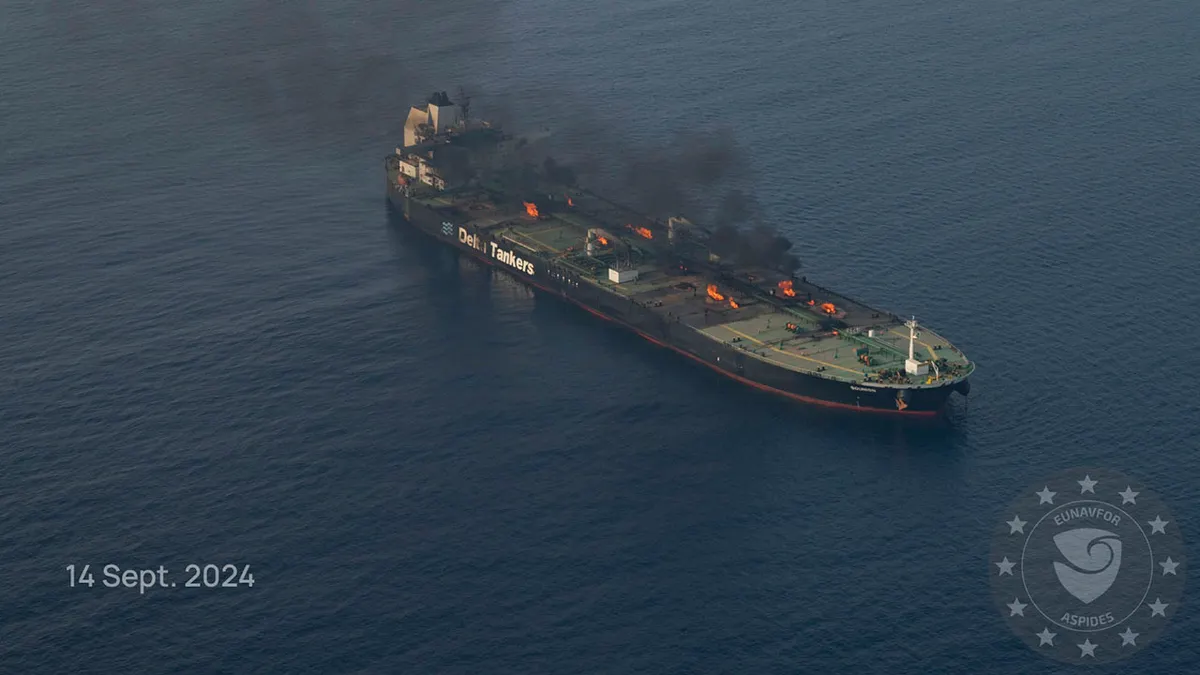
Israel announced that it will respond to the attacks targeting the city of Eilat, where Israeli air defenses successfully intercepted missiles and drones launched from Yemen. These statements come at a sensitive time, as tensions in the region have notably increased.
In detail, Israeli military sources confirmed that the attacks aimed at Eilat were successfully thwarted, and that Israeli forces are prepared to respond to any future threats. Officials indicated that these attacks reflect an escalation in the military activities of the Houthis, who continue to target Israeli territory.
Details of the Incident
The attacks targeting Eilat followed a series of fiery statements from the Houthis, who declared their capability to strike deep into Israeli territory. Images circulated on social media captured moments of missile interception, raising significant concern within Israeli circles.
In this context, the Israeli Minister of Defense stated that his country would not hesitate to use force against any threats coming from Yemen, emphasizing that the Houthis must understand that any aggression against Israel will be met with a harsh response. He also added that Israel would work to enhance its defensive capabilities to counter any future attacks.
Background & Context
Historically, relations between the Houthis and Israel have seen increasing tensions, especially following the outbreak of war in Yemen. The Houthis, backed by Iran, consider Israel a primary enemy and have carried out several missile attacks against Israeli targets in the past.
These events occur amid escalating conflict in the region, where Iran continues to support the Houthis in Yemen, complicating the security situation in the Middle East. Additionally, the situation in Yemen remains dire, with the Yemeni people suffering from the repercussions of a war that has persisted for years.
Impact & Consequences
The recent escalation could lead to increased tensions between Israel and Iran, as Israel views any threat from the Houthis as a direct threat from Iran. This escalation may contribute to mounting pressures on the Israeli government, which faces both internal and external challenges.
International reactions may also play a role in this context, as some countries are expected to call for restraint and avoidance of military escalation. However, Israel may find itself compelled to take more decisive steps to protect its national security.
Regional Significance
This escalation could significantly affect the situation in the Arab region, potentially leading to increased tensions between Arab states and Israel. Furthermore, any military escalation could impact peace efforts in the region and exacerbate the suffering of civilians in Yemen.
In conclusion, the situation in the region remains fragile, with increasing threats from the Houthis, necessitating urgent international action to ensure security and stability in the area.