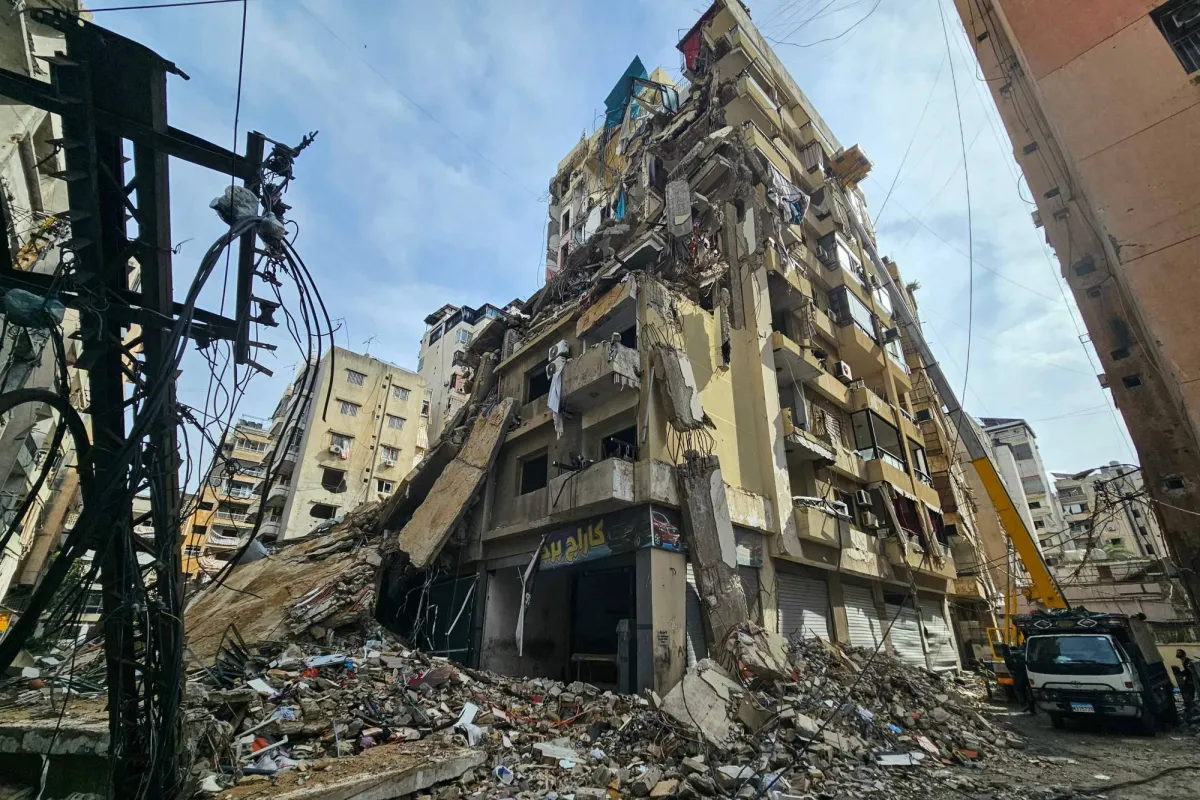
Clashes are escalating in Lebanon as Israeli forces seek to impose new realities on the ground. The Lebanese Defense Minister reported that Israeli troops have advanced an estimated 8 kilometers into Lebanese territory, beginning the demolition of homes in the villages they entered, a move aimed at preventing the return of residents and establishing a long-term military presence.
In this context, Israeli Prime Minister Benjamin Netanyahu announced that his forces are working to expand the buffer zone in southern Lebanon, indicating the establishment of a security area to prevent any infiltration towards the Galilee and northern borders. These statements reflect a clear Israeli intention to impose a security strip by force.
Details of the Incident
Earlier, the Israeli army expanded its pressure by issuing immediate evacuation warnings to residents of seven southern villages, requesting their relocation to the north of the Zahrani River. The targeted villages include Ma'shouq, Burj al-Shimali, Rashidiya, Deir Kifa, Qaqaiya al-Jisr, Wadi Jilo, and Al-Bas. Intense Israeli bombardment continues to target multiple areas, including Qalili, Qalaouiyeh, and Ras al-Ain, with airstrikes and drones hitting regions such as Dardghiya, Al-Majadel, and Al-Mansouri.
Reports indicate that over 70 rockets were fired towards Al-Taybeh, in an Israeli attempt to advance towards the Litani River under heavy air cover, reflecting a transition of operations to a phase of establishing new lines of contact. Clashes are concentrated on the commanding hills, with engagements recorded around Al-Bayada and Shama, in an attempt to gain fire control over the heights overlooking the south.
Background & Context
These developments occur within the context of escalating military tensions in the region, where lessons from the 2006 war are evident in Israeli strategy. Israel has abandoned the rapid push towards direct engagement, opting instead for a slow, calculated advance accompanied by overwhelming firepower aimed at destroying the combat environment before entering. This strategy is informally known as the "scorched earth policy," where Israeli forces avoid entering any town before subjecting it to near-total destruction.
Retired Brigadier General George Nader noted that Israel is deploying massive forces to the south, with military divisions numbering between 15,000 and 18,000 soldiers each, indicating the presence of tens of thousands of fighters in the field. This mobilization reflects a readiness for a long and open war, with the battle taking on an existential character for both sides.
Impact & Consequences
Concerns are growing that these military operations could lead to greater escalation in the region, heightening tensions between Israel and Hezbollah. The use of "explosive devices" in Hezbollah's statements indicates a shift in combat to within the villages, complicating the military situation further. This pattern of operations explains the slow Israeli advance in contrast to its significant destructive capacity.
The warnings issued by the Israeli army to residents are not merely military measures; they serve as a psychological and social pressure tool aimed at pushing the population towards displacement, leading to additional internal crises. Forced displacement, even if conducted under the guise of warnings, places local communities in front of complex living and social challenges.
Regional Significance
These events coincide with rising regional tensions, as neighboring countries are directly affected by the escalation of conflict in Lebanon. The continuation of Israeli military operations in southern Lebanon could have negative repercussions on regional stability, complicating the political landscape in the area.
In conclusion, the situation in southern Lebanon appears poised for further escalation, as Israel seeks to achieve its military objectives through the use of excessive force, placing the region in a state of ongoing instability.