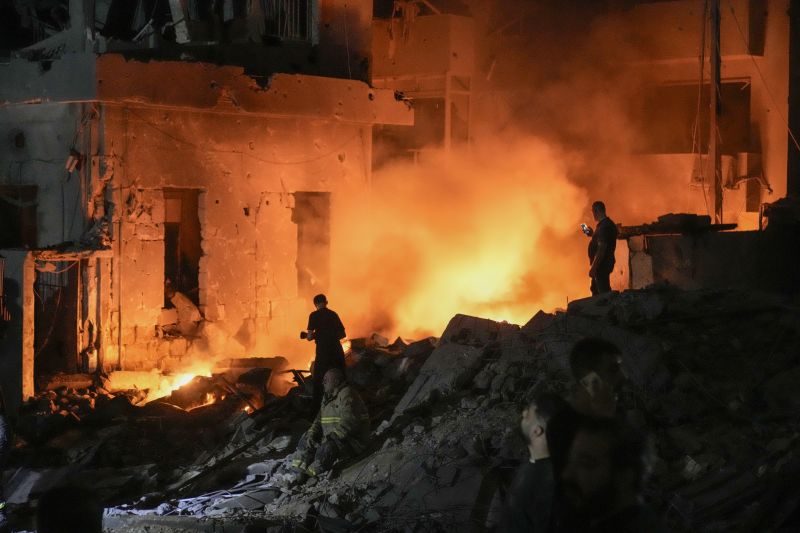
An Israeli airstrike targeting the Jnah area in Beirut has resulted in the deaths of 5 individuals and injuries to 21 others, according to local sources. The attack occurs at a time when the region is witnessing a significant escalation in military activities, raising concerns among the local population.
Events in Lebanon are unfolding rapidly as tensions rise between armed factions and the Israeli army. This airstrike is considered part of a series of reciprocal attacks that have occurred along the Lebanese-Israeli border in recent times.
Details of the Incident
The attack, which took place late last night, targeted a residential area in Jnah, leading to widespread destruction of property. Ambulance teams rushed to the scene to transport the injured to nearby hospitals, where some were reported to be in critical condition.
This incident comes amid rising tensions in the region, where recent days have seen exchanges of fire between Israeli forces and Palestinian factions in Gaza, heightening fears of a larger escalation that could impact regional security.
Background & Context
Lebanon, which has been grappling with compounded economic and political crises, has witnessed a rise in military tensions along its southern borders in recent years. These events occur at a sensitive time, as Lebanon prepares to face multiple internal and external challenges.
The tensions between Lebanon and Israel are not new, with roots extending back decades of conflict. However, recent events suggest that the situation may be heading towards further escalation, particularly with the increase in military activities along the border.
Impact & Consequences
The recent attack could lead to a greater military escalation in the region, threatening Lebanon's stability and exacerbating the suffering of the Lebanese people, who are already facing multiple crises. Additionally, this escalation may affect relations between Lebanon and neighboring countries, intensifying regional tensions.
The international community is closely monitoring the situation, as recent developments may require urgent diplomatic interventions to avoid a larger escalation that could lead to a comprehensive conflict in the region.
Regional Significance
The events in Lebanon have far-reaching implications for the Arab region, reflecting a state of instability that could affect neighboring countries. Military escalation may lead to an influx of refugees and increase the burdens on host countries.
Furthermore, these events may reopen discussions on security and peace issues in the region, necessitating diplomatic moves by Arab nations and the international community to resolve ongoing conflicts.
The escalation of events in Lebanon reflects a continuous state of tension in the region, requiring all concerned parties to work towards calming the situation and avoiding an escalation that could have dire consequences for all.