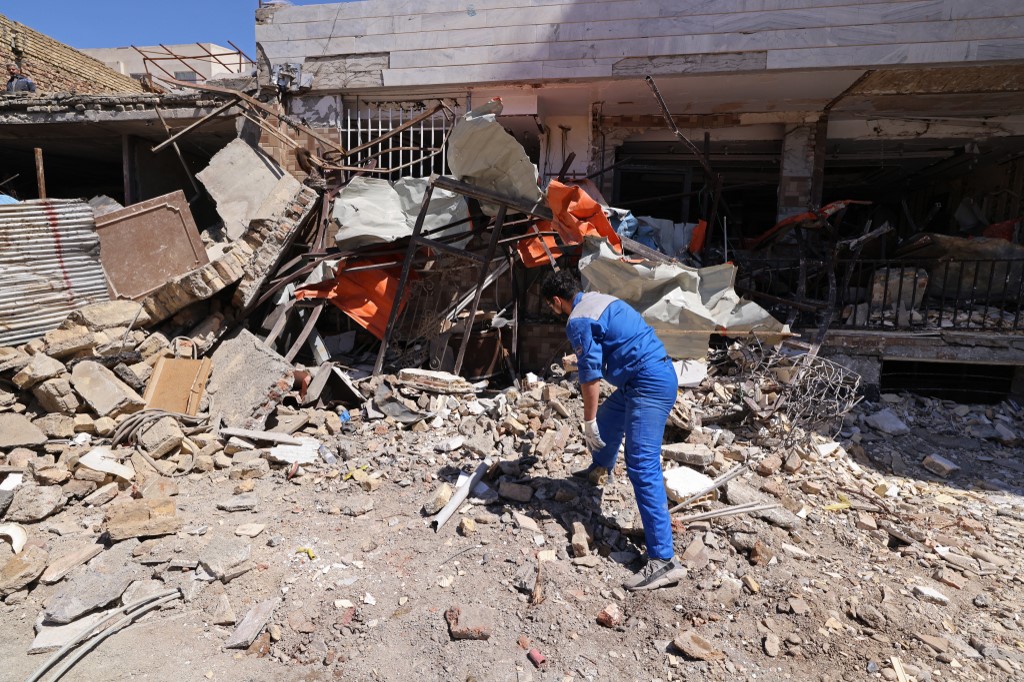
An Israeli airstrike destroyed a bridge connecting the towns of Sahmar and Mashghara in eastern Lebanon on Friday, according to Lebanese media reports. The National News Agency, a government agency, confirmed that Israeli warplanes targeted the bridge, leading to its complete destruction.
Local reports also indicated that a nearby second bridge was also bombed, escalating tensions in the area. This attack comes after previous warnings from the Israeli army, which indicated that it would target two other bridges over the Litani River in the region.
Details of the Incident
This airstrike is part of a series of attacks launched by Israel on infrastructure in Lebanon, having previously targeted five other bridges over the Litani River in the south, including most of the main roads crossing this waterway. These attacks occur at a sensitive time, as the region is experiencing heightened military and political tensions.
It is noteworthy that these airstrikes come in the context of the ongoing conflict between Israel and Hezbollah, where the border between the two countries has seen an escalation of hostilities in recent months. These events have raised concerns about a larger escalation that could affect the stability of the entire region.
Background & Context
Historically, the Lebanese-Israeli border has been a theater of conflicts and disputes. Since 2006, when the Second Lebanon War broke out, the region has witnessed increasing tensions between Israel and Hezbollah. These tensions have led to a series of clashes and retaliatory attacks, negatively impacting civilians on both sides.
In recent years, Israel has intensified its attacks on Lebanon, targeting Hezbollah's infrastructure and military sites. This escalation reflects an Israeli policy aimed at undermining Hezbollah's capacity to carry out military operations against it, but at the same time, it increases the suffering of Lebanese civilians.
Impact & Consequences
These Israeli airstrikes on Lebanon are part of a broader strategy aimed at enhancing Israeli security by destroying Hezbollah's military capabilities. However, this strategy may also exacerbate the humanitarian situation in Lebanon, where the Lebanese people are suffering from severe economic and social crises.
Moreover, these attacks could provoke reactions from Hezbollah, which may feel compelled to respond to these aggressions, increasing the risk of military escalation. Should this occur, it could lead to a larger conflict in the region, affecting the stability of neighboring countries.
Regional Significance
The repercussions of these airstrikes extend beyond Lebanese borders, affecting regional stability in general. The tensions between Israel and Hezbollah could destabilize security in neighboring countries such as Syria and Palestine, where armed groups may exploit these events to enhance their activities.
Furthermore, the continued military escalation in Lebanon could impact peace efforts in the region and complicate relations between Arab countries and Israel. Under these circumstances, it becomes essential for the concerned parties to work towards de-escalating the situation and avoiding further escalation.