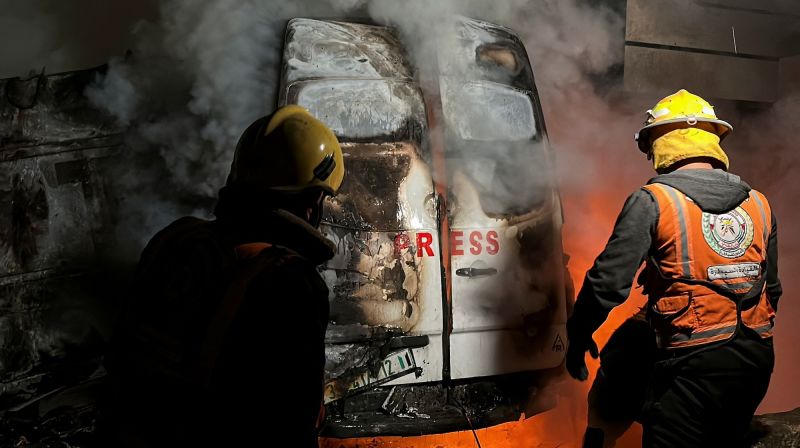
The International Federation of Journalists strongly condemned the assassination of three journalists in an Israeli airstrike targeting southern Lebanon, an incident that highlights the increasing risks faced by journalists in conflict areas. The incident occurred at a sensitive time, as tensions in the region escalate, raising concerns about the safety of journalists covering the events.
The victims were journalists who were performing their professional duties in covering ongoing events in the area. The International Federation of Journalists denounced this act, stating that targeting journalists is a blatant violation of human rights and freedom of expression.
Details of the Incident
In detail, reports indicate that the Israeli airstrike targeted a residential area in southern Lebanon, where the journalists were working to cover local events. The airstrike resulted in the deaths of three of them and injuries to others, provoking angry reactions from human rights organizations and the international community.
The journalists who lost their lives were known for their coverage of events in Lebanon and had significantly contributed to conveying the truth to the world. The International Federation of Journalists called for a thorough investigation into the incident and accountability for those responsible.
Background & Context
This incident comes amid rising tensions between Israel and Hezbollah, with the region witnessing numerous clashes and airstrikes in recent months. Historically, conflict zones in the Middle East have always been dangerous environments for journalists, who face significant risks while performing their duties.
Journalists in Lebanon, especially in border areas, face considerable challenges, including direct threats from conflicting parties. This incident reflects the ongoing dangers that journalists encounter in their quest to deliver information to the public.
Impact & Consequences
The ramifications of this incident could be far-reaching, potentially leading to increased international pressure on Israel regarding its practices in conflict zones. It may also affect press freedom in Lebanon, as journalists might feel more fearful about covering events.
International human rights organizations may escalate their demands for the protection of journalists, which could lead to changes in policies regarding journalist safety in conflict areas. Additionally, this incident may contribute to strengthening efforts to establish international mechanisms for the protection of journalists.
Regional Significance
This incident highlights the risks faced by journalists across the Arab world, where political tensions and armed conflicts are on the rise. Journalists in Arab countries often face threats and assaults, reflecting a state of instability in the region.
These conditions require the international community to take urgent steps to protect journalists and ensure freedom of expression. Targeting journalists is not merely an attack on individuals but an assault on the right to knowledge and information.
The assassination of these three journalists underscores the urgent need for the protection of journalists in conflict zones, and the international community must take a firm stance against these violations. Effective mechanisms must be in place to protect journalists and ensure their safety while carrying out their professional duties.