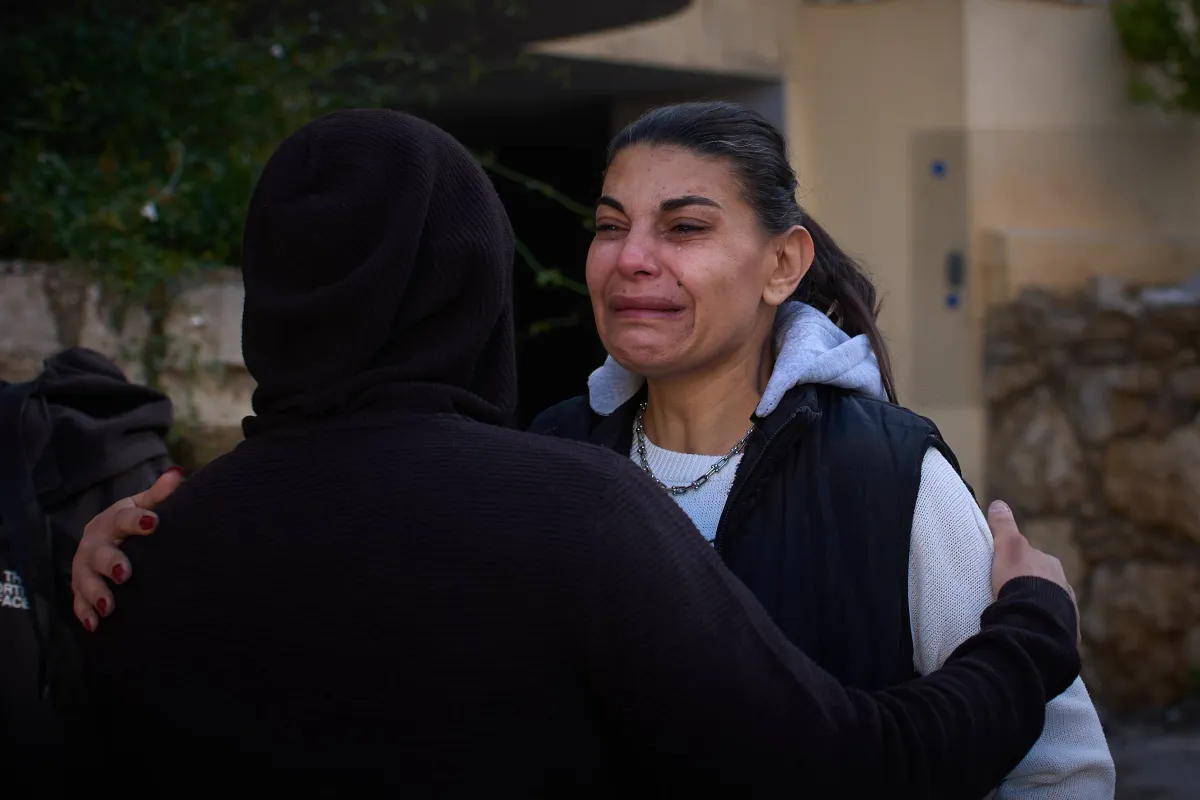
An Israeli airstrike targeting a building in the predominantly Christian area of Ain Saadeh east of Beirut on Sunday evening resulted in the deaths of a Lebanese Forces official, his wife, and their neighbor. The incident has exacerbated the divide between host communities and displaced individuals from southern regions and the southern suburbs, most of whom belong to the supporters of Hezbollah and the Amal Movement.
Israel accuses Hezbollah leaders and members of positioning themselves within civilian residential areas and using the population as human shields. Israeli army radio reported that the assassination attempt on Sunday targeted a member of the Palestinian Brigade affiliated with the Iranian Quds Force, but it failed.
Details of the Incident
A significant state of tension prevailed in the targeted area late Sunday into Monday, with some local residents and displaced individuals calling for the expulsion of the displaced from the areas they sought refuge in, to avoid further Israeli military operations. Investigations are ongoing to determine whether a member of the Palestinian Brigade was present in the targeted building, as testimonies conflict regarding whether the apartment was rented or vacant.
Surveillance cameras recorded an individual speeding away on a motorcycle after the strike, but it remains unclear whether he was the intended target or a delivery worker. According to a security source, the incident resulted from an Israeli targeting operation, likely conducted by a naval vessel at sea.
Background & Context
Officials from the Lebanese Forces assert that Hezbollah elements were present in the targeted building, emphasizing the need for the state to mobilize all its agencies to prevent the recurrence of such incidents. The head of the Lebanese Forces, Samir Geagea, called on security agencies to compile accurate lists of displaced persons in safe areas.
The Free Patriotic Movement also urged Hezbollah officials to bear moral responsibility by not mingling with civilians, arguing that this threatens civil peace and national cohesion.
Impact & Consequences
Concerns are growing that Israel may seek to incite chaos and tensions within the host communities of displaced persons. Political activist Mona Fayyad stressed the importance of the authorities and security agencies in containing any street unrest by enhancing their presence.
Lebanon is facing one of the most complex humanitarian crises in its modern history, with the number of displaced persons exceeding one million due to the ongoing war between Israel and Hezbollah. The international response has not matched the scale of the disaster, placing the Lebanese state before unprecedented challenges in managing this crisis.
Regional Significance
The events in Lebanon reflect a state of instability in the region, with rising tensions among different communities. The increasing humanitarian and economic crises in Lebanon could impact neighboring countries, necessitating a response from the international community.
In conclusion, the situation in Lebanon remains tense, and the international community needs to intensify its efforts to support Lebanon in facing the multiple crises it is experiencing.