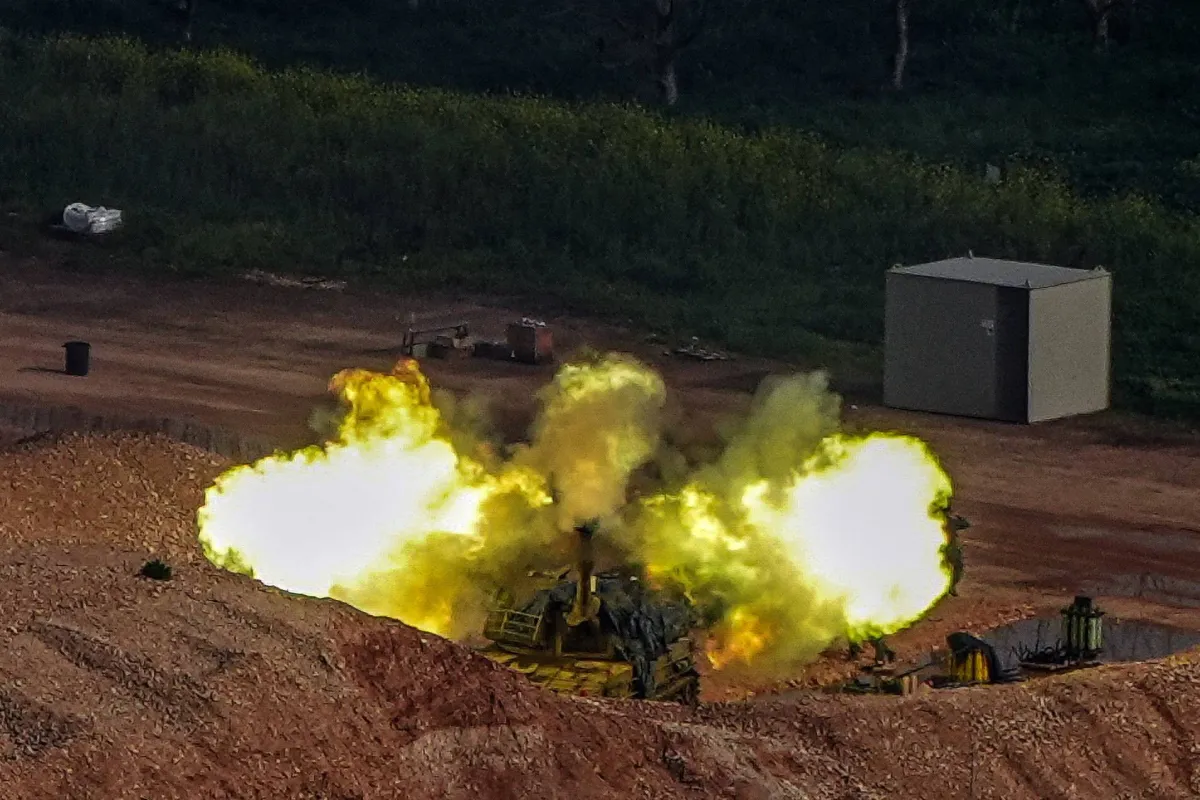
Two paramedics from the Islamic Health Authority were martyred on Sunday due to an Israeli airstrike that targeted their center near the Bint Jbeil Hospital in southern Lebanon. This attack comes amid escalating Israeli military operations in the region, raising concerns about the increasing violence and its impact on civilians.
According to the National News Agency, the airstrike resulted in the deaths of the paramedics, while another strike targeted the health authority's center in the town of Deir Kifa without causing injuries. These events occur in a tense context where Israel intensifies its attacks on medical facilities, raising alarms about the safety of healthcare workers and patients alike.
Details of the Incident
Earlier, the Eastern Zawtar area was hit by an Israeli airstrike that resulted in the deaths of five paramedics from the Islamic Scout Movement, reflecting a notable escalation in Israeli attacks on medical teams. The Lebanese Ministry of Health has reported that the number of paramedics who have been martyred since the beginning of the war on March 2 has reached 42, highlighting the risks faced by medical teams in conflict zones.
On the other hand, Israeli army spokesperson Avichai Adraee claimed that Hezbollah is using ambulances for military purposes, warning that Israel would take action against any military use of medical facilities. These statements come at a sensitive time as fears grow over the targeting of civilians and health facilities.
Background & Context
The region has witnessed military escalation since the beginning of the war in October 2023, with Israel continuing its military operations against Hezbollah in Lebanon, while Gaza suffers from rising violence. Israeli airstrikes have resulted in the deaths of over 680 Palestinians in Gaza since the ceasefire began, reflecting the deteriorating humanitarian situation in the area.
These events coincide with rising tensions between Israel and Iran, as Israel conducts a military campaign against Hezbollah, complicating the security situation in the region. The use of ground-to-air missiles by Hezbollah indicates a qualitative development in the conflict, increasing the risk of military escalation.
Impact & Consequences
These airstrikes underscore the significant challenges faced by medical teams in conflict zones, as they are endangered due to armed conflicts. Targeting medical facilities constitutes a blatant violation of international humanitarian laws, prompting the international community to intervene to protect civilians and healthcare workers.
Concerns are growing that the continuation of violence may exacerbate the humanitarian conditions in Lebanon and Palestine, potentially contributing to an increase in the number of displaced persons and refugees. Moreover, military escalation could provoke reactions from the international community, impacting the political dynamics in the region.
Regional Significance
This military escalation in Lebanon and Palestine is part of a larger picture of the conflict in the Middle East, where political, military, and humanitarian dimensions intertwine. The ongoing violence in these areas may affect the stability of neighboring countries and complicate peace efforts in the region.
In conclusion, the situations in Lebanon and Palestine remain under observation, as the current state requires an urgent response from the international community to protect civilians and ensure the safety of healthcare workers.