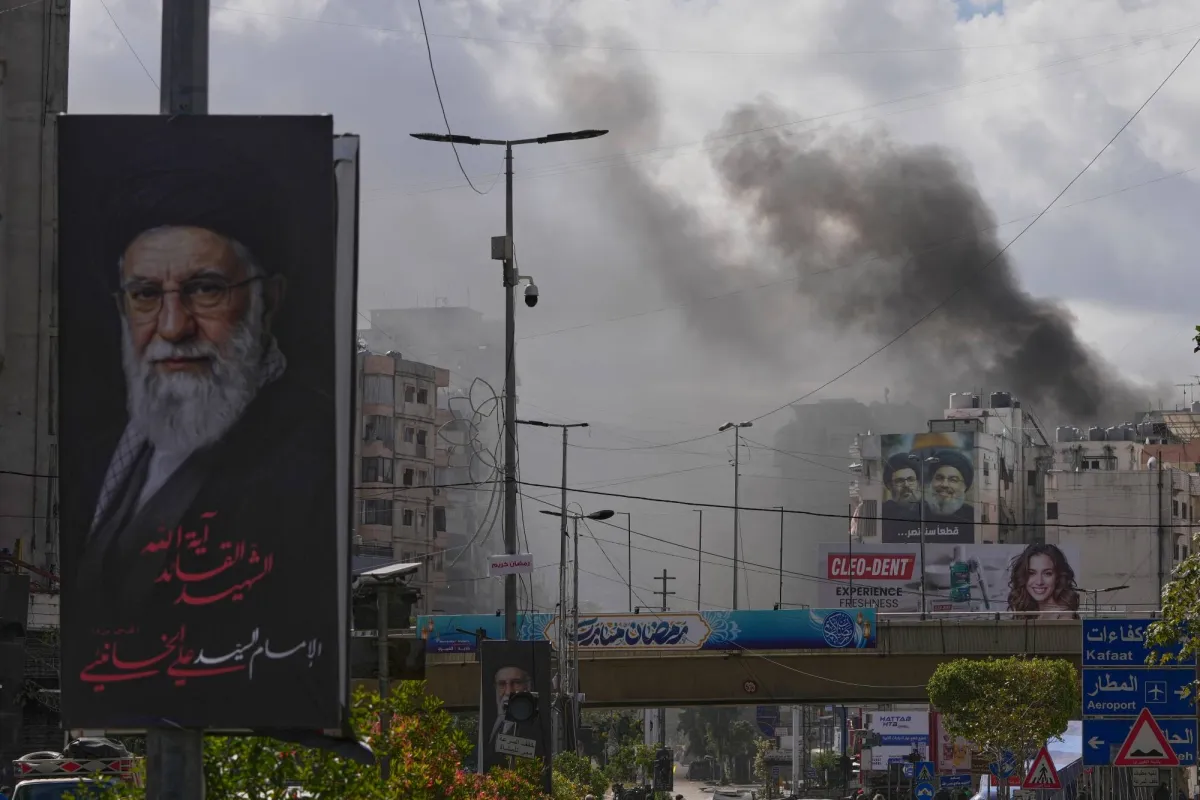
The Israeli military announced the death of several prominent Hezbollah leaders during an airstrike that targeted the Lebanese capital, Beirut, on Monday. The strike, which was carried out early in the day, targeted Hamza Ibrahim Rakhin, the deputy commander of the party's Unit 1800, along with the head of operations for the unit and another activist, according to press reports.
The Israeli military stated in a press release that Unit 1800 is responsible for coordinating between Hezbollah and Palestinian organizations in Lebanon, Gaza, and Syria, noting that Rakhin was overseeing the deployment of armed Palestinian elements in southern Lebanon to confront Israeli forces.
Details of the Incident
In a related context, the Israeli military reported that Hezbollah headquarters and command centers in Beirut were targeted, reflecting a continuing military escalation in the region. These airstrikes come at a sensitive time, as relations between Israel and Hezbollah have been increasingly tense since the beginning of March, following the party's attacks on Israel.
The Israeli military confirmed that the airstrikes are part of a response to attacks carried out by Hezbollah, which it considers a threat to Israeli security. It pointed out that the military operations aim to undermine Hezbollah's ability to carry out further attacks.
Background & Context
Historically, relations between Israel and Hezbollah have been marked by recurring tensions, with Hezbollah being one of the most prominent armed groups in Lebanon, known for its close ties with Iran. These tensions have increased in recent years, particularly after the escalation of conflict in the region and its impact on regional security.
It is noteworthy that Hezbollah has previously denied any direct link between its conflict with Israel and the ongoing conflict in Iran, as the party seeks to maintain its image as a national resistance force. However, recent events suggest that the conflict in the region may have broader implications for Lebanese and regional security.
Impact & Consequences
Analysts expect that the Israeli airstrikes will lead to further escalation in the conflict between Hezbollah and Israel, potentially negatively impacting the security situation in Lebanon. These events may also increase tensions between Iran and its allies in the region, threatening regional stability.
These developments are likely to affect Lebanese-Iranian relations, as the Lebanese government seeks to maintain its sovereignty and stability amid external pressures. Additionally, the military escalation could hinder any diplomatic efforts aimed at resolving the conflict between the involved parties.
Regional Significance
These events are part of a broader landscape of tensions in the Middle East, where regional and international interests intersect. The Israeli airstrikes may lead to increased divisions among political forces in Lebanon, reflecting the challenges faced by the Lebanese government in managing relations with Iran and Hezbollah.
In conclusion, the situation in Lebanon remains under scrutiny, with growing concerns about a military escalation that could have serious repercussions for security and stability in the region.