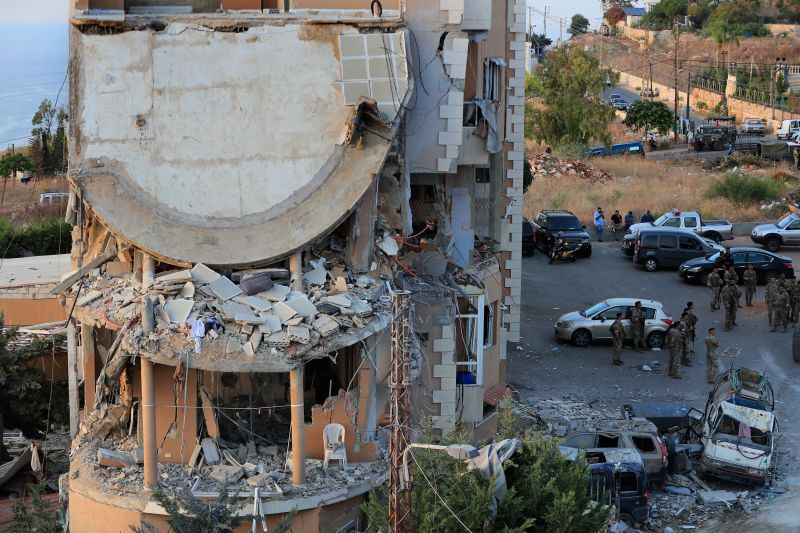
An Israeli airstrike on Sunday resulted in the deaths of seven individuals, including six from the same family, in the Kfar Hatt area, over 40 kilometers from the Israeli border. Lebanese civil defense sources confirmed the details of the incident, noting that the attack occurred early in the day, provoking angry reactions from local residents.
This airstrike is considered one of the deadliest attacks in the region in some time, as tensions between Israel and Lebanese Hezbollah have escalated in recent months. Reports indicate that the victims were in their homes when the airstrike targeted them, raising questions about international laws regarding attacks on civilians.
Details of the Incident
The attack took place in Kfar Hatt, known as a quiet residential area where many families live. Reports have indicated that the victims were from a single family, which has intensified the sorrow and pain within the local community. Rescue teams rushed to the scene, where the injured were transported to nearby hospitals.
This airstrike comes at a sensitive time, as the region is witnessing an escalation in military actions between Israel and Hezbollah, increasing concerns about rising violence in Lebanon. The Lebanese government condemned the attack, deeming it a blatant violation of Lebanese sovereignty.
Background & Context
Historically, the Lebanese-Israeli border has seen ongoing tensions, with several wars and conflicts over the years. Since 2006, when the Second Lebanon War broke out, clashes between the two sides have not ceased, exacerbating the humanitarian situation in the region. The presence of Hezbollah as a military force in Lebanon complicates matters further, as some view it as resistance to occupation, while others see it as a threat to regional security.
In recent years, pressures on Lebanon have increased due to economic and political crises, making the situation more fragile. These conditions have exacerbated tensions among various Lebanese factions, complicating the political landscape.
Impact & Consequences
This airstrike represents a serious escalation in the ongoing conflict and may lead to military responses from Hezbollah, potentially increasing the cycle of violence in the region. Additionally, this incident could affect relations between Lebanon and Israel, heightening international pressures on the involved parties to seek a peaceful resolution.
Moreover, the killing of innocent civilians in such attacks raises concerns within the international community regarding human rights and international laws. This incident may open the door for renewed calls for justice for the victims and increase pressure on the Lebanese government to address the deteriorating security situation.
Regional Significance
Events in Lebanon serve as an indicator of the security situation in the Arab region as a whole. The tensions between Israel and Hezbollah are not merely a local issue but affect the entire regional stability. The escalation of violence in Lebanon may also impact neighboring countries, such as Syria and Palestine, complicating the conditions in the Middle East.
In conclusion, events in Lebanon remain under scrutiny, as the international community looks for peaceful solutions that ensure the rights of civilians and restore stability to the region. Continued violence will only exacerbate humanitarian and political crises in Lebanon and the surrounding area.