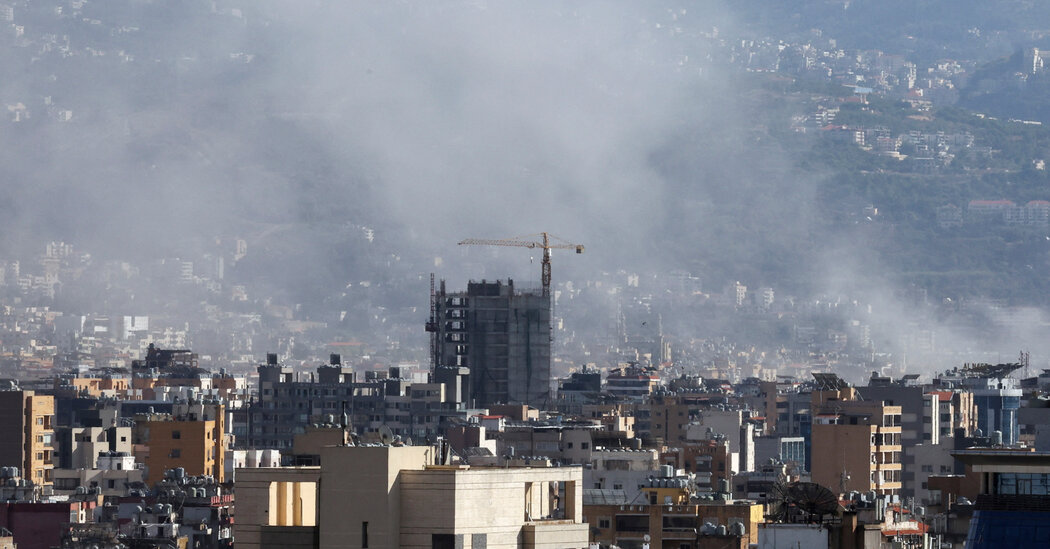
Six civilians were killed in an Israeli airstrike targeting the town of Maroub in southern Lebanon, sparking angry reactions in the region. This attack comes at a sensitive time marked by escalating tensions between the two sides.
The town of Maroub has been one of the areas experiencing increased tensions recently, with repeated Israeli attacks on Lebanese territory. Lebanese officials condemned this attack, emphasizing the need to protect civilians and halt the aggressions.
Details of the Incident
On Wednesday morning, Israeli warplanes launched an airstrike on Maroub, resulting in the deaths of six individuals and injuries to others. According to local sources, the strike targeted a residential area, raising concerns about civilian casualties. The injured were transported to nearby hospitals for treatment.
This airstrike is part of a series of attacks carried out by Israel against targets in Lebanon, heightening fears of a larger military escalation. Images circulated on social media showcased the destruction caused by the strike, reflecting the scale of the humanitarian disaster.
Background & Context
Historically, Lebanese-Israeli relations have been marked by ongoing tensions, particularly following the 2006 war. Since then, numerous incidents have escalated the situation, including repeated attacks on Lebanese territory. Hezbollah, which controls a significant part of southern Lebanon, is a key player in this equation, adopting a policy of responding to Israeli aggressions.
In recent years, Israel has intensified its military operations in the region, claiming to target Hezbollah positions. However, these operations often result in civilian casualties, complicating the humanitarian situation in Lebanon.
Impact & Consequences
This airstrike represents a serious escalation in the security situation in Lebanon and may provoke a response from Hezbollah, which may feel compelled to retaliate against Israeli aggressions. Such escalation could draw the region into a broader conflict, increasing the suffering of civilians in Lebanon.
These events are expected to increase pressure on the Lebanese government, which is already facing economic and political challenges. The international community may intervene to pressure Israel to cease its attacks, but the outcomes remain uncertain.
Regional Significance
These events significantly impact the situation in the Arab region, reflecting the ongoing Israeli-Palestinian conflict and its effects on neighboring countries. The rise in violence could exacerbate the humanitarian conditions in Lebanon and heighten tensions between Arab states and Israel.
In light of these events, the international community must urgently act to halt the escalation and protect civilians, as the continuation of this situation could lead to dire consequences for regional security.