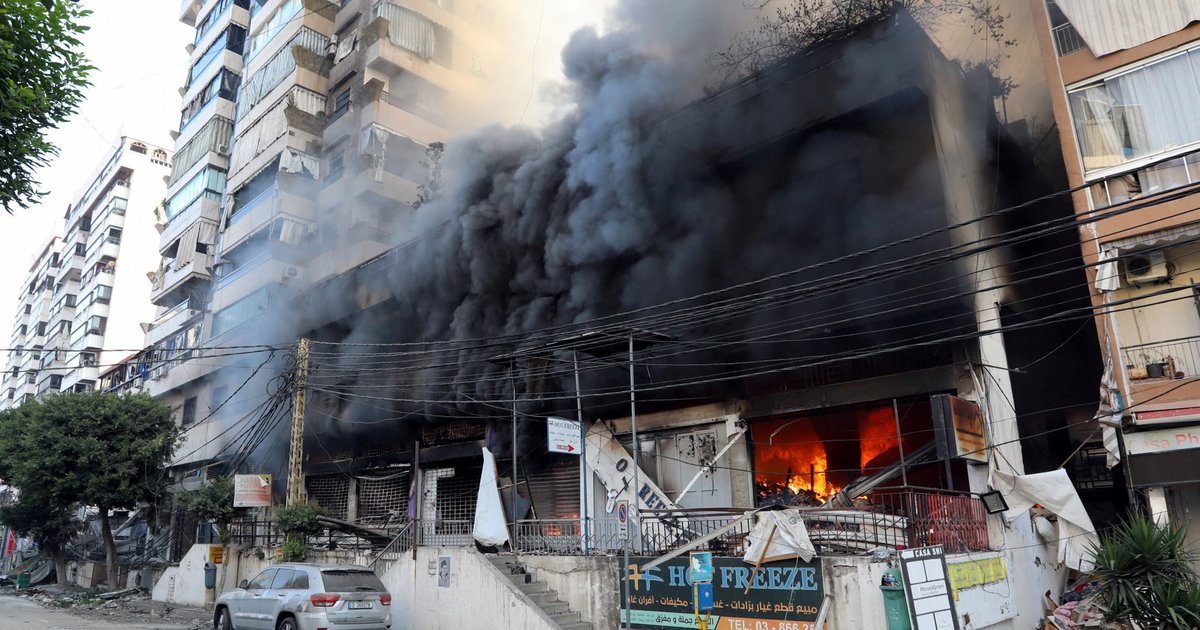
A new Israeli airstrike has caused thick columns of smoke to rise in southern Beirut, alarming local residents. This strike occurs amid escalating tensions in the region.
The southern suburbs are considered a stronghold for Hezbollah, which has long been a target of Israeli airstrikes. Local sources reported that the strike targeted an area near the party's strongholds, resulting in the destruction of some facilities and significant material damage.
Details of the Incident
According to reports, the airstrike took place during the night, with explosions heard in various parts of the suburb. Surveillance cameras captured smoke rising into the sky, causing panic among residents. Images circulated on social media showed the devastation in the area.
This airstrike comes at a time when tensions between Israel and Hezbollah are escalating, as military activities along the Lebanon-Israel border have recently increased. Israeli military sources confirmed that the strike targeted military sites belonging to Hezbollah, which is considered a continuous threat to Israeli security.
Background & Context
Historically, the southern suburbs of Beirut have witnessed numerous Israeli airstrikes, especially during past conflicts between the two parties. Hezbollah is one of the most prominent armed factions in Lebanon and has fought several wars with Israel, most notably the 2006 war. Since then, tensions between the two sides have persisted, with exchanges of attacks and threats.
In recent years, Israeli military activities in the region have increased, as Israel seeks to prevent Hezbollah from enhancing its military capabilities, particularly concerning missiles and advanced weapons. This military escalation occurs amid the political and economic crises facing Lebanon, complicating the security situation further.
Impact & Consequences
This airstrike is expected to escalate tensions between Israel and Hezbollah, which could negatively impact security in Lebanon and the region as a whole. The increase in Israeli airstrikes may provoke reactions from Hezbollah, which may feel compelled to respond to these aggressions.
These events serve as a reminder that the situation in Lebanon remains fragile, and any military escalation could have severe repercussions for civilians. Furthermore, the continuation of these airstrikes may affect international efforts to find a peaceful resolution to the Lebanese-Israeli conflict.
Regional Significance
The events in the southern suburbs of Beirut are part of a larger picture of tensions in the Arab region. The conflict between Israel and Hezbollah has implications for many Arab countries, as Hezbollah is considered part of the resistance axis that includes other armed factions in the region.
Moreover, the rising tensions in Lebanon could affect relations between Arab countries and Israel, especially amid attempts by some nations to normalize relations with Israel. This situation may deepen divisions within the Arab world and strengthen the position of armed factions opposed to normalization.
In conclusion, the southern suburbs of Beirut remain a hotspot in the Arab-Israeli conflict, and events there continue to attract international attention. The continuation of Israeli airstrikes could lead to greater escalation in the region, necessitating urgent international intervention to resolve the conflict.