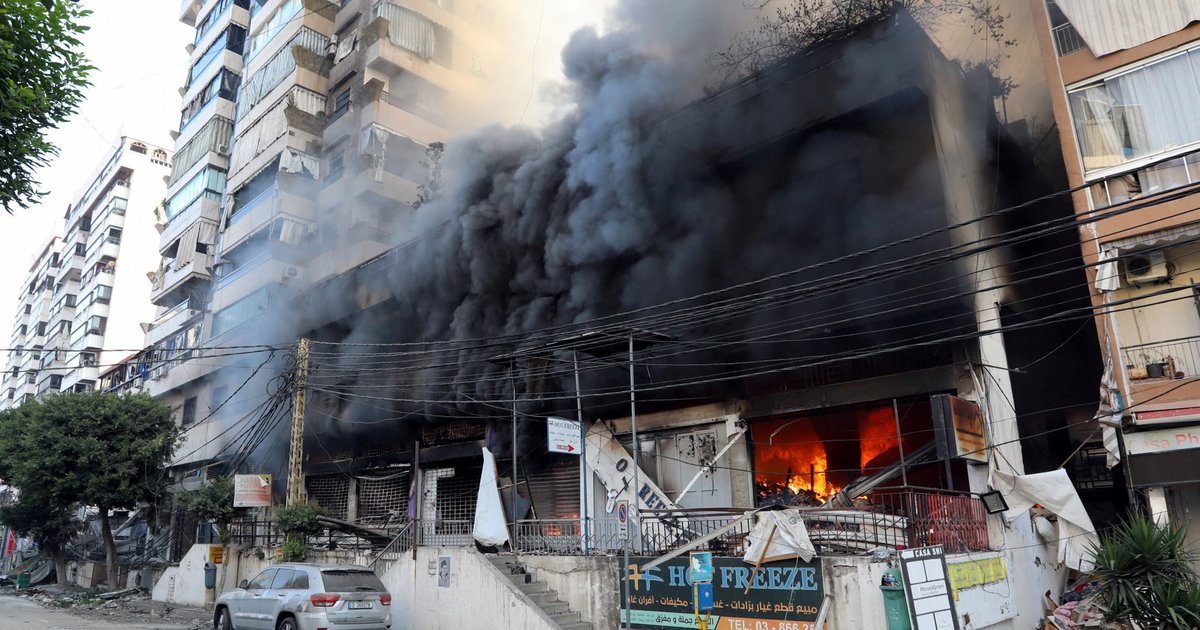
Israeli warplanes launched an airstrike on the southern suburb of Beirut, which is considered a stronghold of Hezbollah, on Monday morning. This action followed a warning issued by the Israeli army to residents of seven key neighborhoods in the area. The airstrike comes amid rising tensions between Israel and Hezbollah, raising fears of a broader escalation in the region.
The Israeli warning, delivered via loudspeakers, urged residents to leave their homes, indicating the Israeli forces' intention to carry out military operations in the area. AFP monitored the aftermath of the airstrike through live broadcasts, showing columns of smoke rising from the targeted areas, reflecting the extent of the destruction caused.
Details of the Incident
The southern suburb of Beirut is a strategic area for Hezbollah, housing numerous military facilities and vital infrastructure. In recent years, the region has witnessed several Israeli airstrikes, but this time it occurs at a highly sensitive moment, as tensions in the area escalate due to the situations in Palestine and Lebanon.
The Israeli army has not officially commented on the details of the airstrike, but reports suggest that the target was military sites belonging to Hezbollah. This escalation follows a series of tense events, including cross-border gunfire between Lebanon and Israel, increasing the likelihood of an outbreak of comprehensive military conflict.
Background & Context
Historically, the southern suburb of Beirut has been a center for Hezbollah's military and political activities, which was established in the 1980s in response to the Israeli occupation of Lebanon. Since then, the party has become a key player in Lebanese politics and is considered one of the biggest challenges facing Israel in the region.
In recent years, relations between Israel and Hezbollah have seen significant escalation, with increased Israeli airstrikes on the party's sites in an attempt to weaken its military capabilities. The situation in Palestine, particularly in Gaza, significantly impacts regional dynamics, complicating the situation in Lebanon.
Impact & Consequences
The recent airstrike underscores the rising tensions in the region and may provoke a response from Hezbollah, increasing the likelihood of conflict escalation. These events could also affect the security situation in Lebanon, where residents live in a state of anxiety and fear of military escalation.
The potential consequences of this escalation may include an increase in displacement and migration, along with negative economic impacts on Lebanon, which is already suffering from a severe economic crisis. Additionally, any military escalation could affect regional stability as a whole.
Regional Significance
This airstrike is part of a series of events affecting stability in the Arab region. The tensions between Israel and Hezbollah may lead to negative repercussions on the relationships between Arab countries and Israel, especially in light of recent developments in the Palestinian issue.
Furthermore, any military escalation in Lebanon could reflect on the situation in Syria, where Hezbollah is considered part of the ongoing conflict. Thus, events in Lebanon could influence the political and security dynamics across the entire region.
In conclusion, the situation in Lebanon remains under close observation, as any further escalation could lead to unforeseen consequences for security and stability in the region.