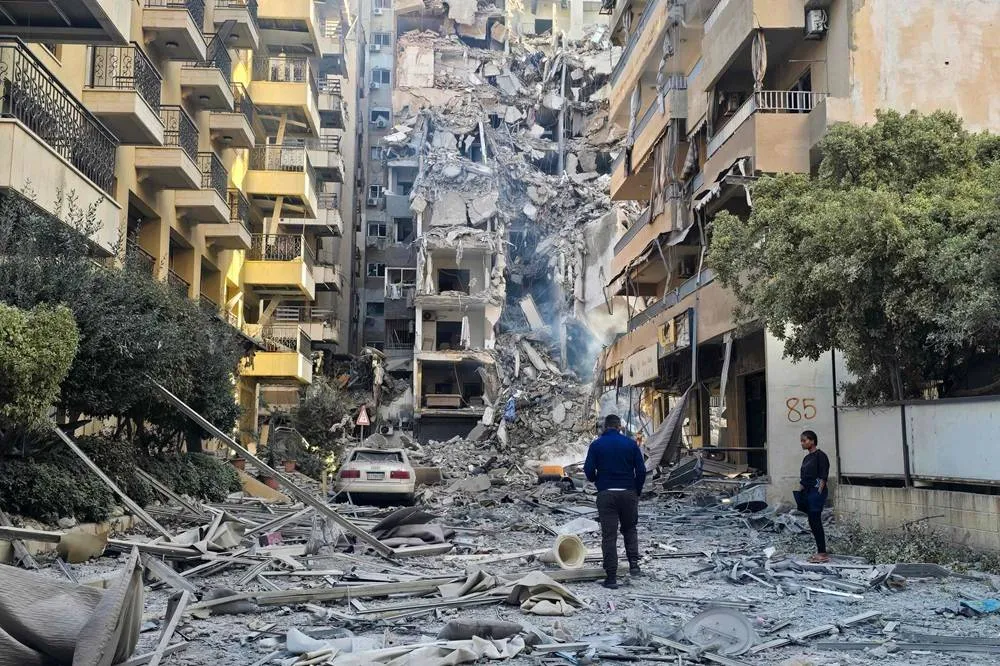
The Israeli army executed a 'precise' airstrike in the Beirut area today (Thursday), following a series of strikes that targeted regions in southern Lebanon, resulting in at least 12 deaths. The airstrike hit an apartment in the Shweifat area, according to Lebanese military sources.
Reports indicate that the target of the airstrike was a military leader in Hezbollah, reflecting an escalating military operation between the two sides. These airstrikes come despite the announcement of a ceasefire since April 17, which has not yielded tangible results on the ground in terms of ending the bombardments and confrontations.
Details of the Incident
Late Wednesday evening, the Israeli army announced the targeting of two prominent figures in the Qassam Brigades, the armed wing of Hamas. Military sources reported the targeting of the new commander of the North Brigade, Aziz al-Bayek, and the deputy commander of the Gaza Brigade, Imad Aslim. While Israel did not confirm the success of the operation, sources from Hamas reported the assassination of Aslim, while al-Bayek was injured.
The attack followed Israeli warplanes bombing a residential apartment in Gaza, resulting in the deaths of 10 Palestinians, including children. The bombardment caused significant destruction in the area, where the targeted building was surrounded by tents for displaced individuals.
Background & Context
Military operations between Israel and Hezbollah continue, with the death toll in the latest round of fighting exceeding 3000 casualties. Despite an existing ceasefire agreement, mutual attacks have not ceased, reflecting a state of ongoing tension in the region.
The recent operations reflect an escalation in the conflict, as each side seeks to demonstrate its strength. Hezbollah, backed by Iran, is considered one of the most prominent armed factions in Lebanon, while Israel aims to undermine its military capabilities.
Impact & Consequences
The increasing military operations may lead to a greater escalation in the conflict, threatening regional stability. The military escalation could exacerbate the suffering of civilians in Lebanon and Palestine, where the number of casualties is rising.
Moreover, the continuation of military operations may affect international relations, especially with the United States intervening in an attempt to halt the fighting. The rising tensions could lead to greater international interventions, complicating the situation further.
Regional Significance
The military operations in Lebanon and Palestine reflect a state of instability in the Middle East, affecting neighboring countries due to the conflict. The situation in Lebanon and Palestine may impact regional security and increase tensions among Arab states.
Under these circumstances, the region remains in a state of anticipation, as everyone seeks to find peaceful solutions to the ongoing conflict. The continuation of violence could worsen humanitarian conditions, necessitating urgent action from the international community.