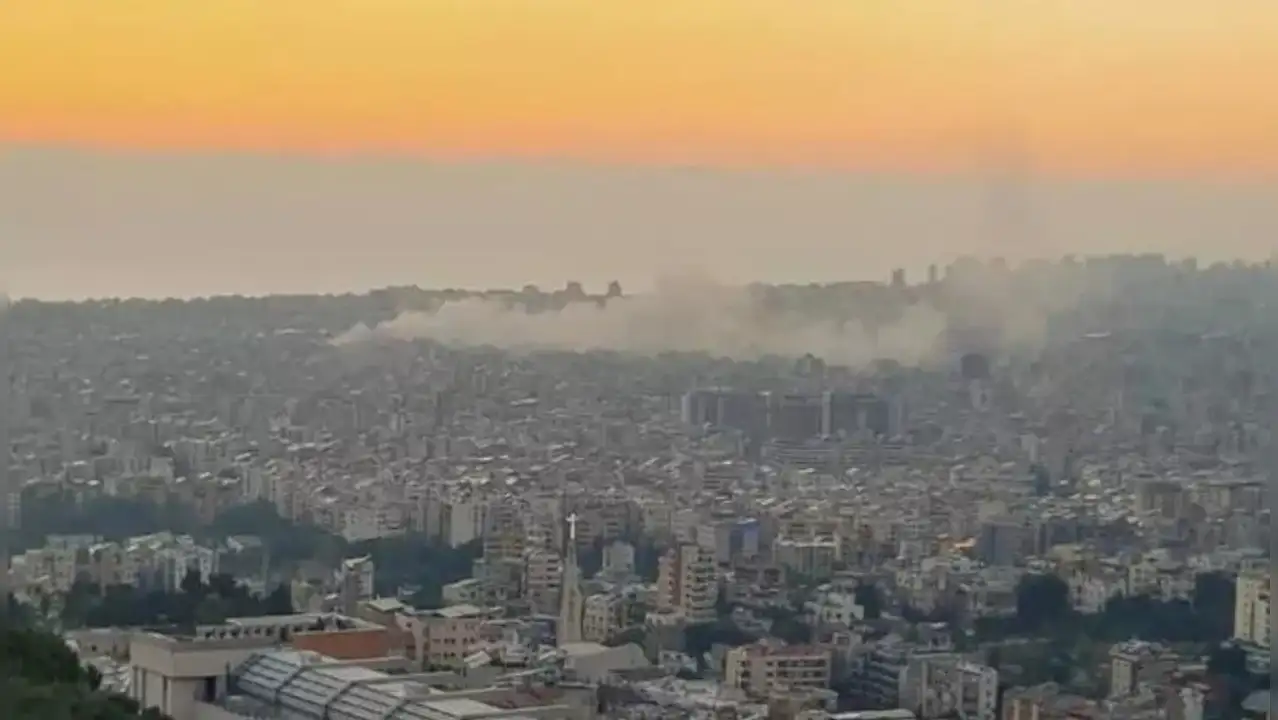
Israeli warplanes launched a fierce airstrike on the Haret Hreik area in southern Beirut, causing panic among residents. This attack comes amid intense Israeli fighter jet activity in Lebanese airspace, heightening tensions in the region.
Haret Hreik is known for its high population density, housing many Lebanese families. The airstrike resulted in significant material damage, but no injuries have been reported so far. These attacks occur at a sensitive time, as the area witnesses an escalation in military operations and political tensions.
Details of the Incident
According to local sources, the Israeli airstrike targeted several sites in Haret Hreik, leading to powerful explosions that were heard in neighboring areas. Reports indicate that Israeli warplanes were flying intensively in the skies, suggesting the possibility of further military operations in the region.
This airstrike follows a series of hostile statements from Israeli officials, who affirmed their readiness to confront any threats they may face from Lebanon. This attack is considered part of Israel's military strategy aimed at enhancing its national security by targeting what it perceives as potential threats.
Background & Context
Historically, the southern suburbs of Beirut have witnessed numerous Israeli attacks, especially during past conflicts between Israel and Hezbollah. This area is considered a stronghold of Hezbollah, one of the most prominent armed factions in Lebanon. These attacks have exacerbated the humanitarian situation in the region, where residents suffer from the consequences of ongoing conflicts.
Over the years, there have been multiple attempts to reach peace agreements between the involved parties, but these efforts have often faltered due to military escalations. The recent airstrike reflects the continuation of this cycle of violence, complicating the situation in Lebanon further.
Impact & Consequences
The Israeli airstrike on Haret Hreik is an indicator of rising tensions in the region and may provoke reactions from Hezbollah or even the Lebanese government. Should military escalation occur, it could drag the region into a broader conflict, affecting regional stability.
Moreover, these attacks could negatively impact the economic and social situation in Lebanon, which is already suffering from multiple crises. An increase in military operations may worsen the humanitarian conditions, necessitating international intervention to curb the escalation.
Regional Significance
The Israeli airstrike on Haret Hreik highlights the fragility of the security situation in Lebanon and its impact on neighboring countries. These events could lead to increased tensions between Arab states and Israel, reminiscent of past conflicts in the region.
Additionally, the escalation of violence in Lebanon may affect relationships between Arab countries, especially those seeking to achieve stability in the region. Under these circumstances, hope remains pinned on peace and negotiation efforts to avoid further escalation.
The Israeli airstrike on Haret Hreik represents a significant challenge to security and stability in Lebanon, underscoring the urgent need for dialogue and negotiation among the involved parties to prevent further escalation and violence.