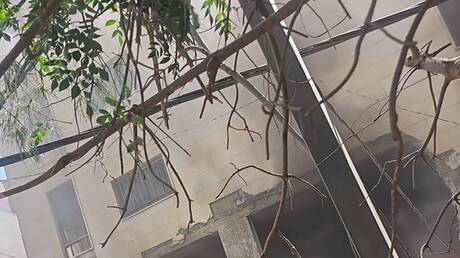
Israeli warplanes launched an airstrike on the Five Wings area in Shweifat, southern Beirut, on Thursday. This attack is part of the increasing military operations by Israel in Lebanon, reflecting the ongoing tensions in the area.
Reports indicate that the airstrike targeted sites believed to be used for military purposes, highlighting Israel's continued policy of conducting military operations against what it perceives as security threats. Details regarding the damage or casualties resulting from this attack have not yet been confirmed.
Details of the Incident
According to an RT correspondent, the airstrike targeted a vital area in Shweifat, which is known for its high population density. The attack followed a series of tensions between Israel and Hezbollah, with the atmosphere charged after mutual accusations between the two sides.
The Israeli aircraft employed advanced weaponry during the attack, raising concerns about the potential impact on civilians in the area. Images circulated on social media showed the destruction in surrounding buildings.
Background & Context
Historically, the southern suburbs of Beirut have witnessed numerous Israeli airstrikes, particularly during past conflicts. This area is considered a stronghold for Hezbollah, which the Israeli occupation views as a major threat to its security. The recent military escalation occurs at a sensitive time, with fears of a large-scale conflict in the region increasing.
Many observers believe that these airstrikes reflect a broader Israeli strategy aimed at undermining Hezbollah's capability to carry out military operations against it. Additionally, these operations come amid growing international pressure on Israel to limit the use of military force in civilian areas.
Impact & Consequences
The Israeli attack on Shweifat could lead to a new escalation in tensions between Lebanon and Israel. Hezbollah is likely to respond to this airstrike, which may intensify the conflict. This escalation could also affect the security situation in Lebanon, which is already grappling with economic and political crises.
The potential consequences of this attack may include an increase in the number of displaced persons, as well as a worsening of humanitarian conditions in the area. International reactions could also play a role in how events unfold, as calls for de-escalation from the international community are growing.
Regional Significance
This attack is not just a local event; it has broader implications for the Arab region. The escalation between Israel and Hezbollah could draw other countries into the conflict, increasing instability in the Middle East. Neighboring Arab countries are closely monitoring the situation, as any escalation could impact their security and stability.
Moreover, these events may affect relations between Arab countries and Israel, especially amid normalization attempts by some nations. Any military escalation could reverse progress and strengthen resistance sentiments against the occupation.
In conclusion, the Israeli airstrike on Shweifat reflects ongoing tensions in the region and raises questions about the future of security and stability in Lebanon and the Middle East as a whole.