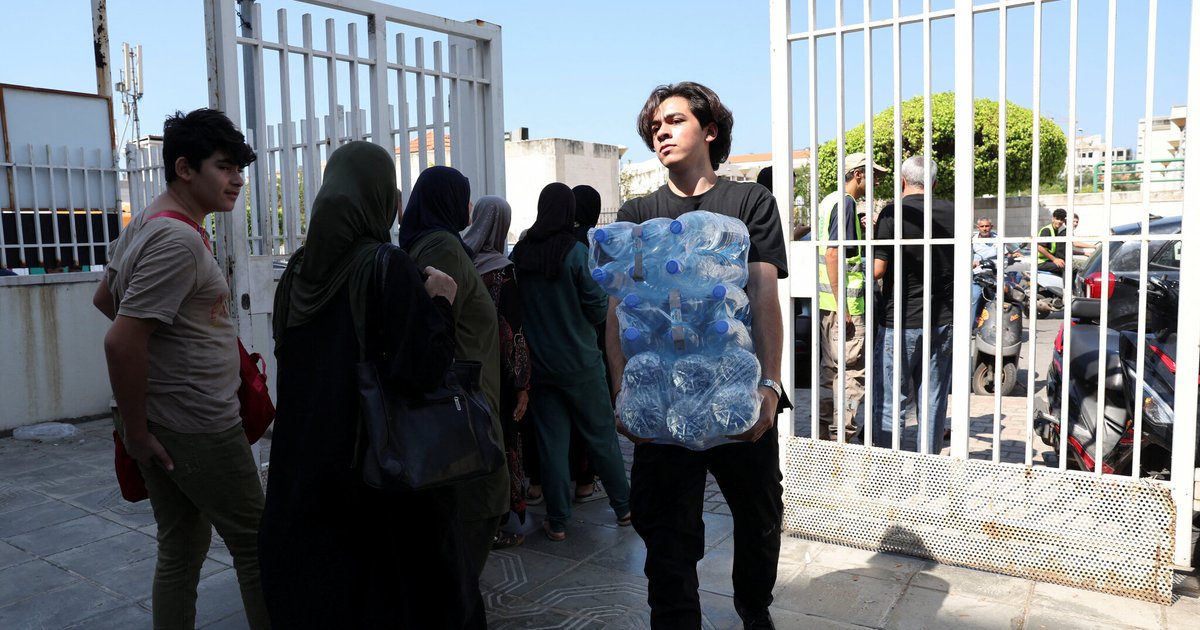
Despite the hope that accompanies the announcement of a ceasefire between Washington and Tehran, the situation in Lebanon continues to deteriorate. Israel has confirmed the continuation of its aggression, which has intensified the suffering of the displaced living in shelters, where they question their fate and when they might return to their homes.
In a shelter in Sidon, Umm Ali sits with her children, suffering from insomnia due to constant anxiety. She states, "We were waiting for a truce, but when we heard that Lebanon was excluded, we felt that the war is still far from over." This sentiment dominates many displaced individuals gathered in shelters, where questions about the possibility of returning to their homes are frequently repeated.
Details of the Situation
The number of displaced individuals in Sidon is increasing, with over 13,000 people currently in official shelters, while the total rises to more than 25,000 when including those who have sought refuge in homes and residential neighborhoods. These figures reflect the immense pressure on the city, historically known as the "Gateway to the South," making it a meeting point between border villages and Beirut.
In light of this situation, schools have turned into shelters, and streets have become waiting areas, where the displaced live in a state of anxiety and anticipation. A young man named Ahmed, who follows the news, says, "We hear about negotiations, but on the ground, nothing has changed." This disparity between political rhetoric and the reality on the ground creates a clear psychological gap between hope and fear.
Background & Context
These events coincide with an official Israeli announcement excluding Lebanon from the ceasefire, increasing the anxiety among the displaced. Despite previous estimates suggesting the possibility of a regional extension of the truce, Beirut has not received any official details regarding the agreement announced between Washington and Tehran, leaving the situation open to contradictory possibilities.
In an attempt to include Lebanon in the ceasefire umbrella, Lebanese President Joseph Aoun has intensified his international communications, including outreach to French President Emmanuel Macron. However, the situation on the ground continues to reflect a state of anticipation, with no new military statements from Hezbollah since last Tuesday.
Impact & Consequences
Israeli airstrikes on Lebanon persist, with Israeli forces launching intense attacks on several areas, resulting in hundreds of casualties. Abu Ahmad, a displaced person from the south, states, "Simply put, we are not under any protection. The war is still upon us, and we are the ones paying the price." This military escalation reinforces the displaced individuals' feeling that returning to their homes is not imminent.
The Israeli threats of evacuation coincide with targeting nearby areas, increasing anxiety among the displaced. Each new military escalation serves as an additional message to the displaced that the road home remains blocked, making remaining displaced a forced choice.
Regional Significance
The repercussions of the situation in Lebanon extend beyond its borders, as the state of displacement and anxiety reflects a broader scene in the region. The displaced live in a state of uncertainty, lacking the luxury of analyzing political trajectories, yet they are affected by their daily outcomes. Amidst political division, the battlefield remains the decisive factor, opening the door to escalation possibilities.
While politics continues to chart its complex paths, the displaced remain elsewhere, where matters are not measured by agreements but by their ability to sleep one night without fear. This ambiguity, more than the bombardment, deepens the sense of insecurity, leaving the displaced in a state of continuous waiting.