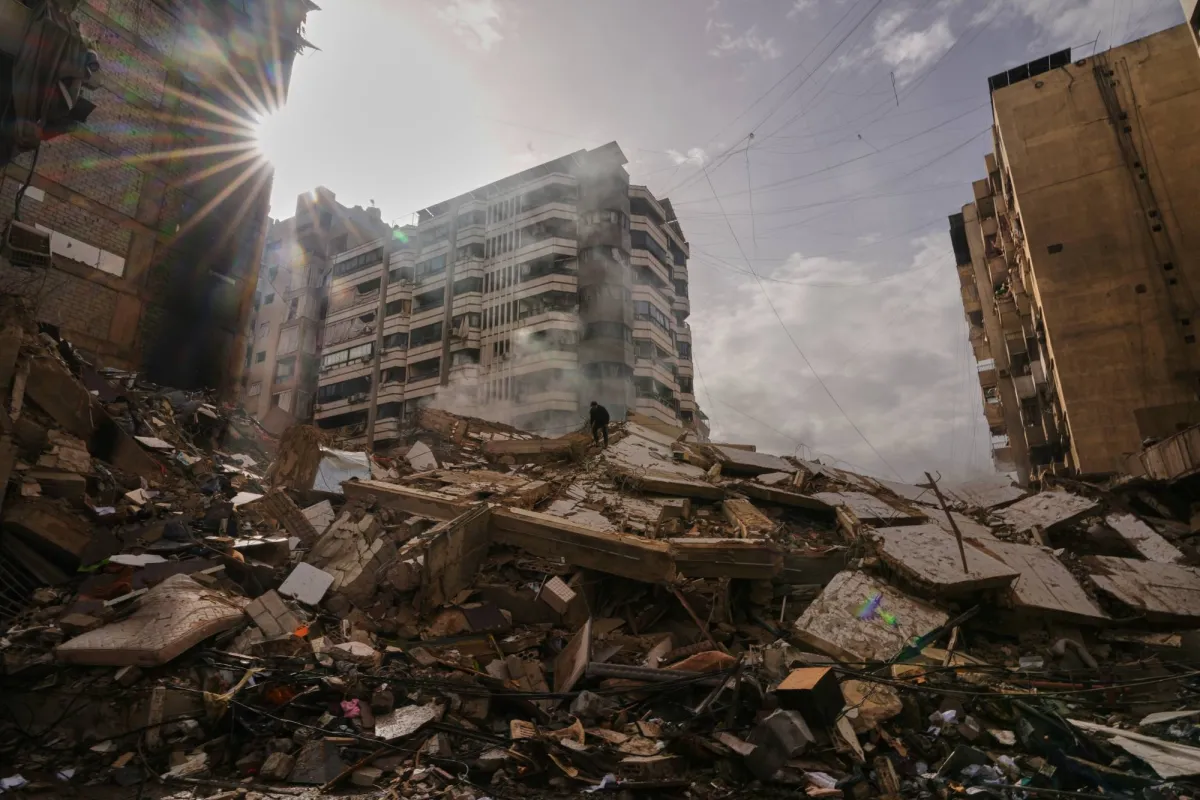
The Lebanese Ministry of Health has reported that the death toll from Israeli airstrikes on Lebanon has surpassed 1300 since the onset of the conflict with Hezbollah on March 2. According to official data, the total number of fatalities reached 1318 by April 1, including 53 medical personnel and 125 children, while the number of injured has reached 3935.
In a related development, the Israeli army announced the death of Hezbollah's southern front commander, known as Haj Youssef Ismail Hashim, due to a strike targeting Beirut. Israeli army spokesperson Avichai Adraee confirmed via X platform that the strike was part of ongoing military operations against Hezbollah.
Details of the Ongoing Conflict
Israel continues to carry out military operations in Lebanon, aiming to expand its activities into new areas such as the western Bekaa Valley. Israeli Prime Minister Benjamin Netanyahu stated that a ceasefire would only be decided independently by Israel, while Defense Minister Israel Katz announced plans to establish a buffer zone extending to the Litani River.
Reports indicate that military operations have focused on towns in southern western Bekaa due to their strategic importance. This comes at a time when tensions in the region are escalating, raising concerns about a broader escalation that could impact regional stability.
Background & Context
Historically, Lebanon has experienced multiple conflicts with Israel, with the latest war being part of a series of disputes that have spanned decades. Hezbollah, considered an Iranian-backed armed faction, has played a key role in resisting Israeli occupation, leading to heightened tensions in the region.
This war occurs at a sensitive time, where regional and international interests intersect, complicating the situation further. These conflicts have significantly impacted civilians, with rising casualty numbers and infrastructure destruction.
Impact & Consequences
The repercussions of this war extend beyond Lebanese borders, affecting regional security and exacerbating tensions among various powers in the area. The military escalation could lead to an influx of refugees into neighboring countries, increasing the burden on those nations.
Moreover, the continuation of military operations may hinder peace efforts and complicate humanitarian conditions. The current situation requires urgent international response to alleviate humanitarian suffering and protect civilians.
Regional Significance
The situation in Lebanon is part of the larger picture of conflicts in the Middle East, where political and military interests intertwine. The escalation of violence in Lebanon may affect relations between Arab countries and deepen internal divisions.
Under these circumstances, the international community must work towards finding peaceful solutions that enhance stability in the region and mitigate the impacts of armed conflicts on civilians.
In conclusion, the situation in Lebanon remains tense, and the world needs to monitor developments closely, as any further escalation could threaten security and peace in the region.