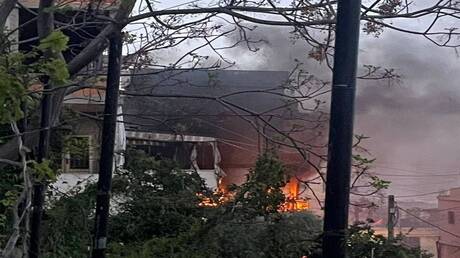
Israeli airstrikes and violent clashes in multiple Lebanese areas over the past few hours have led to the deaths of nine people and more than forty injuries, including children, a pregnant woman, and a paramedic. These incidents come at a time when security tensions in the region are escalating, further exacerbating the suffering of civilians and reflecting the dire situation in Lebanon.
The areas affected by the airstrikes and clashes span southern Lebanon and the Bekaa Valley, where reports have documented intense confrontations between Israeli forces and local armed groups. These clashes have caused panic among residents, who are already grappling with economic and social crises.
Details of the Incident
According to local sources, the Israeli airstrikes targeted residential areas, resulting in civilian casualties. Reports confirm that among the deceased are children and a pregnant woman, underscoring the catastrophic impact of these military operations on civilians. Many of the injured have been transported to hospitals for treatment, with numbers continuously rising.
It is noteworthy that these events occur amid rising tensions in the region, with increasing clashes between Israeli forces and armed factions in Lebanon, complicating the security situation further. Images circulated on social media depict the destruction inflicted on the targeted areas, reflecting the scale of the humanitarian disaster faced by the residents.
Background & Context
Historically, Lebanon has witnessed numerous armed conflicts, particularly amid the ongoing struggle between Israel and Hezbollah. This conflict dates back decades, with Israeli airstrikes on Lebanese territory increasing in the context of a broader regional conflict. As the economic and political conditions in Lebanon deteriorate, these clashes have become more frequent, intensifying civilian suffering.
In recent years, Lebanon has faced multiple crises, ranging from economic collapse to political turmoil. These crises have exacerbated the security situation, making clashes between armed factions and Israeli forces a part of daily life. This scenario complicates the Lebanese government's ability to manage the situation, further deepening the humanitarian crisis.
Impact & Consequences
These events highlight the significant challenges facing Lebanon amid multiple crises. With the rising number of casualties, pressure mounts on the Lebanese government, which is already struggling with instability. Additionally, these clashes could lead to greater escalation in the region, threatening regional security.
Moreover, the increase in violence in Lebanon may result in a surge of refugees into neighboring countries, adding to the burdens on those nations. The international community is closely monitoring the situation, as these events may require urgent responses from humanitarian organizations to assist those affected.
Regional Significance
The recent events in Lebanon are part of a larger picture of conflicts in the Arab region. With rising tensions in several countries, including Syria and Palestine, the situation in Lebanon becomes increasingly complex. These events could lead to heightened tensions between Arab states, threatening regional stability.
In conclusion, the situation in Lebanon remains concerning, with an increasing need for urgent solutions to end the violence and achieve peace. The continuation of these clashes will only exacerbate humanitarian and economic crises, necessitating effective steps from the international community to support Lebanon during this critical phase.