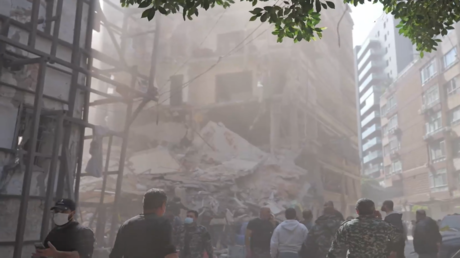
The Israeli bombardment on Ain al-Mreisseh in Beirut has resulted in hundreds of deaths and injuries, showcasing massive destruction of buildings. The airstrikes are part of an escalating military conflict in the region, raising concerns about the humanitarian situation in Lebanon.
The Israeli airstrikes continue to target the Lebanese capital, hitting multiple areas and leading to widespread destruction. Local sources reported that the bombardment resulted in the deaths of many civilians, in addition to injuring dozens, exacerbating the suffering of the population amid Lebanon's dire economic conditions.
Details of the Incident
In the early morning hours, Israeli warplanes launched a series of strikes on various areas in Beirut, particularly in Ain al-Mreisseh. Images circulated on social media depicted horrific scenes of destruction, with buildings reduced to rubble and fires breaking out in several locations.
These attacks come at a sensitive time, as Lebanon is grappling with a crippling economic crisis, complicating the humanitarian situation further. Eyewitnesses indicated that the airstrikes targeted residential areas, causing panic among the residents.
Background & Context
Historically, Lebanese-Israeli relations have been marked by ongoing tensions, with several rounds of conflict between the two sides. Since 2006, when the July War erupted, Israeli violations of Lebanese airspace have not ceased, leading to heightened tensions in the region.
In recent years, the intensity of Israeli bombardment has increased, particularly with the rising military activities of Hezbollah in southern Lebanon. This military escalation reflects broader regional tensions, including the conflict in Syria and its impact on Lebanon.
Impact & Consequences
The recent airstrikes underscore the rising violence in the region, threatening stability in Lebanon. The humanitarian impact of these attacks will be significant, as many residents will face the loss of their homes and essential resources.
Moreover, these events may exacerbate the humanitarian crises in Lebanon, where many are already suffering from shortages of food and medicine. International pressure on Israel to cease these attacks is expected to continue, but the situation may remain tense in the absence of clear political solutions.
Regional Significance
These airstrikes are part of a broader conflict in the region, directly affecting neighboring Arab countries. The military escalation in Lebanon could have repercussions for regional security, especially with the presence of other regional powers like Iran and Saudi Arabia.
Additionally, the situation in Lebanon may impact Syrian refugees in the country, as the number of displaced persons may increase due to the bombardment. This could place additional pressure on neighboring countries hosting refugees.
The military escalation in Lebanon highlights the multiple crises facing the region. In the absence of political solutions, the situation remains poised for further tensions and violence.