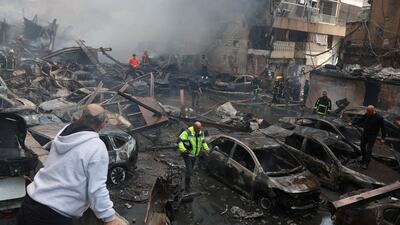
In a tragic incident, the Lebanese capital, Beirut, was subjected to intense Israeli airstrikes yesterday, resulting in the deaths of dozens of civilians within minutes. The bombardment, which lasted only ten minutes, dropped over 100 bombs on densely populated residential areas, leading to widespread destruction and severe injuries among the residents.
Survivor testimonies reveal horrific scenes as people rushed into the streets seeking safety amidst the rising smoke from the destroyed buildings. A state of panic and chaos prevailed in the targeted areas, highlighting the gravity of the situation.
Details of the Attack
According to local sources, the airstrikes followed an escalation of tensions between Israel and Hezbollah, with both sides exchanging accusations of inciting violence. These bombings are considered the most intense since the beginning of the conflict, reflecting a serious escalation in the ongoing strife.
Reports indicate that many of the victims were children and women, intensifying public outrage against the Israeli attacks. Numerous cases of critical injuries have also been recorded, putting additional pressure on Lebanon's healthcare system, which is already suffering from a severe crisis.
Background & Context
Historically, Lebanon has witnessed numerous armed conflicts, but the current escalation comes at a sensitive time as the country grapples with crippling economic and social crises. Since 2019, Lebanon has faced an unprecedented economic collapse, complicating the situation amid regional conflicts.
The Israeli presence in Lebanon dates back decades, with the last major war occurring in 2006. Since then, there have been periods of relative calm, but tensions have never fully dissipated, making the current situation even more perilous.
Impact & Consequences
The repercussions of this massacre could be severe on both regional and international levels. These attacks are likely to lead to further escalations in the conflict, threatening the stability of Lebanon and the region as a whole. International reactions may include calls for de-escalation, but history shows that such appeals often fall on deaf ears.
Furthermore, these events may affect relations between Arab countries and Israel, as pressures may increase on Arab governments to intervene or take a firmer stance against the Israeli escalation.
Regional Significance
This massacre serves as a stark reminder of the scale of human suffering in conflicts and underscores the urgent need for peace and stability in the region. The international community must pay attention to the unfolding tragedy and work towards a resolution that prioritizes human rights and the protection of civilians.
As the situation develops, it remains crucial for global leaders to engage in dialogue and seek diplomatic solutions to prevent further loss of life and to address the underlying issues fueling the conflict.