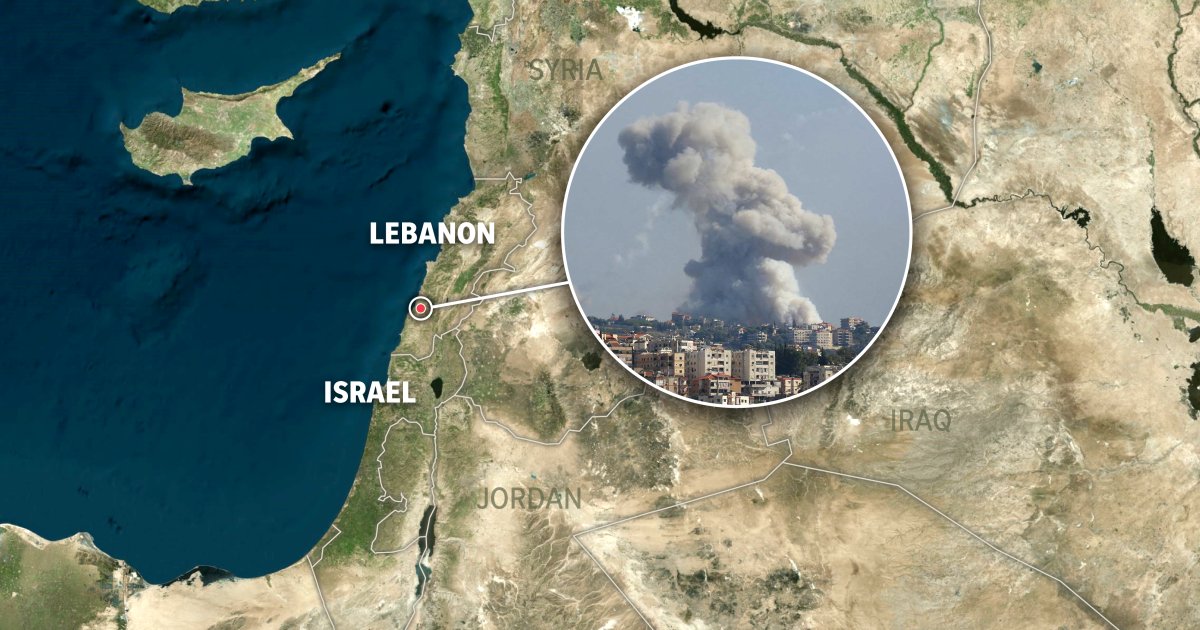
The Israeli army continued its assaults on Lebanon, as Israeli warplanes conducted a series of airstrikes on Friday targeting various areas in the south of the country. These airstrikes resulted in the destruction of dozens of homes in the town of Aita al-Shaab, according to local sources.
At the same time, the Lebanese Hezbollah responded with a series of missile attacks on targets inside Israeli territory, triggering sirens in several settlements. These events come amid escalating tensions between the two sides, with the Israeli army announcing that it has bombed over 3,500 targets across Lebanon since the fighting began.
Details of the Attacks
The Israeli airstrikes this morning targeted areas between the towns of Kafra and Sarbin, in addition to the towns of Barachit and Sarifa. The official Lebanese National News Agency confirmed that one of the strikes hit a house near a center for the Islamic Health Authority, causing an ambulance to catch fire without any injuries reported.
Israeli warplanes also struck the towns of Bint Jbeil, Haniin, Qounin, and Tayr, while Israeli artillery shelled the vicinity of eastern Barachit. As part of these assaults, the Israeli army issued an evacuation warning to residents of the southern suburbs of Beirut, further heightening tensions in the region.
Background & Context
These escalations occur amid the ongoing war between Israel and Hezbollah, which began on March 2 of this year. This conflict has resulted in the deaths of 1,345 individuals and injuries to 4,040 others, including a significant number of children and women. Additionally, it has led to the displacement of over one million people, according to Lebanese authorities.
In a related context, reports indicate that the Israeli army plans to establish a buffer zone in southern Lebanon, similar to the Yellow Line in Gaza, aimed at reducing friction with Hezbollah. Sources within the Israeli army have confirmed that this zone will not include military installations but is intended to prevent the return of residents to the destroyed border villages.
Impact & Consequences
The current developments indicate a serious escalation in the conflict between Israel and Hezbollah, which could lead to further tensions in the region. This escalation also reflects the security challenges facing Israel, especially with the increasing strength of Hezbollah and its capability to carry out missile attacks.
Moreover, these events could impact regional stability, as fears grow of an outbreak of a full-scale war in the area. Many observers believe that these escalations could lead to international or regional interventions, complicating the security situation in the Middle East.
Regional Significance
The current events in Lebanon are part of the broader conflict between Iran and its allies on one side, and Israel and the United States on the other. This conflict reflects the ongoing tensions in the region, as concerns rise over escalating violence and its impact on neighboring Arab countries.
These events also raise significant concerns among Arab nations, as they could lead to serious humanitarian repercussions, particularly with the increasing number of displaced individuals and casualties. The international community must urgently intervene to resolve this crisis and alleviate the suffering of civilians in Lebanon.