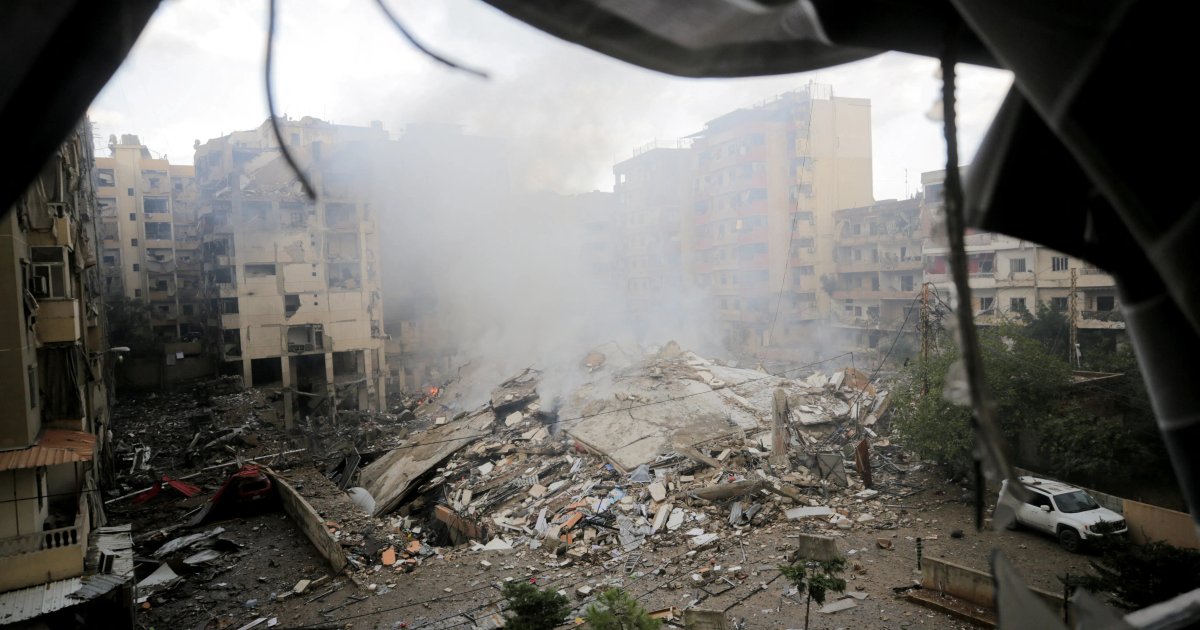
The Israeli aggression against Lebanon continued on Saturday, with warplanes conducting intensive airstrikes in various regions of the country, leading to fatalities and injuries. In response, Hezbollah launched rockets into occupied territories, further heightening tensions in the area.
The Israeli strikes resulted in the deaths of two individuals in a drone attack targeting a motorcycle on the road north of Tyre. The Lebanese news agency reported that the airstrike resulted in two martyrs without providing additional details.
Details of the Incident
The Israeli airstrikes targeted the town of Srifa in the Tyre district, as well as conducting strikes on the towns of Ansar in the Nabatieh district, where the Ein Sayyag area and a residential building were hit. Additionally, an Israeli missile fell in the area without detonating. Furthermore, the airstrikes hit the town of Barashit in the Nabatieh district with three consecutive strikes, along with targeting the Madi and Jamous neighborhoods and the Al-Amana fuel station in the southern suburbs of Beirut.
Later, the Lebanese Ministry of Health reported that 32 individuals were injured, including 3 paramedics, as a result of the Israeli airstrikes targeting southern Lebanon. The ministry confirmed that the strikes caused damage to the Italian-Lebanese Hospital, which continues to operate despite the damage.
Background & Context
These airstrikes come amid escalating tensions between Israel and Hezbollah, with the region witnessing a notable increase in hostilities since the beginning of March. The Israeli aggression against Lebanon since March 2 has resulted in the deaths of 1,368 individuals and injuries to 4,138 others, along with the displacement of over one million people, according to Lebanese authorities.
This escalation is part of a broader war being waged by Israel and the United States against Iran, which began on February 28, exacerbating the situation in the region and increasing fears of a comprehensive war.
Impact & Consequences
Recent events indicate that the military escalation in Lebanon could lead to serious repercussions for regional security. With the increase in reciprocal attacks, there is growing concern about the potential outbreak of a comprehensive war that could affect neighboring countries and exacerbate civilian suffering.
The continued Israeli airstrikes on Lebanon reflect an occupation policy of targeting civilian infrastructure, which intensifies tensions and complicates peace efforts in the region.
Regional Significance
The ongoing events in Lebanon are indicative of rising tensions in the Middle East, contributing to increased divisions among Arab countries. The military escalation may also impact relations between Arab nations and Israel, increasing pressure on Arab governments to address the humanitarian crises resulting from the conflict.
In conclusion, the situation in Lebanon remains tense, with rising fears of further escalation that could plunge the region into greater chaos and instability.