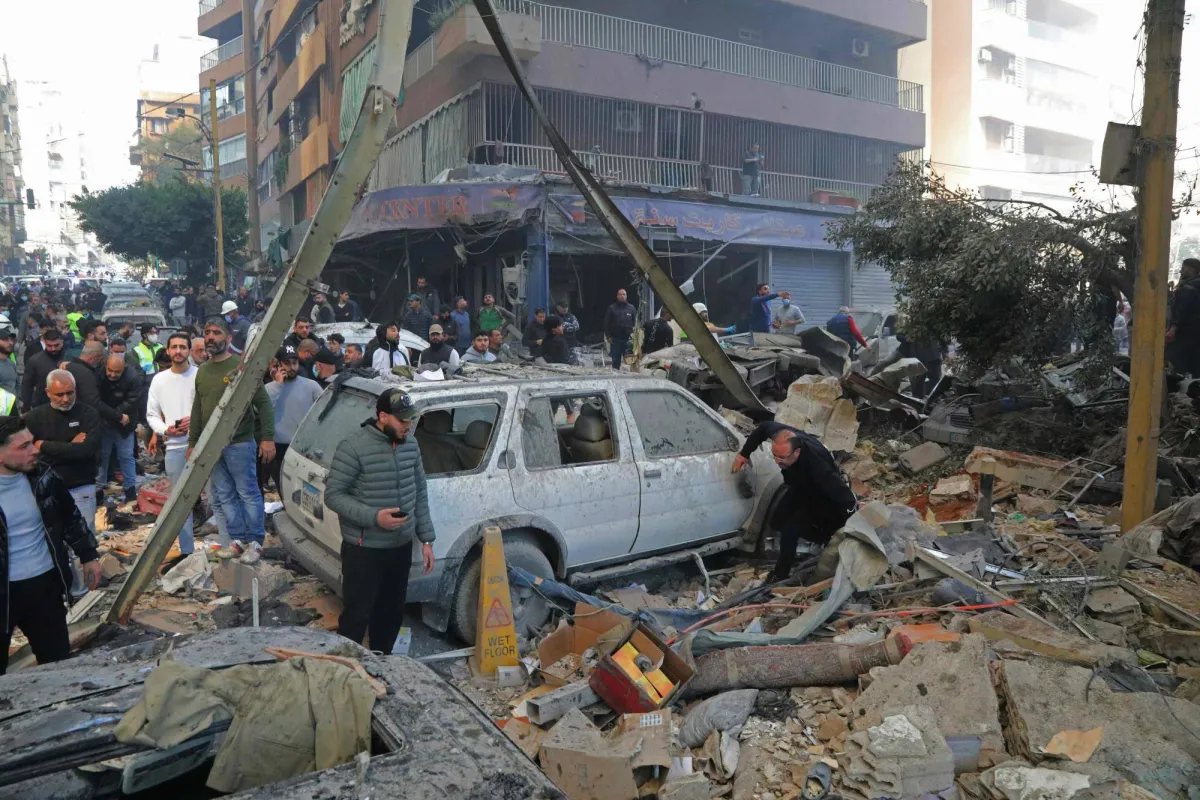
The Israeli military has conducted widespread airstrikes targeting the Lebanese capital, Beirut, and other regions, leading to hundreds of casualties in what is considered the most violent scene since the recent confrontations between Israel and Hezbollah.
This escalation comes just hours after a temporary ceasefire was announced between Iran and the United States, with Lebanon hoping to be included in the climate of de-escalation. However, the Israeli airstrikes have dashed those hopes, thrusting Lebanon back into the heart of a regional escalation that could have serious repercussions.
Details of the Incident
The Israeli forces executed over one hundred airstrikes within minutes, targeting residential and commercial areas. According to the Lebanese Ministry of Health, at least 89 people have been reported dead, including 12 medical personnel, with 722 others injured. The strikes hit neighborhoods such as Bir Hassan, Hay al-Sellum, and Al-Musaytbeh, resulting in building collapses and widespread panic among residents.
At the same time, Lebanese President Joseph Aoun described these attacks as "barbaric," emphasizing the need for the international community to take responsibility to halt such aggressions. Additionally, Parliament Speaker Nabih Berri deemed the events as a "complete war crime."
Background & Context
These airstrikes occur at a sensitive time, as diplomatic efforts were underway to find a peaceful resolution to the regional crisis. Lebanese officials had been in intensive contact with relevant parties to ensure Lebanon's inclusion in the announced ceasefire, but the events unfolded contrary to those hopes.
Historically, Lebanon has witnessed military escalations from Israel, but this wave of airstrikes is considered the most intense in years, raising concerns about the potential for greater escalation in the future.
Impact & Consequences
The Israeli military escalation could exacerbate the humanitarian situation in Lebanon, where residents are already suffering from the ongoing conflict's effects. This escalation may also plunge Lebanon back into a cycle of violence, threatening stability across the entire region.
Concerns are growing that these airstrikes could provoke reactions from Hezbollah, potentially dragging the region into a broader conflict. Furthermore, Israel's disregard for the ceasefire could complicate peace efforts in the area.
Regional Significance
This escalation may impact relations between Arab countries and Israel, highlighting how instability in Lebanon can affect regional security. Additionally, events in Lebanon could reopen discussions about Iran and Hezbollah's roles in the region.
In conclusion, the situation in Lebanon remains complex and requires genuine international efforts to achieve peace and stability, moving away from military escalation that only leads to further suffering.