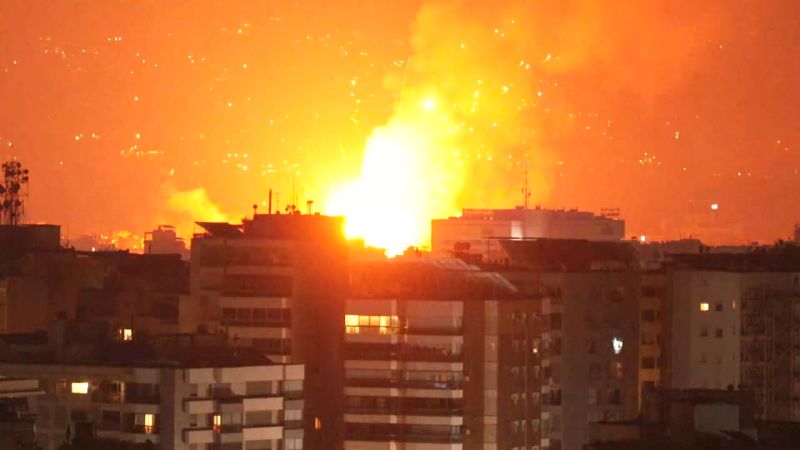
The Israeli military executed waves of simultaneous airstrikes in both Iran and Lebanon, targeting over 200 sites, according to military reports. These strikes are part of an escalation in regional tensions, with the targeted sites believed to be associated with the Iranian regime and Lebanese Hezbollah.
These air operations are considered part of a long-term Israeli strategy aimed at countering what it perceives as security threats posed by Iran and its allies in the region. The Israeli military indicated that these strikes are a response to military activities carried out by Hezbollah, which are seen as a direct threat to Israeli national security.
Details of the Operation
The Israeli military reported that the airstrikes were conducted in several phases, executed simultaneously in both Iran and Lebanon. Advanced fighter jets were utilized to strike the designated targets with precision, reflecting a high level of military coordination and planning.
The targeted sites included military facilities and weapon storage depots, as well as locations allegedly used for storing and developing missiles. A military spokesperson noted that these operations aim to undermine the capability of Iran and Hezbollah to carry out any military operations against Israel in the future.
Background & Context
These strikes come at a highly sensitive time, as the region witnesses escalating tensions between Israel and Iran, particularly following a series of military incidents along the Lebanese border. Historically, relations between Israel and Iran have been strained, with Israel viewing Iran as an existential threat due to its nuclear program and support for armed groups in the region.
Hezbollah, considered one of Iran's key allies in the region, has ramped up its military activities in recent years, prompting Israel to take preemptive measures to ensure its security. These dynamics reflect the ongoing conflict in the Middle East, where regional and international interests intertwine in complex ways.
Impact & Consequences
Analysts suggest that these strikes could lead to greater escalation in tensions between Israel and Iran, potentially negatively impacting the stability of the region as a whole. Should Iran or Hezbollah retaliate, it could trigger a new round of military conflict, exacerbating the suffering of civilians in Lebanon and Syria.
Furthermore, these events may affect relations between Arab states and Iran, with some countries possibly feeling compelled to intervene or take clear stances amid rising tensions. Additionally, these strikes could impact peace and stability efforts in the region, complicating any attempts at political settlements.
Regional Significance
These airstrikes serve as yet another reminder of the security challenges facing countries in the region. As tensions rise between Israel and Iran, Arab states may find themselves in a difficult position, needing to balance their national interests with their commitments to regional security.
These events could also influence Arab public opinion, potentially increasing anti-Israel sentiments in some countries, which might lead to internal unrest. At the same time, some nations may seek to strengthen their alliances with the United States and other Western countries to counter the growing threats.
In conclusion, events in the Middle East remain complex and intertwined, requiring all parties involved to work towards peaceful solutions to avoid further escalation and violence.