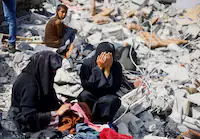
The Lebanese Ministry of Health announced the death of 12 paramedics in the recent Israeli airstrikes that targeted areas in southern Lebanon. This incident highlights a serious military escalation in the region, where tensions between Lebanon and Israel are intensifying.
The airstrikes, which occurred late at night, targeted multiple sites in southern Lebanon, resulting in widespread destruction. Local sources confirmed that rescue teams were evacuating the injured when they came under attack, leading to a significant number of casualties.
Details of the Incident
These airstrikes come amid ongoing military escalation between the two sides, with recent weeks witnessing exchanges of shelling between Israeli forces and Hezbollah. Images circulated on social media depict the extent of the destruction in the targeted areas, raising concerns about the humanitarian situation in the region.
This incident is considered one of the deadliest in recent times, with fears of escalating violence in the area growing. The Lebanese Ministry of Health issued an official statement condemning the attacks and calling on the international community to intervene to protect civilians.
Background & Context
Historically, the Lebanese-Israeli border has seen numerous armed conflicts, with the area being a stage for recurring strife. The current tensions stem from several factors, including repeated Israeli violations of Lebanese airspace and military operations conducted by Hezbollah.
In recent years, tensions have escalated due to political and economic crises in Lebanon, complicating the situation further. Additionally, the exchanged statements between officials from both sides reflect a lack of prospects for a peaceful resolution in the near future.
Impact & Consequences
This incident underscores the negative impact of armed conflicts on civilians, as the number of casualties increases each time hostilities escalate. The deaths of the paramedics highlight the dangers faced by rescue teams in conflict zones.
Calls from human rights organizations and the international community are increasing, urging the involved parties to cease hostilities and protect civilians. The continuation of this violence could exacerbate the humanitarian situation in Lebanon, which is already suffering from multiple crises.
Regional Significance
The events in Lebanon are part of a larger picture of conflicts in the region, where tensions in Lebanon affect relations between Arab states. The escalation of violence may negatively impact regional stability, complicating situations in neighboring countries.
Moreover, these events could lead to increased tensions between major powers in the region, as countries compete for influence in Lebanon. The current situation requires the international community to take urgent steps to de-escalate tensions and ensure civilian protection.
The killing of 12 paramedics in Israeli airstrikes reflects a new humanitarian tragedy in Lebanon, emphasizing the urgent need for a peaceful resolution that guarantees civilian rights and halts the cycle of violence.