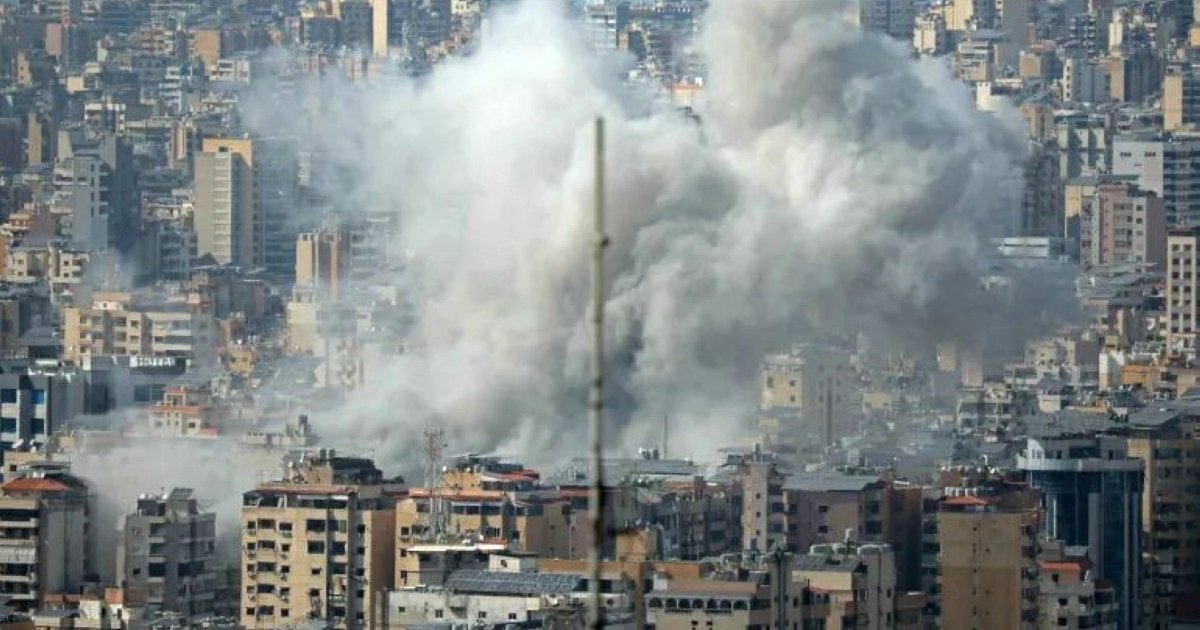
Israeli airstrikes in Lebanon on Sunday resulted in the deaths of 14 individuals, following threats from Israel to target a key border crossing with Syria, leading to its closure. Since March 2, Israel has launched a series of air raids on Lebanon in response to rocket fire from Hezbollah towards Israeli territory, amid escalating tensions between the United States and Israel on one side and Iran on the other.
The victims were spread across various regions, with four people killed in the southern suburbs of Beirut, while ten others, including a family of six, died in strikes on southern Lebanon. Additionally, 39 people were injured in an airstrike targeting the al-Jnah neighborhood in Beirut, near Rafik Hariri University Hospital, the largest public medical facility in Lebanon.
Details of the Incident
In another development, Hezbollah announced that it launched a cruise missile at an Israeli warship located 126 kilometers off the Lebanese coast. No immediate comment was made by the Israeli military regarding this attack. While most Israeli strikes on Hezbollah have been carried out by aircraft and drones, some have originated from the sea.
In an official statement, the Israeli military warned that it had begun targeting Hezbollah's infrastructure sites in the southern suburbs of Beirut, without providing evidence for its claims. Israel also announced that it would conduct targeting operations at the al-Masnaa border crossing between Lebanon and Syria, which is a vital trade route between the two countries.
Background & Context
Historically, Lebanese-Israeli relations have been marked by ongoing tensions, with wars and armed conflicts being part of the region's history. Since 2006, when the Second Lebanon War broke out, the border between the two countries has seen repeated escalations. In recent years, tensions have increased due to a broader regional conflict involving Iran and its allies in the area.
The southern Lebanese region is considered a hotspot for conflict, hosting many displaced individuals from other parts of Lebanon. Israeli forces have issued evacuation orders for the town of Kfar Hatta, where seven people were killed, including a four-year-old girl and a Lebanese soldier, according to the Lebanese Ministry of Health.
Impact & Consequences
These events indicate a serious escalation in the conflict, as Israeli airstrikes may exacerbate the humanitarian situation in Lebanon. With the rising number of casualties, pressure mounts on the Lebanese government to address the worsening humanitarian crisis, while the country faces economic and political strains.
The military escalation could also impact regional stability, potentially provoking reactions from Hezbollah's allies in the area, further complicating the security situation in the Middle East.
Regional Significance
The events in Lebanon are part of a broader conflict in the region, where regional and international interests intersect. The escalation of violence in Lebanon could affect relations among Arab states, particularly those with vested interests in Lebanon and Syria.
In conclusion, hope remains pinned on dialogue and negotiation to avoid further destruction, as Lebanese President Joseph Aoun has called for talks with Israel, expressing a desire to save what remains of homes that have not yet been destroyed.