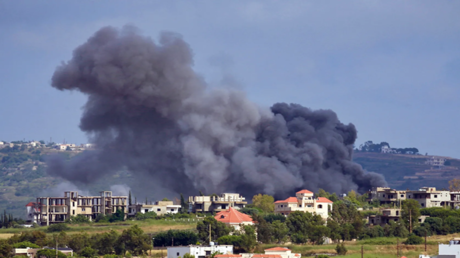
Eighteen people, including a soldier from the Lebanese army, have been killed and over 30 injured due to sporadic airstrikes carried out by the Israeli military across various regions in Lebanon today. These attacks occur amid rising tensions in the area, raising concerns about escalating violence.
The Israeli military operations targeted multiple areas in Lebanon, resulting in significant human and material losses. Humanitarian efforts are increasing in an attempt to provide assistance to those affected, as relief organizations strive to reach the devastated regions.
Details of the Incident
According to local sources, the airstrikes targeted sites in southern Lebanon, where it is believed that armed militants are present. These operations come as part of the ongoing escalation between Israel and Hezbollah, which has been witnessed along the Lebanese-Israeli border recently.
The Lebanese army confirmed the death of one of its soldiers, further intensifying tensions between Lebanese and Israeli forces. Reports also indicate that many of the injured are in critical condition, putting additional pressure on local hospitals.
Background & Context
Historically, the Lebanese-Israeli border has seen recurring tensions, with numerous armed conflicts between the two parties. Hezbollah, which is considered a major force in Lebanon, has fought several wars against Israel, making the border a consistently volatile area.
In recent years, tensions have escalated due to disputes over water and oil resources in the Mediterranean Sea, increasing the likelihood of a new conflict. These airstrikes occur at a sensitive time, as international concern grows over the rising violence in the region.
Impact & Consequences
The repercussions of these airstrikes could be severe, potentially leading to a greater escalation in the conflict between Israel and Hezbollah. There are also fears that these events may affect stability in Lebanon, which is already grappling with economic and political crises.
The international community is closely monitoring the situation, as these events could lead to external interventions or diplomatic pressures on the involved parties. Calls for de-escalation are likely to increase, but history shows that such calls may not be sufficient to halt the escalation.
Regional Significance
The events in Lebanon have wide-ranging implications for the Arab region as a whole. The escalation of violence in Lebanon could destabilize neighboring countries, such as Syria and Palestine, which are already facing internal and external crises.
Moreover, these events may affect relations between Arab countries and Israel, as there could be increased pressure on Arab governments to handle the situation more cautiously. At the same time, some parties may exploit these events to fuel sectarian or political conflicts in the region.
In conclusion, the events in Lebanon remain a significant point of interest, as everyone watches how the situation will unfold in the coming days. The continuation of violence could lead to serious repercussions for security and stability in the region.