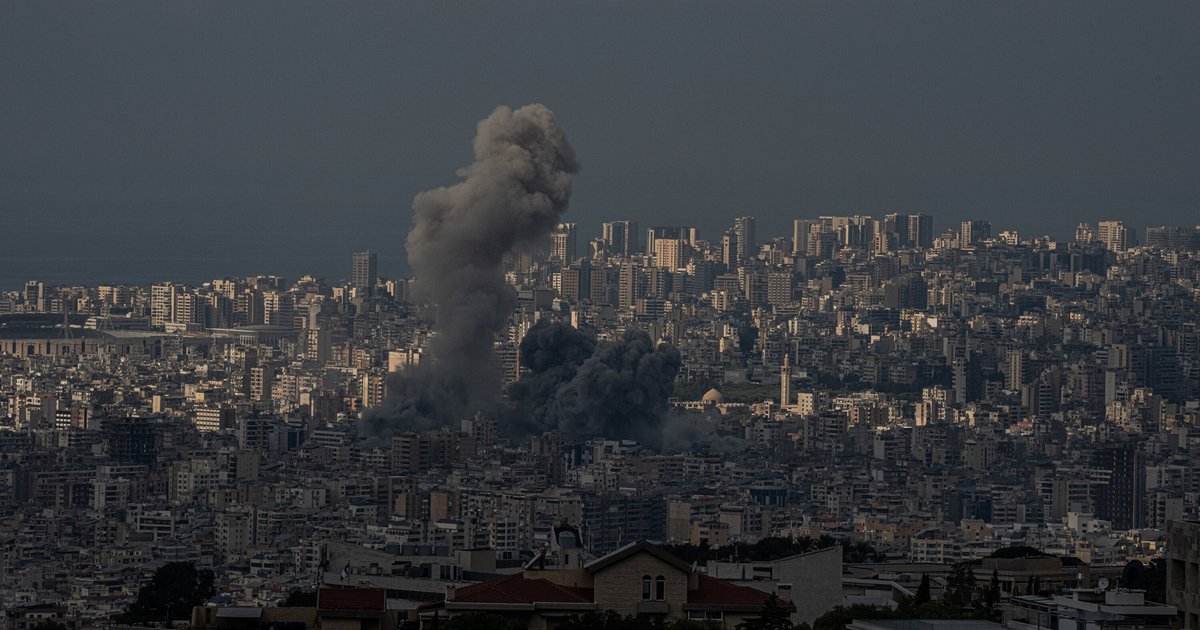
An Israeli airstrike resulted in the deaths of 7 people and injuries to 26 others in the Al-Jnah area of southern Beirut, marking a continued military escalation in the region over the past hours. In contrast, the Israeli army announced that 48 officers and soldiers were injured in battles in southern Lebanon.
The Lebanese Ministry of Health reported that the airstrike targeted the Al-Jnah area, where Israeli military operations continued in several towns, including Al-Ghandouriya, Kafra, Hanin, Sarifa, and Al-Marwaniya. Al Jazeera's correspondent reported that Israeli warplanes conducted airstrikes on the towns of Hanin and Dbayeh, resulting in injuries and significant material damage.
Details of the Incident
The Israeli airstrikes included targeting the area between Houmine Al-Tahta and Bani Afoul, in addition to 4 airstrikes on the town of Sahmar in western Bekaa. The town of Arid New in the Marjeyoun district was also hit by an airstrike that caused a power outage. Other airstrikes targeted the outskirts of the towns of Al-Shahabiya and Al-Majadel and the town of Jabal Al-Batam, resulting in the destruction of homes and damage to neighboring buildings.
Airstrikes renewed over the town of Al-Dweir, targeting the Rishum neighborhood, leading to the complete destruction of a house. Warplanes executed 3 consecutive airstrikes on the same neighborhood, resulting in the destruction of two other houses and extensive property damage. The road connecting the towns of Al-Dweir and Al-Kfour was cut off before civil defense and ambulance teams managed to reopen it.
Later, an Israeli airstrike targeted the town of Al-Ramadiya, resulting in injuries, while a drone carried out two airstrikes on the Ma'aroub road near the town of Dardghiya, targeting a car and a small truck, amid reports of casualties and injuries.
Background & Context
This escalation comes amid increasing tensions between Lebanon and Israel, with Hezbollah reporting that it targeted the Kiryat Shmona settlement with a missile strike, in addition to targeting the Amiyad base north of Lake Tiberias. The Israeli home front also targeted gatherings and vehicles of the Israeli army in the towns of Al-Qantara and Deir Sryan.
On the other hand, the Lebanese army announced the implementation of a repositioning and deployment operation for several of its military units in the southern border areas, amid the escalation of Israeli aggression. The army leadership confirmed that this step was a result of increased Israeli threats, which led to the encirclement and isolation of army units.
Impact & Consequences
Concerns are rising over the escalation of violence in the region, as reports indicate that the Israeli escalation could exacerbate the humanitarian situation in Lebanon, especially in border areas. The Lebanese army leadership warned that Israeli attacks do not distinguish between military and civilian targets, complicating the security situation further.
Moreover, the continuation of Israeli bombardment could negatively impact internal stability in Lebanon, as warnings of media incitement that could lead to internal tensions are increasing. In this context, the Lebanese army emphasized the necessity of maintaining national unity in the face of current challenges.
Regional Significance
This military escalation between Lebanon and Israel represents part of a broader conflict in the region, where regional and international interests intersect. The current situation reflects ongoing tensions in relations between Arab states and Israel, necessitating international intervention to curb the escalation.
In conclusion, the situation in Lebanon remains sensitive and requires careful monitoring by all concerned parties, as any further escalation could lead to serious repercussions for security and stability in the region.