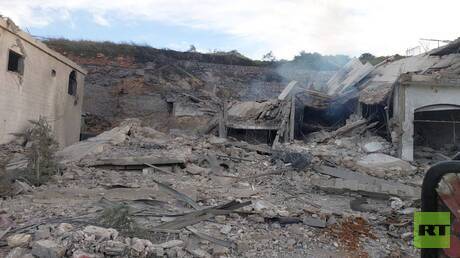
Israeli airstrikes have resulted in the deaths of 7 individuals in Lebanon on Tuesday, marking a new escalation in military tensions between Israel and Hezbollah. The Israeli military confirmed that it destroyed a Hezbollah complex located within a mosque, raising mixed reactions regarding the nature of military operations in the region.
Simultaneously, Hezbollah launched rocket attacks on the areas of Metula and Kfar Yuval in northern Israel, reflecting the increasing escalation in confrontations between the two parties. These events come at a sensitive time, as fears of escalating violence in the region grow.
Details of the Incident
According to local sources, the Israeli airstrikes targeted areas in southern Lebanon, leading to the casualties. Reports confirmed that among the dead were civilians, complicating the humanitarian situation in Lebanon. In response, the Israeli military stated that the aim of the airstrikes was to destroy Hezbollah positions, noting that operations were conducted precisely to minimize collateral damage.
In retaliation for the airstrikes, Hezbollah fired rockets at areas in the Galilee, triggering sirens in some Israeli cities. This escalation is part of a series of reciprocal attacks between the two sides, heightening tensions in the region.
Background & Context
Historically, the Lebanese-Israeli border has witnessed numerous armed conflicts, with Hezbollah being one of the main factions resisting Israeli occupation. Since the 2006 war, there have been repeated attempts to achieve a ceasefire, but recent escalations indicate that the situation remains fragile. Additionally, the political situation in Lebanon, including economic and political crises, complicates the landscape.
These events coincide with rising tensions in the region as regional and international powers seek to influence the situation in Lebanon and Palestine. The Israeli-Palestinian conflict continues to be a major factor fueling conflicts in the area.
Impact & Consequences
The recent escalation between Israel and Hezbollah could lead to serious repercussions for regional security. The airstrikes and military responses are likely to provoke further escalation, threatening the stability of Lebanon and the entire region. Moreover, the civilian casualties may trigger international reactions calling for restraint.
Furthermore, these events could affect relations between regional powers, as some countries may seek to intervene to mitigate the escalation. The humanitarian situation in Lebanon may deteriorate further, necessitating an urgent response from the international community.
Regional Significance
The current events are indicative of the ongoing conflicts in the region, where many Arab countries are suffering from similar crises. The escalation between Israel and Hezbollah may impact stability in neighboring countries such as Syria and Palestine, where the conflict could expand.
In conclusion, the situations in Lebanon and Israel remain under close observation, with expectations that tensions will continue to rise. The need for dialogue and de-escalation remains essential to avoid further violence and destruction in the region.