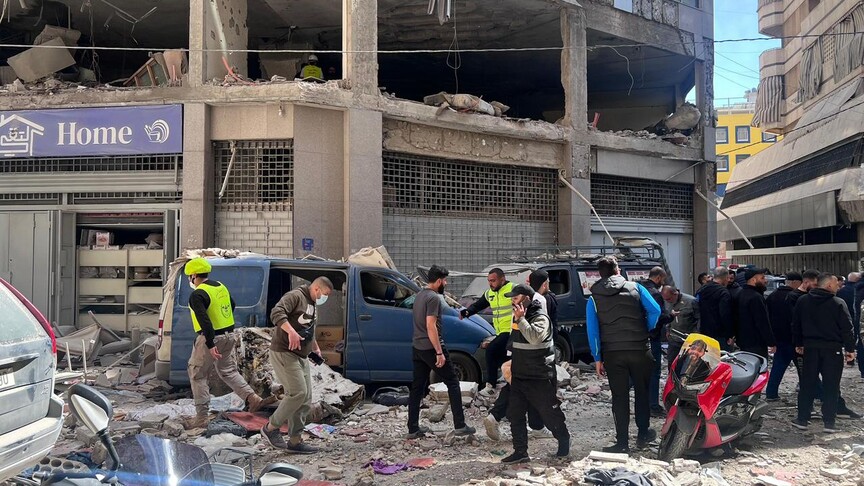
In a serious military escalation, Lebanon's Health Minister announced that the death toll from Israeli airstrikes has risen to 89 individuals, while hundreds have been injured across various regions. This escalation comes at a highly sensitive time, as the country has witnessed more than 100 airstrikes by the Israeli army.
The airstrikes are spread across several Lebanese areas, leading to panic and fear among the population. The minister indicated that the numbers may increase in the coming hours as military operations continue.
Details of the Incident
Reports of the damage caused by the airstrikes are pouring in, with many buildings and infrastructure in the targeted areas destroyed. Images circulated on social media depict horrific scenes of the devastation left by the airstrikes, further exacerbating the suffering of civilians in Lebanon.
Simultaneously, the Lebanese Ministry of Health issued a statement calling for urgent international intervention to protect civilians and halt the assaults. They also urged for humanitarian aid to be provided to those affected by these airstrikes.
Background & Context
Historically, Lebanese-Israeli relations have been marked by increasing tensions, particularly following the recent conflict that erupted in 2006. Since then, the border between the two countries has witnessed sporadic clashes, but the current escalation is among the most severe the region has seen in years.
These events coincide with rising tensions in the region, where political and military dimensions intertwine within a broader context of regional conflicts. Such tensions have impacted the security and economic situation in Lebanon, which is already grappling with multiple crises.
Impact & Consequences
The military escalation is likely to worsen the humanitarian situation in Lebanon, where many residents are suffering from shortages of essential supplies and healthcare services. Additionally, this escalation may open the door for military responses from Hezbollah, complicating the situation further in the region.
Politically, this escalation could increase pressure on the Lebanese government, which faces significant challenges in managing both internal and external crises. There are also concerns that this situation could lead to a larger escalation in the conflict between Lebanon and Israel, potentially affecting the stability of the entire region.
Regional Significance
Neighboring Arab countries are directly affected by the escalation in Lebanon, as it could lead to an influx of refugees and heightened border tensions. Other Arab nations may find themselves compelled to intervene or take political stances regarding this escalation.
In light of these circumstances, Arab countries must work together to provide support to Lebanon, whether through humanitarian aid or by pressuring the international community to intervene. The stability of Lebanon is an integral part of the overall stability of the region.