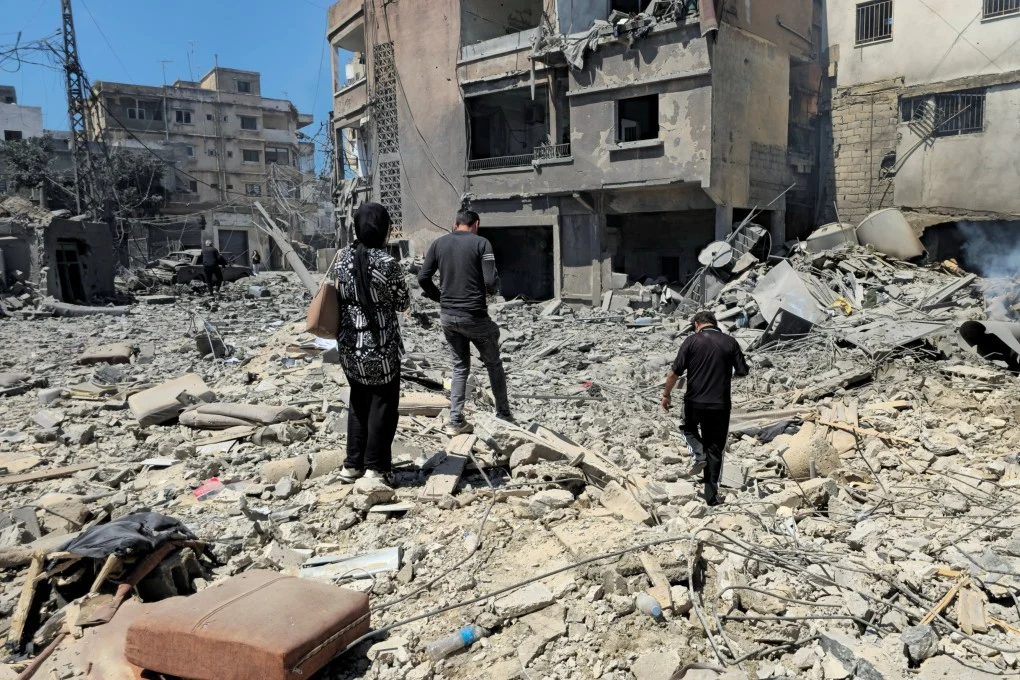
In a new escalation of hostilities, the Lebanese Ministry of Health confirmed that Israeli airstrikes resulted in the deaths of six members of a single family, including two children, in an area south of Sidon on Thursday morning. This attack comes at a time when tensions between Israel and Hezbollah are rising, despite an existing ceasefire agreement.
According to reports, the victims were a displaced family, highlighting the profound humanitarian impact of the ongoing conflict in the region. The attack occurred at a sensitive time, as it was believed that the truce could lead to a de-escalation of tensions between the conflicting parties.
Details of the Incident
The National News Agency (NNA) reported that the victims were living in a bombed area, leading to their tragic deaths. The Israeli airstrikes are part of a continuous military escalation, with attacks increasing since the beginning of this month, resulting in numerous civilian casualties.
Concerns are growing that this escalation could lead to a full-scale war in the region, as Hezbollah continues to respond to Israeli attacks. Reports have indicated that the airstrikes targeted civilian areas, raising questions about Israel's commitment to international laws regarding the protection of civilians in armed conflicts.
Background & Context
Historically, the Lebanese-Israeli border has seen ongoing tensions, with several rounds of conflict between the two sides. The dispute dates back decades, with repeated wars, the most recent being in 2006. Since then, Hezbollah has maintained its military presence in southern Lebanon, making it a constant target for Israeli airstrikes.
In recent years, tensions have significantly increased, particularly with the rise of Iranian influence in the region. Hezbollah is considered part of the resistance axis that includes Iran and Syria, complicating the conflict and making it difficult to reach peaceful solutions.
Impact & Consequences
This incident underscores the tragic humanitarian impact of the conflict, as civilians bear the brunt of the ongoing strife. The killing of an entire family reflects the extent of suffering experienced by the Lebanese people and increases pressure on the Lebanese government to address the escalating humanitarian crises.
Moreover, the military escalation could have political repercussions, as the Lebanese government may be compelled to adopt a harsher stance towards Israel, complicating the political landscape in the country. At the same time, this escalation could lead to increased popular support for Hezbollah, strengthening its position domestically.
Regional Significance
The ramifications of this attack extend beyond Lebanon, affecting regional stability. The Israeli-Lebanese conflict has direct implications for neighboring countries, especially with the presence of regional powers like Iran that support Hezbollah. Any escalation in Lebanon could have negative repercussions on security throughout the Arab region.
In conclusion, it is crucial to recognize that the situation in Lebanon requires urgent international attention, as the continuation of violence will exacerbate humanitarian and political crises. It is essential for international parties to work towards peaceful solutions to the conflict before conditions deteriorate further.