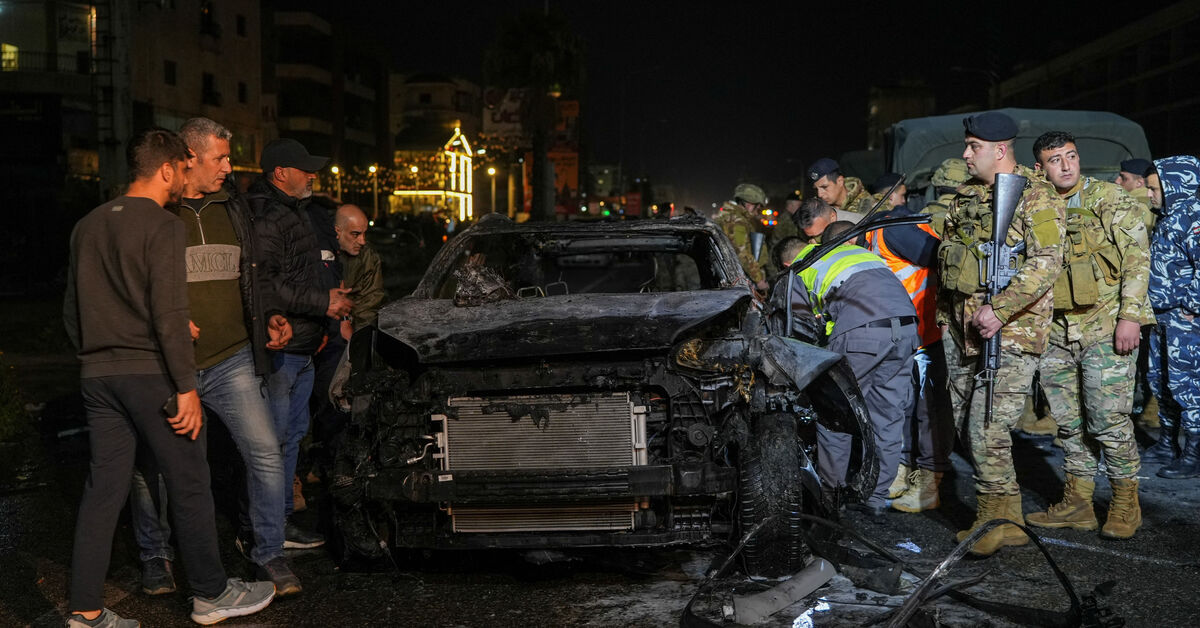
The Lebanese Ministry of Health announced that seven people were killed and 24 others injured due to two Israeli airstrikes targeting areas in the southern suburbs of Beirut. The attacks, which took place on Wednesday, targeted vehicles in two different locations, causing significant damage and creating panic among local residents.
These airstrikes come at a sensitive time, as the region is witnessing increasing tensions between Israel and Hezbollah, raising fears of a larger escalation in the conflict. The Israeli attacks focused on targets believed to be linked to armed groups, reflecting Israel's ongoing policy of targeting what it perceives as security threats.
Details of the Incident
According to reports, the Israeli airstrikes targeted vehicles moving in the suburbs of Beirut, resulting in the immediate deaths of several individuals. Local sources also reported that some of the injured are in critical condition, heightening concerns about the final casualty count. The attacks followed a series of military tensions between Israel and Hezbollah, with both sides exchanging strikes in recent weeks.
It is noteworthy that this is not the first time Israel has targeted areas in Lebanon, as the past years have seen several similar airstrikes. However, the escalation of attacks in civilian areas raises questions about the military and ethical objectives of these operations.
Background & Context
Historically, relations between Israel and Lebanon have been extremely tense, especially following the Lebanese Civil War that lasted from 1975 to 1990. Since then, the border between the two countries has witnessed numerous clashes, with Hezbollah playing a prominent role in resisting Israeli occupation. In recent years, tensions have escalated with the increase of Israeli military activities in the region, leading to strong reactions from Hezbollah.
Additionally, the economic and political situation in Lebanon is suffering from multiple crises, making the country more susceptible to external influences. Amid economic and social crises, the Lebanese face significant challenges, further complicating the security situation.
Impact & Consequences
These Israeli airstrikes represent a serious escalation in the ongoing conflict and may provoke a response from Hezbollah, increasing the likelihood of a new round of violence. This escalation could also impact regional security, as it may lead to interventions from other countries in the area.
These events are likely to affect relations between Lebanon and Western countries, especially amid international pressures on Israel to limit its military operations in civilian areas. Moreover, the escalation may complicate peace efforts in the region and increase instability.
Regional Significance
The events in Lebanon are part of a larger picture of conflict in the Middle East, where regional and international interests intersect. The escalation in Lebanon could affect neighboring countries, such as Syria and Jordan, potentially leading to an influx of refugees or increased border tensions.
Ultimately, the situation in Lebanon remains under close observation, as any further escalation could have serious repercussions for security and stability across the entire region.