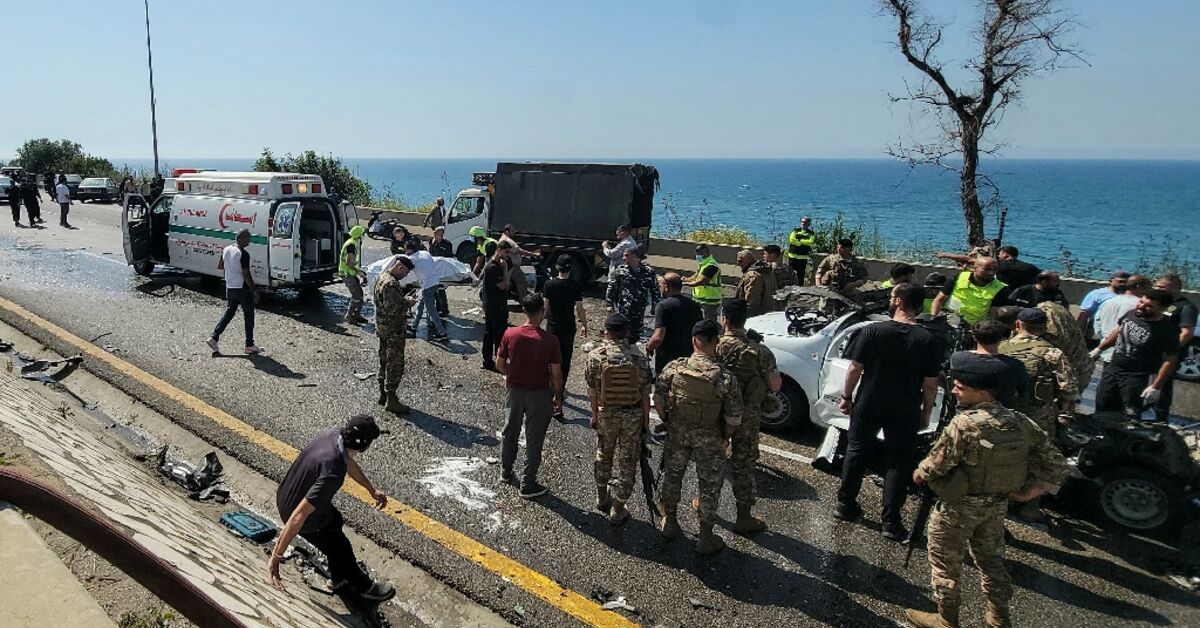
Israeli forces carried out airstrikes in Lebanon on Saturday, leading to the deaths of at least eight individuals in the south, according to local sources. The strikes targeted a highway near Beirut, outside Hezbollah's traditional strongholds. These attacks occur at a sensitive time, as relative calm has prevailed in the region following three weeks of a declared ceasefire, which has failed to halt the daily exchange of fire often concentrated in southern Lebanon.
These airstrikes are among the most intense since the ceasefire began, raising questions about the effectiveness of these agreements in achieving peace and stability in the region. Reports indicate that the strikes also targeted sites believed to be affiliated with Hezbollah, further escalating tensions between the two sides.
Details of the Attacks
The Israeli airstrikes on Lebanon continued despite the announced ceasefire, targeting various areas and resulting in civilian casualties. Images circulated on social media displayed the destruction caused by the strikes, reflecting the scale of the military escalation in the region.
These developments come at a critical juncture, as the international community seeks to calm the situation in Lebanon and prevent further escalation of the conflict. However, the Israeli military escalation reflects ongoing instability in the region and heightens fears of a new war.
Background & Context
Historically, relations between Israel and Hezbollah have been marked by increasing tensions, especially following the war that erupted in 2006. Since then, intermittent clashes between the two sides have persisted, leading to heightened tensions in the region. Recent events have contributed to growing concerns about a larger escalation, particularly with regional powers like Iran supporting Hezbollah.
The current ceasefire, announced three weeks ago, aimed to reduce tensions, but it has not succeeded in achieving that goal. Recent events have shown that ceasefires in this area are often fragile, and fighting can resume at any moment.
Impact & Consequences
These developments indicate that the situation in Lebanon may worsen, potentially affecting regional stability. The military escalation could provoke reactions from the international community and place additional pressure on the Lebanese government, which is already grappling with economic and political crises.
Moreover, the continuation of these attacks may bolster Hezbollah's position within Lebanon, where it could be viewed as the defender of national sovereignty. This could lead to increased popular support for the party, complicating peace efforts in the region.
Regional Significance
The ongoing military tensions in Lebanon highlight the precarious nature of stability in the Middle East. The international community's response to these developments will be crucial in determining the future dynamics of the region.
In conclusion, the recent Israeli airstrikes and the failure of the ceasefire to maintain peace underscore the fragile state of affairs in Lebanon and the potential for further conflict that could have far-reaching implications for regional security.