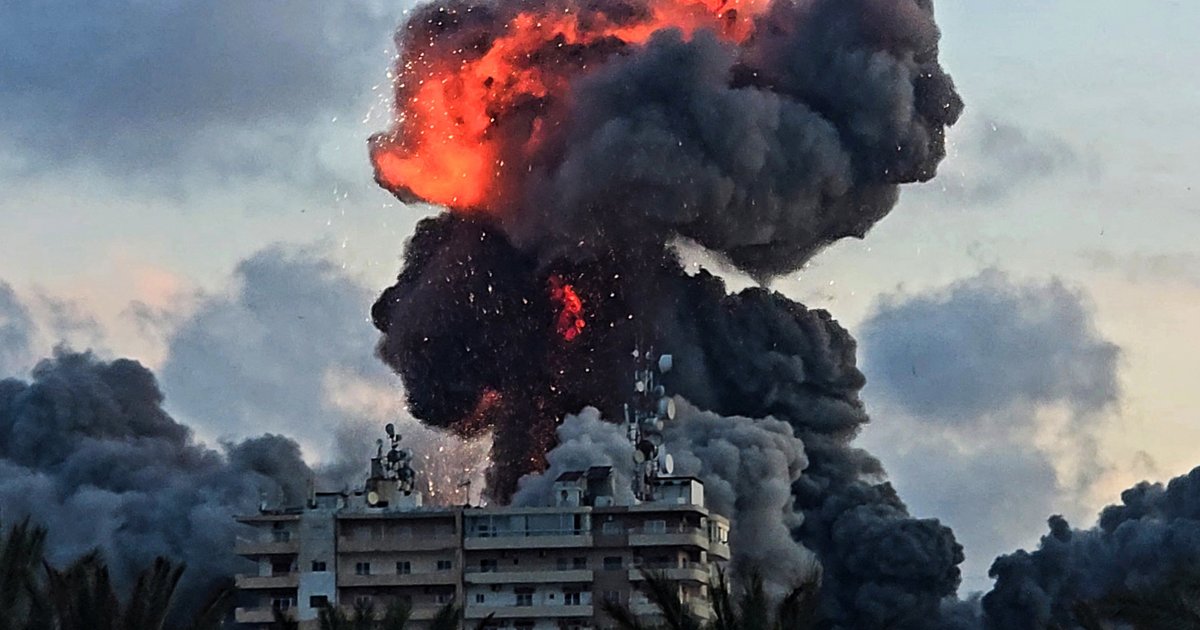
The Lebanese Ministry of Health announced on Thursday that Israeli airstrikes in southern Lebanon have resulted in the deaths of at least 11 people, including two children, and injured 21 others. These incidents come at a time when Lebanon is experiencing escalating regional tensions, raising concerns about the humanitarian situation in the country.
According to the ministry's statement, one airstrike on a building in the city of Sidon killed five people, including two women, and injured 21 others, among them five children. Other reports indicated that an early morning airstrike targeted a vehicle in the town of Adloun, resulting in the deaths of six individuals, including two children.
Details of the Incident
These airstrikes are part of an escalating military confrontation between Israel and Hezbollah, with the region witnessing heightened tensions recently. The Israeli airstrikes are a response to attacks carried out by Hezbollah against Israeli targets, intensifying the conflict in the area.
There are growing fears that these military actions could lead to a larger escalation, as civilians continue to bear the brunt of the violence. Many of the victims are women and children, highlighting the humanitarian impact of these conflicts.
Background & Context
Historically, Lebanon has faced ongoing conflicts with Israel, with several wars and disputes occurring over the past decades. The most recent conflict between Hezbollah and Israel dates back to 2006, which resulted in widespread destruction in Lebanon. Since then, there have been periods of relative calm, but tensions have remained, particularly with the ongoing conflict in Syria and its impact on the Lebanese situation.
The Lebanese economy is suffering from successive crises, complicating the humanitarian situation further. Under these circumstances, there is an increasing need for international support to help Lebanon navigate the multiple crises it faces.
Impact & Consequences
These events underscore the urgent need to seek political solutions to the Lebanese crisis, as military escalation will only exacerbate the humanitarian situation. The international community is called upon to take immediate action to assist civilians affected by the conflict and ensure the protection of human rights in the region.
Moreover, military escalation could have negative repercussions on regional security, as neighboring countries may be directly affected. It is essential for the concerned parties to work towards de-escalating the situation and seeking peaceful solutions to the conflict.
Regional Significance
The events in Lebanon are part of a broader picture of conflicts in the Middle East, where regional and international interests intersect. The crises in Lebanon, Syria, and Palestine directly impact the stability of the region, necessitating efforts from all parties involved to achieve peace.
Ultimately, the international community must take responsibility for the humanitarian situation in Lebanon and strive to find sustainable solutions to the conflicts afflicting the region.