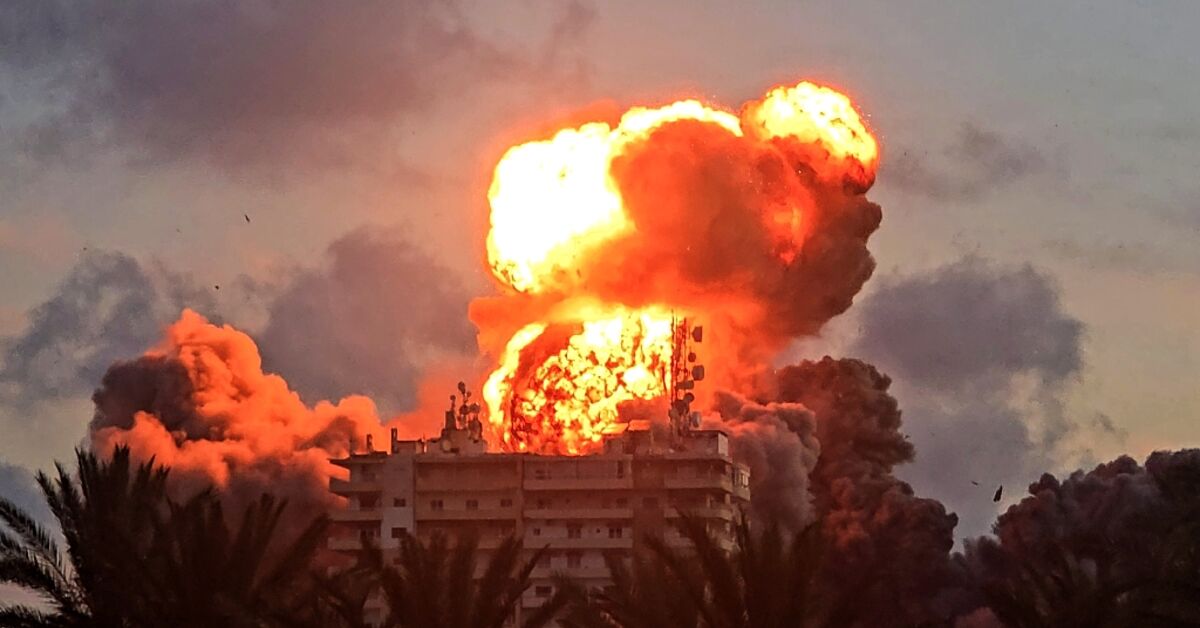
In a new escalation of events, Israeli forces launched an airstrike on the Beirut area on Thursday, with Lebanese sources reporting that the strike targeted a residential apartment, resulting in the deaths of 14 people. This airstrike is the second since the ceasefire was announced in April, raising concerns about the stability of the situation in the region.
This strike comes at a sensitive time, as Lebanon and Israel are preparing to hold military talks at the Pentagon on Friday, in addition to other US-mediated discussions scheduled for next week. This round of talks is the fourth since the outbreak of the recent war between Israel and Hezbollah on March 2.
Details of the Incident
Reports indicate that the Israeli airstrike targeted a residential area in Beirut, leading to widespread destruction of surrounding buildings. Lebanese authorities confirmed the casualties and expressed concern over the rising violence in the country. Civilian injuries have also been reported, adding to the suffering of the population amid the difficult economic conditions the country is experiencing.
The Israeli army, for its part, confirmed the execution of the airstrike, stating that the target was sites belonging to Hezbollah. These statements come at a time when tensions between the two sides are escalating, raising questions about the future of security in the region.
Background & Context
Historically, relations between Lebanon and Israel have been marked by ongoing tensions, especially since the Lebanese Civil War in the 1970s and 1980s. The recent conflict between Israel and Hezbollah in March has led to a significant escalation of violence, affecting civilians in Lebanon and worsening humanitarian conditions.
The ceasefire announced in April was hoped to ease tensions, but recent events indicate that the situation remains fragile. The upcoming military talks at the Pentagon could provide an opportunity to de-escalate tensions, but they also carry new risks if no agreement is reached.
Impact & Consequences
The recent escalation could exacerbate the humanitarian situation in Lebanon, where residents are suffering from economic and health crises. Airstrikes lead to an increase in the number of displaced individuals and the destruction of infrastructure, complicating the situation in the country.
These events may also affect relations between Lebanon and the United States, as Washington seeks to play a mediating role in the conflict. Any escalation could complicate peace efforts and increase tensions in the region.
Regional Significance
The events in Lebanon have wide-ranging implications for the Arab region, as any escalation between Lebanon and Israel could provoke reactions from other countries in the area. The situation in Lebanon raises concerns among Arab nations striving for stability in the region.
Ultimately, hope rests on the upcoming talks at the Pentagon, which could serve as an opportunity to ease tensions and achieve peace in the region.