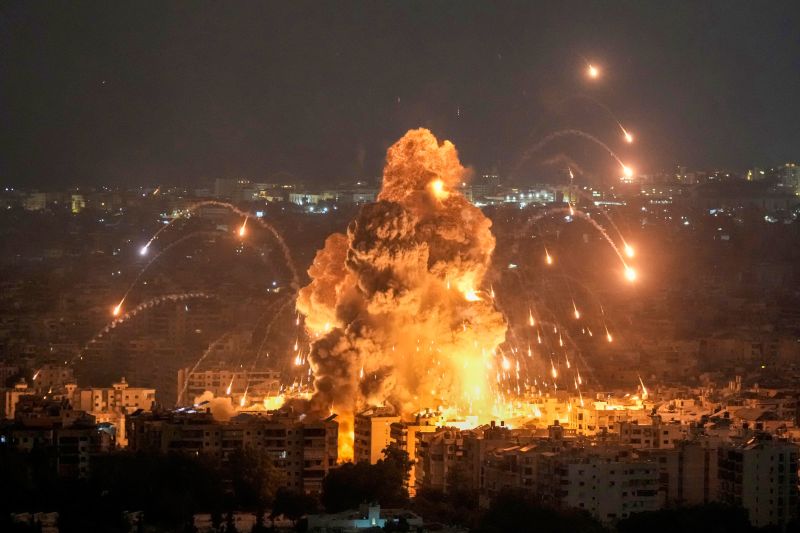
The Lebanese Ministry of Health reported that intense Israeli airstrikes targeting various regions in Lebanon today resulted in the martyrdom of 89 individuals and injuries to 700 others, marking an unprecedented military escalation. These events occur at a highly sensitive time as Lebanon grapples with multiple crises on economic and political fronts.
Israeli warplanes continue to bombard several areas in Lebanon, leading to widespread destruction of infrastructure and homes. Images circulated on social media depict horrific scenes of devastation and destruction left by the airstrikes, provoking widespread condemnation from the international community.
Details of the Incident
The Israeli airstrikes were distributed across various regions, including the southern suburbs of Beirut and towns in southern Lebanon. These airstrikes represent a significant escalation in the ongoing conflict, as the country has not witnessed such a high number of casualties in years. The injured have been transported to nearby hospitals, which are suffering from severe resource shortages due to the multiple crises facing Lebanon.
At the same time, numerous humanitarian organizations have issued statements condemning these attacks, warning of their repercussions on civilians. The United Nations has called for an immediate cessation of hostilities, emphasizing the need to protect civilians in armed conflicts.
Background & Context
Historically, Lebanon has experienced multiple conflicts with Israel, with the roots of the dispute extending back decades. As tensions in the region escalate, fears of a larger escalation that could lead to a full-scale war are increasing. Lebanon, which is suffering from crippling political and economic crises, finds itself in a difficult position as internal and external pressures mount.
The humanitarian situation in Lebanon has significantly worsened in recent years, with many Lebanese suffering from poverty and unemployment. These airstrikes come at a time when the Lebanese people are in dire need of support and assistance, further complicating the humanitarian situation.
Impact & Consequences
The repercussions of these airstrikes will be far-reaching, not only for Lebanon but for the entire region. These events are expected to increase tensions among various factions within Lebanon and may contribute to escalating the conflict with Israel. Additionally, international reactions may play a role in shaping future events.
These airstrikes also serve as a test of the Lebanese government's ability to handle the increasing crises and may impact political stability in the country. Under these circumstances, the government may find itself compelled to make difficult decisions regarding security and foreign policy.
Regional Significance
The events in Lebanon have direct implications for neighboring Arab countries, as they could lead to escalated conflicts in the region. Relations between Arab states and Israel may be significantly affected, especially amid growing popular support for the Palestinian cause.
Furthermore, these events may lead to increased popular movements in Arab countries, as citizens express solidarity with the Lebanese people. Amid the multiple crises facing the region, the situation in Lebanon remains a focal point for all.