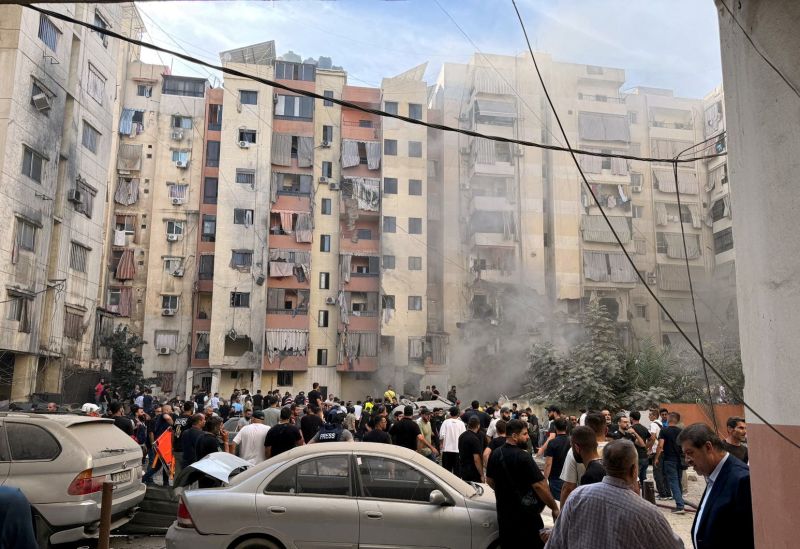
Israeli airstrikes have renewed in areas of southern Beirut, with Israeli forces confirming they are targeting Hezbollah's infrastructure. Warnings have been issued to civilians in the targeted areas, reflecting fears of a larger military escalation in Lebanon.
Earlier reports indicated that clashes erupted between Hezbollah fighters and Israeli forces in border regions, intensifying tensions in the area. This escalation comes amid the already tense situation in the region, which necessitates close monitoring by the international community.
Details of the Incident
The Israeli Army announced in an official statement that it is targeting sites belonging to Hezbollah in southern Beirut, indicating that these operations are part of its efforts to counter security threats. Warnings have been directed at civilians in the targeted areas, highlighting a notable escalation in military operations.
On the other hand, Hezbollah confirmed that it has engaged in clashes with Israeli forces, reflecting the rising tensions between the two sides. These clashes occur at a sensitive time, as each party seeks to bolster its position amid the current circumstances.
Background & Context
Historically, relations between Israel and Hezbollah have been marked by ongoing tensions, especially since the 2006 war. Since then, there have been several rounds of military escalation, but the current situation appears more complex due to the political and economic crises facing Lebanon.
These airstrikes are part of a broader Israeli strategy aimed at undermining Hezbollah's military capabilities, especially amid increasing regional tensions. Additionally, the situation in Lebanon, which is grappling with multiple crises, makes it difficult for the Lebanese government to maintain security.
Impact & Consequences
The military escalation in southern Beirut could have serious implications for regional security. This escalation is likely to increase tensions between Israel and Hezbollah, potentially dragging the region into a wider conflict. Furthermore, the continuation of airstrikes may exacerbate the humanitarian situation in Lebanon, which is already suffering from economic and social crises.
Moreover, this escalation could affect relations between Lebanon and other Arab countries, as some nations may reconsider their positions on Hezbollah and Israel in light of these developments.
Regional Significance
The repercussions of this escalation extend beyond Lebanon, potentially impacting the stability of the entire region. Given the multiple crises facing Arab countries, any military escalation could worsen the humanitarian and economic conditions in neighboring states.
This situation may also evoke memories of past conflicts in the region, necessitating international intervention to ensure that conditions do not deteriorate further. The stability of Lebanon is an integral part of the stability of the Arab region, and therefore any military escalation must be handled with extreme caution.