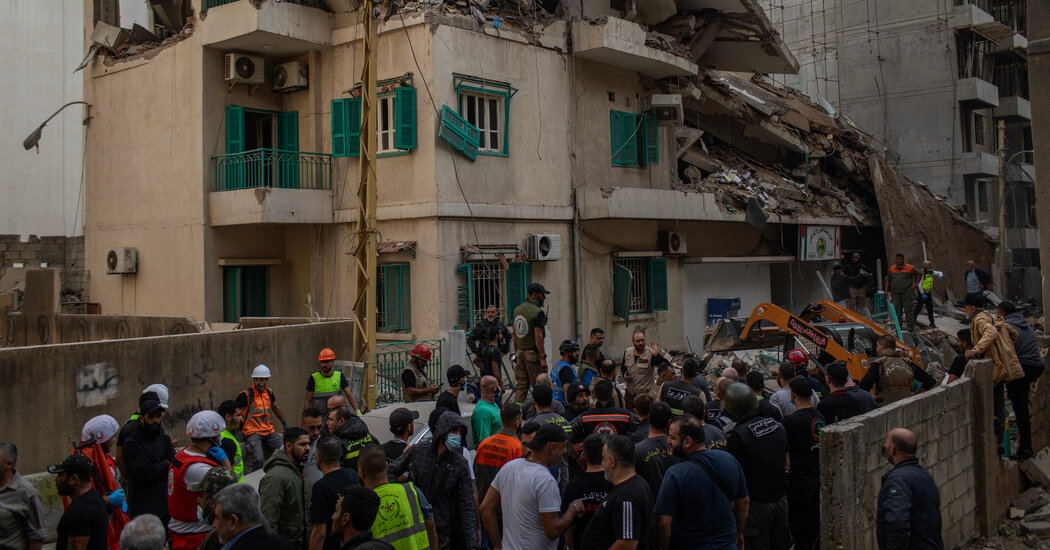
Israeli warplanes launched airstrikes on the southern suburbs of Beirut, resulting in the deaths of an Israeli sergeant and a farmer, along with injuries to others. These events follow an evacuation warning issued by the Israeli army to local residents, reflecting escalating tensions in the region.
In the details of the attacks, the first strike targeted a building in the vicinity of Al-Mashrafiya near Bir al-Abed, while the second strike targeted a residential apartment in the "Swaidan" building in the Al-Rihab area, heading towards Bir Hassan. Reports indicate that the second strike aimed at the deputy commander of Unit 1800, complicating the security situation in Lebanon.
Details of the Attacks
These airstrikes come at a sensitive time, as the region experiences increasing tensions between Israel and Hezbollah. Reports have shown that the strikes followed warnings from the Israeli army to local residents, raising concerns about the humanitarian situation in the southern suburbs, which is considered a stronghold for Hezbollah.
Information indicates that the airstrikes caused significant damage, with targeted buildings destroyed, leading to panic among residents. Injuries among civilians have been reported, reflecting the risks faced by local communities amid the ongoing conflict.
Background & Context
Historically, the southern suburbs of Beirut have witnessed numerous conflicts between Israel and Hezbollah, as this area is a significant center for the party's activities. Since the 2006 war, there have been several rounds of escalation, but recent events suggest a new escalation that could alter the dynamics of the conflict in the region.
It is noteworthy that Hezbollah has expressed its readiness to respond to any Israeli aggressions, increasing the likelihood of escalating violence in the coming days. Additionally, the political situation in Lebanon, which is suffering from economic and political crises, makes it difficult to predict the developments of the situation.
Impact & Consequences
The repercussions of these airstrikes extend beyond Lebanese borders, potentially affecting relations between Arab countries and Israel. If the escalation continues, the international community may intervene to try to calm the situation, but history shows that such interventions are often ineffective.
The military escalation may also exacerbate the humanitarian situation in Lebanon, where residents are suffering from economic and health crises. This could lead to increased internal displacement, putting additional pressure on the Lebanese government, which is struggling to provide basic services.
Regional Significance
The events in Lebanon are indicative of the volatile security situation in the Arab region. Amid rising tensions between armed factions and states, these airstrikes may lead to a reassessment of Arab countries' strategies in dealing with Israel and Hezbollah.
Furthermore, the situation in Lebanon could impact stability in neighboring countries, such as Syria and Palestine, where resistance movements in those countries may be influenced by what is happening in the southern suburbs. Any escalation could trigger a chain reaction in the region, complicating the security landscape further.
In conclusion, the situation in the southern suburbs of Beirut remains under observation, with expectations that tensions will continue to rise. Recent events underscore the urgent need for political solutions that ensure security and stability in the region.