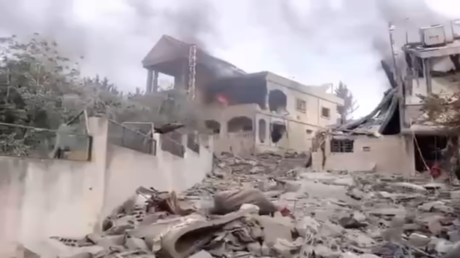
Israeli warplanes launched a series of airstrikes today on several towns in southern Lebanon, targeting areas between the districts of Nabatieh and Tyre. These attacks come at a sensitive time marked by a notable escalation in security conditions, raising fears of worsening situations in the region.
These airstrikes coincide with increasing tensions between Israel and Hezbollah, as reports indicate a rise in military activities along the Lebanese-Israeli border. Local sources have reported that the strikes targeted sites believed to be used by Hezbollah elements, further intensifying tensions between the two sides.
Details of the Incident
According to military sources, Israeli aircraft conducted the strikes in the early morning hours, targeting several sites in towns such as Nabatieh and Tyre. Images and videos circulated on social media show columns of smoke rising from the targeted areas, reflecting the intensity of the attacks.
Reports also indicate that the airstrikes resulted in significant material damage, but no human casualties have been confirmed so far. This escalation comes at a sensitive time, as the region had experienced relative calm following rounds of fighting in previous years.
Background & Context
Historically, the Lebanese-Israeli border has seen ongoing tensions, especially since the 2006 war that erupted between Israel and Hezbollah. Since then, there have been numerous military incidents, but the current situation appears more complex due to political changes in the region.
In recent years, military activities along the border have increased, with Hezbollah seeking to enhance its military capabilities in response to Israeli threats. In turn, Israel continues to carry out preemptive military operations against what it considers threats to its national security.
Impact & Consequences
These airstrikes raise concerns about a larger escalation in the conflict between Israel and Hezbollah, which could lead to a new round of fighting. Should these attacks continue, they may provoke responses from Hezbollah, increasing the likelihood of a comprehensive conflict in the region.
Moreover, military escalation could affect the humanitarian situation in Lebanon, where the population is already suffering from severe economic and social crises. Any escalation in hostilities could exacerbate humanitarian conditions, necessitating urgent international response.
Regional Significance
The current events in southern Lebanon are part of a larger picture of tensions in the Middle East, where regional and international interests intersect. Any escalation in the conflict between Israel and Hezbollah could impact the stability of neighboring countries such as Syria, complicating situations in Iraq and Palestine.
Additionally, these events may affect relations between Arab states and Israel, especially amid attempts by some countries to normalize relations. The rise in violence could hinder these efforts and increase hostility towards Israel in the Arab world.
The Israeli airstrikes on southern Lebanon represent a serious escalation in the ongoing conflict, warranting international attention. Amid the tense conditions, there remains hope that the involved parties can avoid a new round of violence.