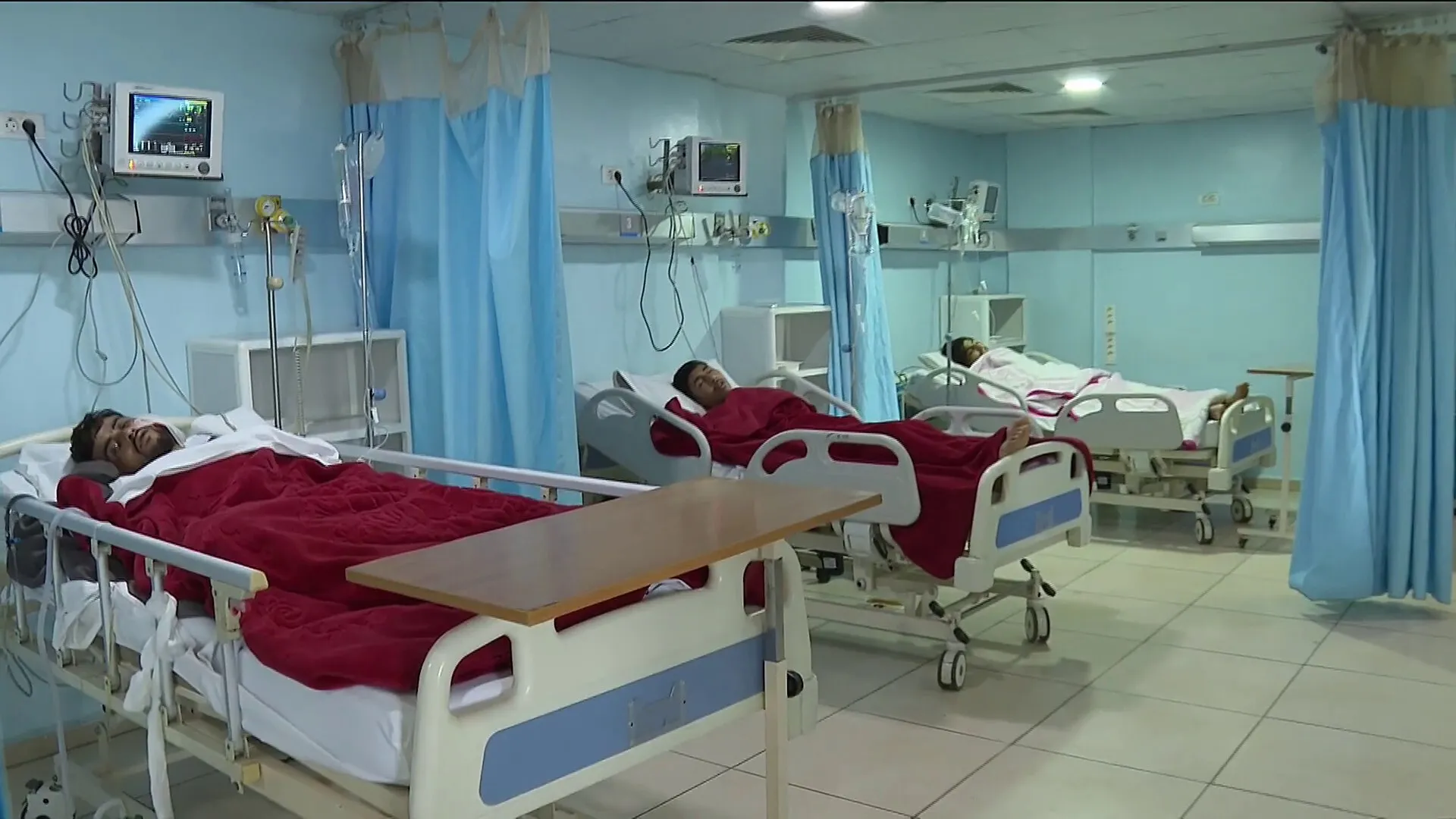
Israeli airstrikes are ongoing across various regions in Lebanon, surpassing traditional confrontation lines to reach civilian and agricultural areas in the Bekaa Valley, leading to casualties and an expansion of the targeting.
In this context, Al Jazeera correspondent Catherine Hanna reported that an Israeli fighter jet launched a fierce strike targeting the town of Bazaliyah in northern Bekaa, hitting a building that housed two homes, resulting in its complete destruction.
Details of the Incident
The airstrike resulted in the martyrdom of a pregnant woman and her fetus, identified as Israa Al-Qadi Al-Bazali, who was hastily buried in the town out of fear of renewed strikes. Hanna also clarified that the destruction was not limited to the targeted building but also affected nearby structures and several nearby shops due to the intensity of the explosion.
The strike temporarily cut the international road linking Baalbek to the city of Homs, before relevant authorities reopened it after clearing the debris.
Background & Context
Academic and political researcher Abdullah Risha believes that the pace of Israeli attacks is likely to escalate in the coming phase, pointing to two main reasons. Risha stated in a discussion on Al Jazeera that while Israel claims not to link the Lebanese arena to regional developments, it continues its military operations, whereas Iran and Hezbollah connect the two fronts, which could lead to ongoing confrontations within Lebanon even if broader understandings are reached in the region.
Amid this escalation, the complexities of the internal political scene in Lebanon become evident, as diplomatic initiatives wane and differences in positions among political forces emerge, raising questions about the state's ability to contain the repercussions of this escalation.
Impact & Consequences
Abdullah Risha pointed out that the internal Lebanese situation is marked by political discrepancies, especially with the stagnation of diplomatic initiatives, such as the French initiative, and the ongoing disputes within the government. He considered that the absence of political consensus limits Lebanon's ability to cope with the escalation, amid continued airstrikes and rising human costs.
Catherine Hanna also noted that the town of Bazaliyah is not far from the context of repeated targeting, having been subjected to strikes during the last war, and that Israeli bombardment has extended to areas in Western Bekaa, such as the towns of Yahmour, Labaya, and Zalaya. This expansion reflects a shift in targeting to areas further away from traditional confrontation lines, increasing fears among residents.
Regional Significance
Between human losses and widespread destruction, the residents of Bekaa face an increasingly perilous reality, as airstrikes continue and expand, raising fears of a more escalated phase in the coming days. This escalation is linked to intertwined military and regional calculations, reflecting the complexity of the situation in the region.
In conclusion, the situation in Lebanon remains under the pressure of Israeli military escalation, necessitating greater international attention to address the growing humanitarian and political crises in the country.