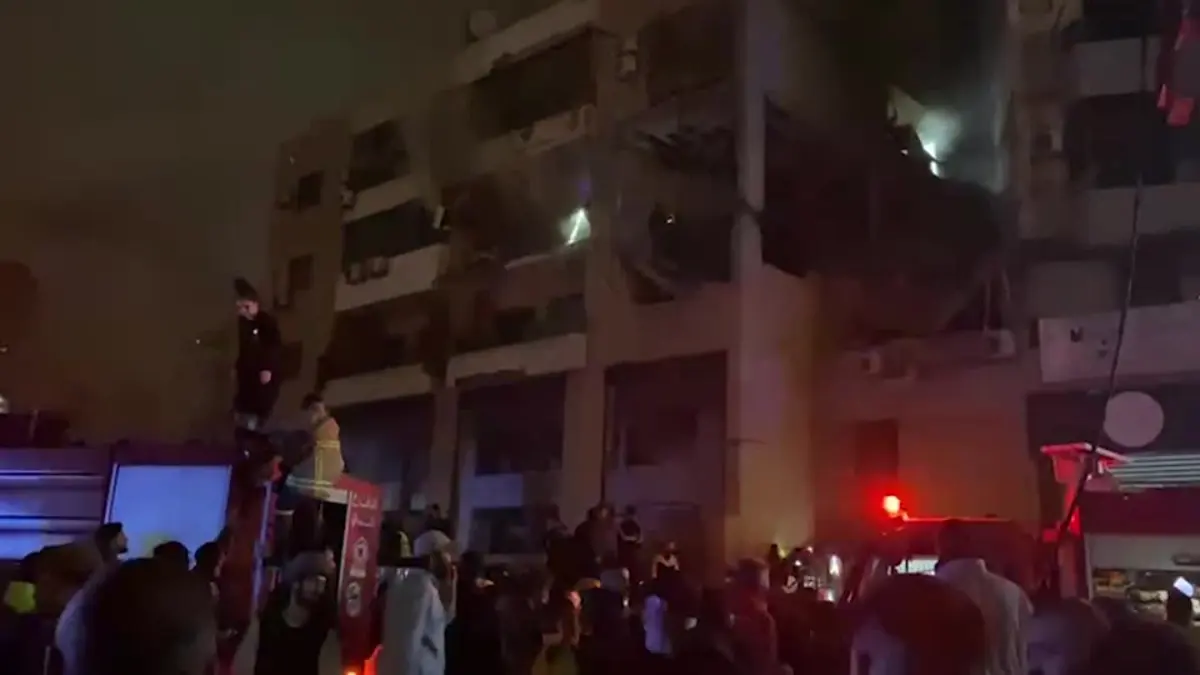
Israeli airstrikes have targeted the Jnah area in Beirut, Lebanon's capital, resulting in substantial material damage. The incident took place late last night, with the sound of explosions heard across various parts of the city, causing panic among local residents.
These airstrikes are part of an escalating conflict between Israel and Hezbollah, with reports indicating that Israeli aircraft bombed targets believed to be linked to armed militias. Images circulated on social media show scenes of destruction left by the strikes, with smoke rising from the targeted sites.
Details of the Incident
According to local sources, the Israeli strikes targeted several sites in the Jnah area, which is considered one of the most densely populated regions in Beirut. Initial reports indicate no human casualties; however, the material damage was evident, with buildings and vehicles in the area suffering significant damage.
This attack follows a series of increasing tensions between the two sides, with gunfire exchanged along the Lebanese-Israeli border in recent days. Many observers have warned that these escalations could lead to a larger escalation in the ongoing conflict in the region.
Background & Context
Historically, the relationship between Lebanon and Israel has been marked by ongoing tensions, especially since the Lebanese Civil War in the 1970s and 1980s. Since then, there have been several rounds of conflict between Israel and Hezbollah, which is considered one of the prominent armed factions in Lebanon. These tensions have particularly escalated following the Israeli war on Lebanon in 2006, which resulted in widespread destruction.
In recent years, fears of a new conflict erupting in the region have increased, especially with the rising Israeli military activities in Lebanese airspace. Additionally, the political and economic situation in Lebanon, which is facing multiple crises, complicates matters and makes the situation more fragile.
Impact & Consequences
The recent Israeli airstrikes are seen as an indicator of a potential escalation in the conflict, as they could provoke reactions from Hezbollah or its allies in the region. Many analysts have warned that any further escalation could lead to a full-scale war in the region, significantly affecting regional stability.
These events may also impact Lebanon's relations with Western countries, especially amid the economic and political pressures facing the Lebanese government. These airstrikes could increase the pressure on the Lebanese government to address the deteriorating security situation.
Regional Significance
The recent events in Lebanon are part of a larger picture of tensions in the Middle East, where conflicts between regional powers are on the rise. These airstrikes could deepen divisions among Arab states, as they may be used as a pretext to justify military interventions by some countries.
Ultimately, the situation in Lebanon remains sensitive and requires close monitoring by the international community. Any further escalation could lead to unforeseen consequences, not only for Lebanon but for the entire region.