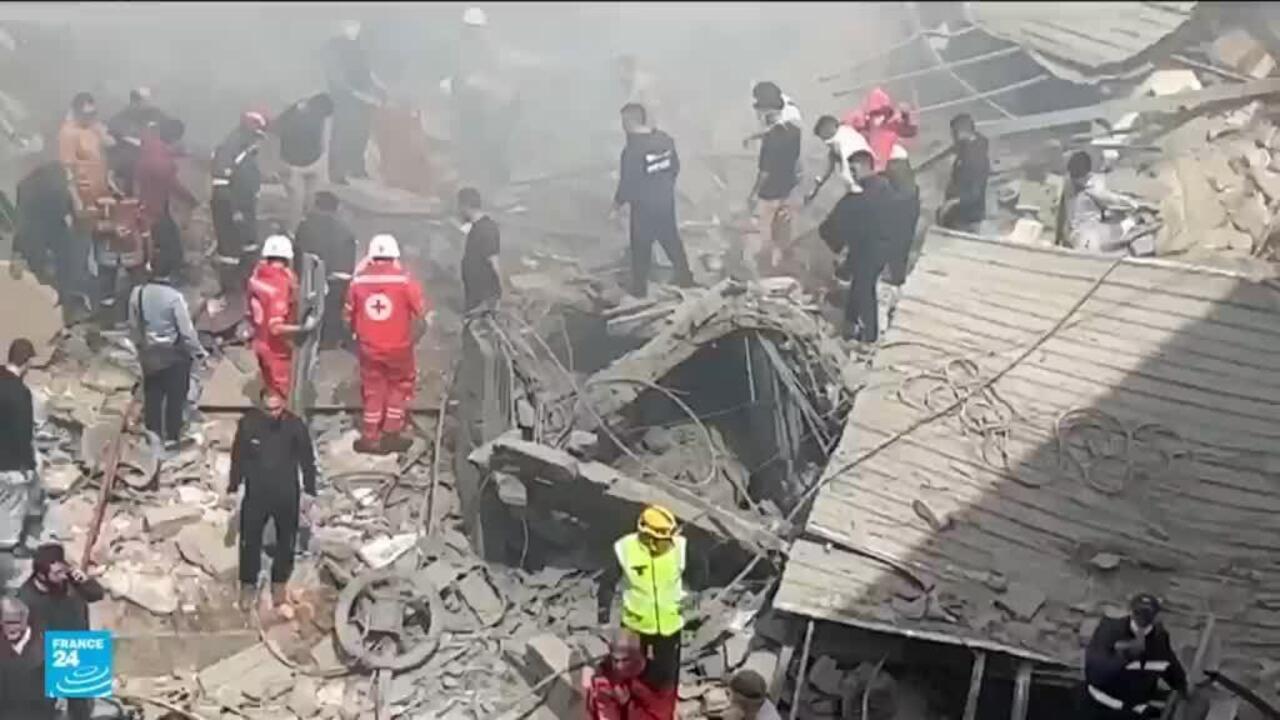
Israeli warplanes have conducted airstrikes on southern Beirut, with live reports from Agence France-Presse indicating Israeli warnings for residents to evacuate several neighborhoods in the area, which is considered a stronghold of Hezbollah. These strikes follow a previous attack targeting an apartment within a residential complex in the Ain Saadeh area east of Beirut, resulting in the death of three individuals, according to the National News Agency citing the Ministry of Health, although the identities of the targets remain unclear.
More than a month after the outbreak of war, Lebanese President Joseph Aoun has renewed his call for negotiations with Israel, warning that the situation in southern Lebanon could resemble that of Gaza if hostilities continue. These statements come at a sensitive time as fears of a larger escalation in the region are growing.
Details of the Incident
The Israeli airstrikes on Lebanon continue to escalate tensions, frequently targeting areas believed to be affiliated with Hezbollah. International pressure is mounting on the involved parties to sit at the negotiation table, especially as the number of civilian casualties rises.
In the latest strike, many civilians were injured, raising concerns about the humanitarian impact of these military operations. The Lebanese government faces significant challenges in managing the security and humanitarian situation, as the need for an effective response to protect civilians increases.
Background & Context
Historically, Lebanon has witnessed numerous conflicts with Israel, especially since the 2006 war. Hezbollah, regarded as a major force in Lebanon, adopts a policy of resisting occupation, complicating the situation further. The current Israeli airstrikes are part of a continuing military escalation, as Israel seeks to undermine Hezbollah's capabilities.
These events coincide with rising tensions in the region, where neighboring countries are directly affected by the conflict. The situation in Gaza also significantly impacts Lebanon, as events there are viewed as part of a broader regional struggle.
Impact & Consequences
The military escalation in Lebanon could lead to serious repercussions for regional security. If airstrikes continue, we may witness new waves of displacement and refugee crises, increasing the burdens on neighboring countries. Furthermore, the ongoing conflict could affect political stability in Lebanon, as the government faces substantial challenges in managing multiple crises.
The economic repercussions will also be noticeable, as the war negatively impacts an already struggling Lebanese economy. Local businesses and investors may hesitate to take new steps amid the prevailing security instability.
Regional Significance
The events in Lebanon have significant implications for the Arab region as a whole. The escalation of violence could lead to a reshaping of political alliances, as Arab countries seek stability amid increasing tensions. Additionally, the situation in Lebanon may affect relations between Arab nations and Israel, especially in light of ongoing peace efforts.
Ultimately, hope remains pinned on peace and negotiation efforts, as dialogue is the only way to avoid further escalation. The international community is urged to pressure the involved parties to come to the negotiation table and prevent further loss of life.