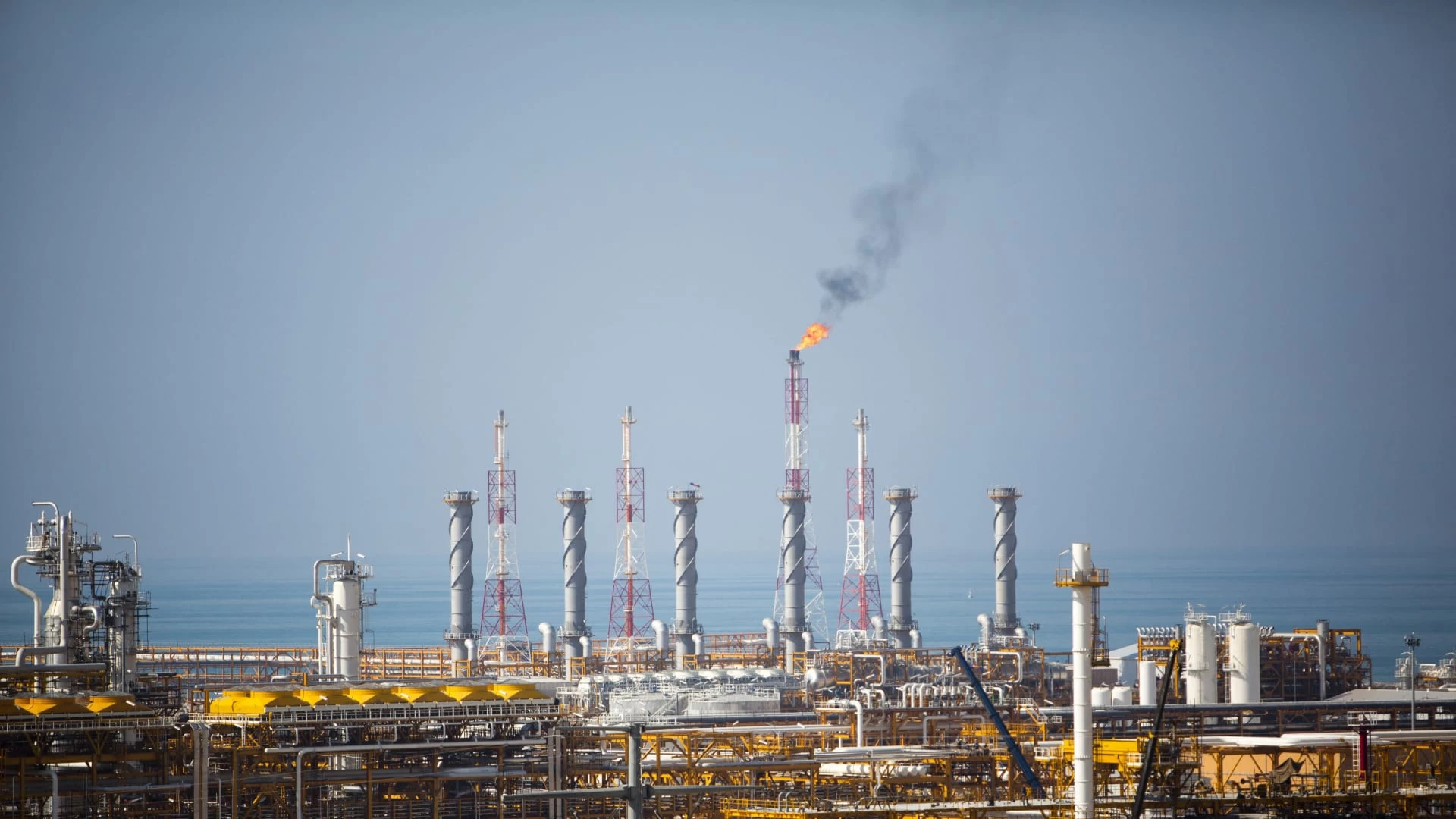
Israeli airstrikes have targeted petrochemical facilities in Iran, resulting in powerful explosions in the capital, Tehran, and other areas. The Fars News Agency reported that the bombardment targeted the Mahshahr petrochemical zone in Ahvaz, where columns of smoke rose, prompting rescue and firefighting teams to be dispatched to the area.
According to an Iranian official, fatalities are likely from the attacks on Mahshahr, where the strikes targeted four petrochemical companies. The Petrochemical Industries Company confirmed that industrial units were evacuated and that there is no risk of environmental contamination in the area.
Details of the Incident
Another Iranian official confirmed the targeting of the Bandar Imam Petrochemical Company in Khour Mousa. In another incident, the Tasnim News Agency reported that a projectile fell near the Bushehr nuclear power plant, resulting in at least one death. Iranian media reported loud explosions and intensive fighter jet activity over Tehran and Bushehr, with the sound of explosions heard from bombings on sites in the northern mountains of Tehran.
The bombardment extended to targets in the city of Abadan southeast of Ahvaz, in addition to explosions in West Azerbaijan Province in northwestern Iran. Areas such as Tut Shal, Jamshidiyeh, and Kolgal were bombed, leading to columns of smoke rising into the atmosphere.
Background & Context
These attacks come at a time of escalating military tensions between Iran and Israel, with the Israeli army announcing the targeting of key defensive sites, weapons production centers, and research and development facilities in Tehran. The Israeli army confirmed that it continues to "deepen the damage to the capabilities of the Iranian regime," reflecting the recent escalation of conflict between the two sides.
In contrast, Israeli media reported that parts of a missile fell in Kiryat Shmona, damaging some homes. The Ynet Israeli website also noted significant damage in the city of Bnei Brak in central Israel due to an Iranian missile attack, with no immediate details available regarding the extent of injuries.
Impact & Consequences
These events illustrate the rising military tensions in the region, with growing fears of a larger escalation that could lead to a broader conflict. The Institute for the Study of War indicated the targeting of a nuclear research institute at Beheshti University in Tehran, as well as the tenth base of the Iranian army in Sistan and Baluchestan Province, and the targeting of an ammunition depot and a base for the Islamic Revolutionary Guard Corps in Isfahan.
These developments are seen as indicators of escalating conflict between Iran and Israel, with each side seeking to bolster its military position in the region. Furthermore, these events could affect regional stability and provoke reactions from other countries in the area.
Regional Significance
These developments are particularly significant for Arab countries, as they could lead to changes in military and political balances in the region. The escalation of tensions between Iran and Israel may impact regional security and increase the risks of armed conflicts.
In conclusion, the situation in Iran remains a focal point for the world, with rising fears of a larger escalation that could negatively affect stability in the region.