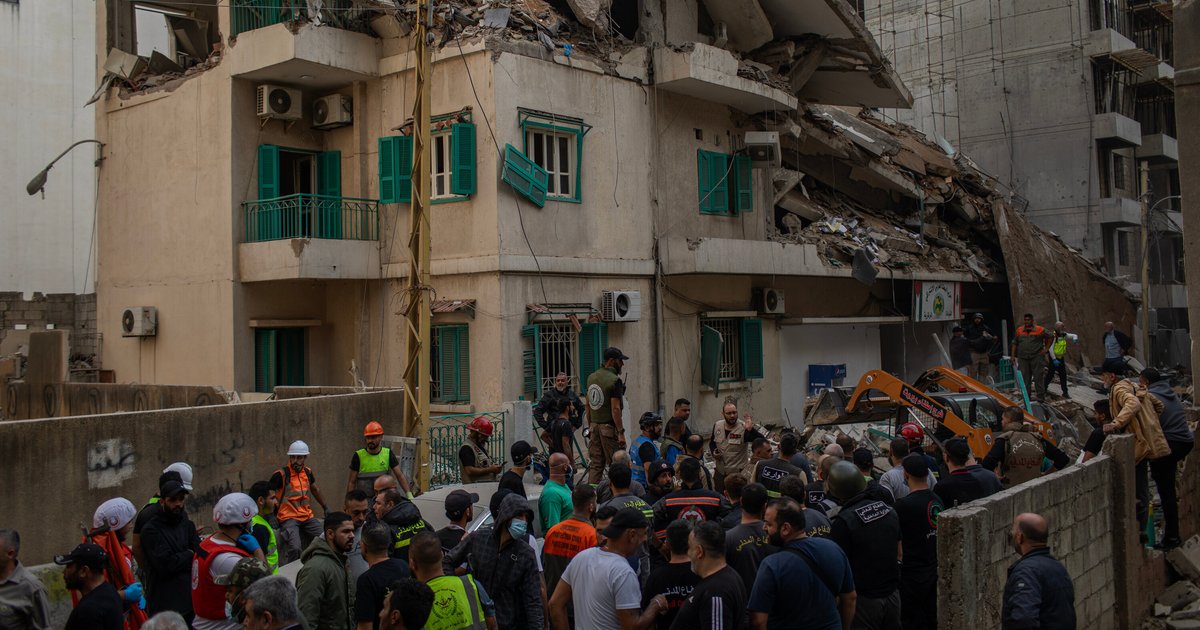
Three Israeli airstrikes targeted the Jnah area in southern Beirut, marking a new escalation of tensions in the region. These strikes come at a sensitive time, as Lebanon is experiencing increasing tensions due to economic and political crises.
The Jnah area is considered one of the vital regions in the Lebanese capital, and these airstrikes have prompted swift reactions from Lebanese officials, who condemned the attacks and deemed them a violation of national sovereignty. Additionally, these strikes occur at a time when Lebanon faces significant challenges, including a crippling economic crisis, complicating the security situation further.
Details of the Incident
According to local sources, the Israeli airstrikes targeted sites believed to be used for military purposes, but no precise information regarding the damages caused by these attacks has been reported yet. It is expected that Lebanese official authorities will issue a statement clarifying the details of the incident.
These airstrikes come amid escalating military tensions between Israel and Hezbollah, with recent exchanges of fire along the Lebanese-Israeli border raising fears of a larger escalation that could impact the region's stability.
Background & Context
Historically, relations between Lebanon and Israel have been tense, with the region witnessing several wars and conflicts. Since the 2006 war, tensions between the two sides have persisted, with Hezbollah continuing to enhance its military capabilities, prompting Israel to take preemptive measures to ensure its security.
In recent years, concerns have grown that any military escalation could have severe repercussions for civilians in Lebanon, who are already suffering from economic and social crises. The political situation in Lebanon is complex, with various political forces vying for power, making it more difficult to address external threats.
Impact & Consequences
These airstrikes are expected to increase tensions between Lebanon and Israel, and may provoke reactions from Hezbollah, which might feel compelled to respond to these attacks. This escalation could lead to a cycle of violence that threatens the stability of Lebanon and the region as a whole.
Moreover, these events may impact international relations, as some countries seek to mediate the conflict between Lebanon and Israel. Any escalation could complicate peace efforts in the region and exacerbate the humanitarian situation in Lebanon.
Regional Significance
The events in Lebanon have significant implications for the entire Arab region, as any military escalation could lead to broader repercussions affecting neighboring countries. Additionally, the situation in Lebanon could impact regional security, especially given the ongoing crises in Syria and Iraq.
As many Arab countries strive for stability and development, the rise of military conflicts could hinder these efforts and increase the suffering of people in the region.
In conclusion, the Israeli airstrikes on the Jnah area reflect a new escalation in tensions between Lebanon and Israel, warranting close monitoring by the international community. Amid the multiple crises facing Lebanon, there remains hope that leaders can find peaceful solutions to avoid further escalation.